Student. Mother. Dreamer. A full life ‘in limbo’ as Supreme Court considers DACA
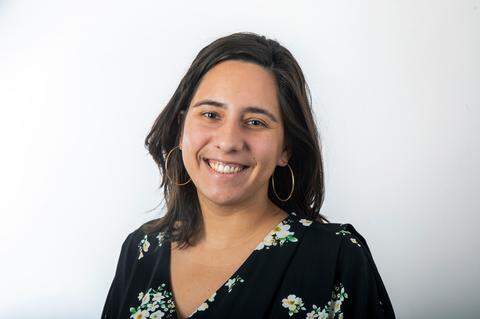
Rosseli Guerrero studies communication and criminal justice part time at Boise State University. She works as a legal assistant at Derden Law, an immigration law firm in Meridian. She and her husband, Jesús, have a 1-year-old son, Yaziel. And her future as a U.S. resident is a question mark.
As the U.S. Supreme Court begins to deliberate the fate of DACA (Deferred Action for Childhood Arrivals) and so-called Dreamers, young lives in Idaho hang in the balance.
Guerrero, 23, came to the U.S. at age 5. Her mother brought her from Mexico to join her father. She applied for the DACA program almost immediately after President Barack Obama created it in 2012 to extend temporary protection from deportation to immigrants who were brought to the U.S. illegally as children.
But the past few years of uncertainty and the pending Supreme Court case make her feel like a “chess piece” in someone else’s political game, she said.
“I feel like I’m always in limbo,” Guerrero said. “I’m more fortunate than most because I do have that document (DACA). At the same time, it can be taken away at any moment.”
In addition to lessening deportation fears, DACA also grants a work permit and the ability to apply for a driver’s license. It does not provide a pathway to legal permanent residence or citizenship.
In 2017, the Trump administration attempted to rescind DACA, prompted by a lawsuit threat and letter signed by nine state attorneys general — all Republicans — including Idaho Attorney General Lawrence Wasden. Then-Gov. Butch Otter also signed the letter, the only governor in the country to do so. Several federal courts blocked Trump’s attempts, allowing current DACA recipients to keep and renew their status, although no new applications were allowed.
“I’ve long held that DACA was created through an unconstitutional executive order because — under the Constitution — the responsibility of creating immigration policy falls squarely on Congress,” Wasden said at the time. “However, the root of this entire issue is Congress’s failure to pass a law that takes into account the needs of everyday families, especially those families whose ties cross international borders.”
This week, the Supreme Court begins hearing arguments that will decide the future of DACA, weighing whether the Trump administration unlawfully rescinded the program. A ruling is expected by next spring.
It’s unclear what the court will decide. But if it rules that the DACA program was created unlawfully in 2012 because it was done without congressional approval, the program could be removed altogether.
No one is sure where that would leave DACA recipients such as Guerrero, who had to announce their undocumented status to immigration officials in order to apply to the program in the first place.
Immigrants who lose their DACA status for various reasons also lose their work authorization and the ability to drive, said Kimberly Schaefer, a Boise immigration attorney.
“That combination takes you from a position where you’ve had a normal life supporting yourself and your family, to having basically nothing,” Schaefer said. “It also puts you at risk of deportation.”
How many DACA recipients live in Idaho?
Even though it wasn’t a permanent solution, Guerrero said receiving DACA status changed her life.
She started slipping in high school, watching her friends go to driver’s education classes, get licenses, start working and plan for college. Because she was undocumented, the bright future she planned for and that her parents brought her to the United States for seemed impossibly out of reach.
“I was just kind of to the point where I was done,” Guerrero said. “I was like, I don’t even matter here. I can do all these great things and ... it’s not even going to matter in the end, because I don’t have legal status.”
Once she became a DACA recipient, she was still different from her classmates. The piece of paper that protected her from being deported didn’t let her leave the country, qualify for in-state tuition or scholarships at Boise State, or put her any closer to being an official citizen of the country she called home. But she could finally work, which she said she’s been doing ever since. She also could legally drive and go to Boise State — even if she and her family had to pay full nonresident price. Part-time students pay twice as much per credit if they aren’t Idaho residents.
Many DACA recipients can qualify for the Idaho Opportunity Scholarship, which awards up to $3,500 based on both need and merit. But lawmaker emails recently revealed that Idaho Republicans might push to block DACA recipients from the scholarship in the 2020 legislative session. Guerrero said she wasn’t aware of her possible eligibility for the scholarship until recently, but hoped to apply in the future.
“I can plan for my future, but there always has to be a plan B,” Guerrero said. “Because I don’t know what’s going to happen. I don’t know what my status will be.”
Out of the 660,880 active DACA recipients immigration officials recorded in June 2019, an estimated 2,840 were living in Idaho. DACA recipients came to the U.S. from more than 100 countries, but the vast majority are originally from Mexico. Half of DACA recipients are 25 years old or younger.
According to U.S. Citizenship and Immigration Services, half of Idaho Dreamers live in the Boise area. DACA recipients in Idaho pay an estimated $5 million in state and local taxes, according to a study by the nonpartisan Institute on Taxation and Economic Policy. The same study estimated that Idaho would lose nearly $3 million in state and local taxes if DACA protections were rescinded.
But Guerrero said she and others like her shouldn’t be regarded as just a “dollar sign.”
“I’m trying to be a great member of the community, a great student, a great worker,” Guerrero said. “What else do I have to do to prove myself? That I belong here?”
Boise State students, immigrant advocates plan rally at the Capitol
As the Supreme Court deliberates, advocates, student organizations and activists are gearing up for a fight.
“The trauma that is being inflicted on these people is unjust,” said Ben Stein, of Immigrant Justice Idaho. “To be a DACA recipient, you’ve had to meet certain requirements, you’ve had to show you’re a person we want in our community. They should not be used as political pawns.”
Immigration attorneys like Stein and Schaefer have recommended that DACA recipients concerned about the future of their status apply for a renewal as soon as possible, before the Supreme Court makes any ruling regarding the program.
Schaefer also recommended that DACA recipients concerned about their status should consult with an attorney to see whether they could find another pathway to residency or citizenship.
Representatives from the ACLU of Idaho and Immigrant Justice Idaho plan to be on the Boise State campus Tuesday, passing out information and providing resources for people to learn about DACA.
Boise State student group Movimento Estudiantil Progressive Action (MEPA) is also working with PODER of Idaho, an immigrant rights group in Southwest Idaho, for a rally at the Idaho State Capitol on Saturday at 11 a.m.
“I hope they (DACA recipients) see support,” said Maricela Deveney-Morales, a junior and the administrator of Boise State’s MEPA chapter. “And they know — no matter what, federally, folks decide — that as a community in Idaho we can still help them.”
Even though it feels impossible to make plans for the future, Guerrero is still making them. Her restricted access to financial aid and scholarship opportunities means she might not be able to afford even part-time Boise State tuition next semester, so she’s strategizing with professors over which classes to take. She’s going to be a legislative intern for the ACLU of Idaho starting in January.
She even has plans for further into the future. She thinks about becoming a journalist or using her second major in criminal justice to tell true stories that can help people. She and her husband are making plans for their son’s future, and saving to buy a house and for Yaziel’s college fund.
“It is a stressful situation for me to not know what’s going to happen,” Guerrero said. “What if I plan to do all these amazing things and I’m just so close to accomplishing it, and then it gets taken away from me? I’ve seen it happen. I’ve seen that storyline before.”
Resources for Idaho DACA recipients and other immigrants
The following nonprofits and immigration firms can provide DACA consultations at a discounted rate.
- Immigrant Justice Idaho: 3775 W. Cassia St., Boise, 208-342-0432
- Catholic Charities of Idaho (Treasure Valley): 7255 W. Franklin Road Boise, 208-345-6031
- Catholic Charities of Idaho (Eastern Idaho): 554 4th St., Idaho Falls, 208-881-0740
- Familias Unidas: 317 Happy Day Blvd., Caldwell, 208-453-3107
This story was originally published November 12, 2019 at 4:00 AM with the headline "Student. Mother. Dreamer. A full life ‘in limbo’ as Supreme Court considers DACA."