
‘I’m his mom and I couldn’t help him’ — Bellingham 10-year-old wins battle with COVID illness
If there was one thing Bellingham resident Stephanie Jensen has learned since Christmas Eve, she says it’s to always “follow your gut.”
After watching her 10-year-old son, Jonah McDaniel, get sicker and weaker by the day and doctors in Bellingham having no answers why, it was Jensen’s gut that told her she needed to slide Jonah into a pair of Pull-ups, get him in the car and head south to Seattle Children’s Hospital.
“I knew something was wrong and felt like I wasn’t being heard,” Jensen told The Bellingham Herald in an email. “I wanted help for my child, and I wasn’t getting it. I’d have moments of feeling like I was overreacting, but it turns out I was right and he needed more help than our doctors were able to give him.”
Though three rapid COVID-19 tests and two polymerase chain reaction, or PCR, tests in Bellingham had all come back negative for COVID-19, it turns out Jonah was suffering from Multisystem Inflammatory Syndrome, which is also known as MIS-C.
According to the Centers for Disease Control and Prevention website, MIS-C is a rare, serious condition in children associated with COVID-19 that can inflame many different parts of the body, including the heart, lungs, kidneys, brain, skin, eyes and gastrointestinal system.
As of Jan. 8, by the CDC’s count there had been a total of 1,659 MIS-C cases in the United States resulting in 26 deaths. Cases have been reported in 47 states, with additional cases still under investigation.
“We do not yet know what causes MIS-C. However, many children with MIS-C had the virus that causes COVID-19, or had been around someone with COVID-19,” the CDC website reads.
Symptoms the CDC lists include pain, vomiting, diarrhea, neck pain, rash, bloodshot eyes and feeling extra tired — all symptoms Jonah was showing in the days after Christmas Eve and before the trip to Seattle nearly five days later, Jensen wrote.
After 11 terrifying days, Jonah returned home Jan. 3 and is now “doing much better,” Jensen told The Herald Friday, Jan. 15, “but still mending a bit.”
After watching her son battle for his life against the effects of MIS-C, Jensen not only recommends parents trust their guts but also educate themselves about the symptoms and dangers of MIS-C in case it finds a way into their family during this pandemic.
“I recommend every parent research MIS-C so you know what it’s all about, because while your child can definitely have little to no COVID symptoms and that seems OK, MIS-C is a complication related to COVID and a syndrome entirely of its own,” Jensen wrote. “It has its own set of symptoms and is overall more dangerous than what we see in children with COVID itself in most cases.”

‘I was baffled’
Jensen described Jonah, a fifth-grader at Northern Heights Elementary, as “an active boy who loves to play basketball, football, skateboard, ride his BMX bike, scooter and play Xbox.”
But on Christmas Eve, Jensen said Jonah came down with a mild fever.
“He was given Tylenol, and it went down fairly quickly, and he returned to his normal self, but the following morning I went to check on him and realized he was burning up and his lips were so dry they were bleeding,” Jensen wrote.
She checked his temperature and found it to be 104 degrees, so she again gave him Tylenol and had him drink a lot of water. His temperature dropped to 101.
As many of us would given current conditions, Jensen worried that Jonah might be suffering from COVID, so she said she called his doctor who recommended bringing him in. Jonah was given ibuprofen and a rapid COVID test, which came back negative, and his fever started to subside.
But Jensen said the doctor was still concerned, so she gave him a regular flu test and checked his urine, but both came back normal.
“So she told us to go home and watch, but if his symptoms weren’t any better by the evening to take him straight to the emergency room for IV fluids and blood work,” Jensen said.
Jonah went home and went straight to bed, and after a few hours, Jensen said she checked on him and found him glassy-eyed and staring at the ceiling.
“I asked if he was OK, and he told me he had the worst headache and neck pain of his entire life,” Jensen wrote, adding that his fever had climbed to 104.5.
She said she feared meningitis and immediately took Jonah to the ER, where he was given ibuprofen and another COVID test, which came back negative. Meningitis was ruled out, Jensen said, when doctors had him hop up and down three times.
“I was baffled, but thought maybe I’d overreacted, and they sent us home,” Jensen wrote.
Searching for answers
The next two days involved body aches, neck pain and a high fever, but Jonah also soon began having bouts of vomiting and diarrhea, Jensen said. He also spent most of the weekend in bed sleeping.
“But, on Monday morning, he came down the stairs telling me his vision was blurry and couldn’t see with his glasses on,” Jensen wrote. “His eyes were bright red and his fever was still around 104 degrees, so I took him back to the ER.”
By then, Jonah’s legs were so weak and he was in so much pain he needed a wheelchair, Jensen wrote. The triage nurse at Bellingham’s St. Joseph hospital recognized Jonah from two nights earlier and said she had been worried about him, so she took him straight in to see a doctor.
“At that point, we discovered he had a rash on his abdomen and back,” Jensen said. “He had mentioned stomach pain, so they suspected appendix, but after waiting several hours for an ultrasound, they realized his appendix was just fine, but his lymph nodes were incredibly swollen.”
Another COVID test came back negative, but he did have the markers for Kawasaki Disease, which usually causes swelling in the walls of medium-sized arteries and lymph nodes of children, according to the Mayo Clinic website. But Jensen said Jonah was too old for that diagnosis, and Jonah was sent home with instructions to return to the ER Dec. 30 if he didn’t improve.
“I was hesitant but didn’t know what to do, so again we went home,” Jensen said.
Finally, an answer
With no answers in Bellingham, friends and family suggested possibly taking Jonah to Seattle, Jensen said.
The next morning, when Jonah’s diarrhea had worsened to the point he couldn’t control it, his eyes were red and swollen and he still had a 104-degree fever, Jensen said she saw no alternative.
“It was then that I decided I didn’t want to risk taking him back to PeaceHealth,” Jensen wrote. “I had felt like something was terribly wrong for days at this point, and was terrified that we’d be turned away again.”
It was then they bought some Pull-ups and got Jonah in the car for the trip to Seattle Children’s.
“It was scary because I felt like he was so ill we might not make it, but I felt deep down that it was the only place we’d get help and be heard,” Jensen wrote.
Doctors at Seattle Children’s also were perplexed by what was ailing, Jonah, Jensen said, but after examining him said they might have an idea and wanted to run a multitude of tests, including another COVID test.
But while running the test, Jonah began to code, Jensen said.
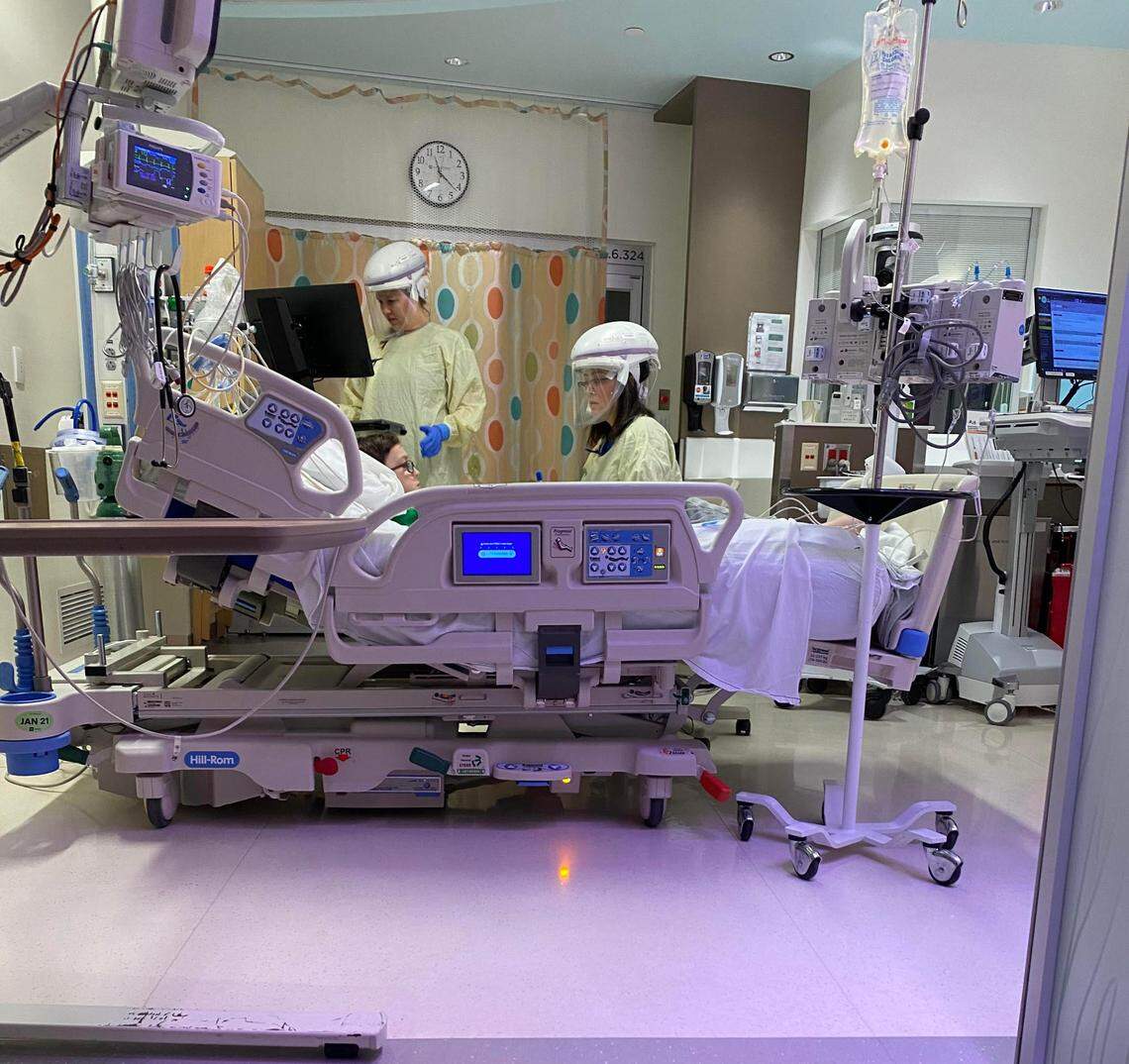
“We were suddenly surrounded by doctors and nurses and the ICU team was called in — it was about 45 minutes later, when they got him stable, that the ER nurse got his COVID test back and it was positive,” Jensen wrote. “That’s when the ER doctor told me about MIS-C and that he would be staying in the ICU.”
‘There were no good days’
Despite finally having a diagnosis for what she said was making Jonah feel so awful, Jensen said they were far from out of the woods.
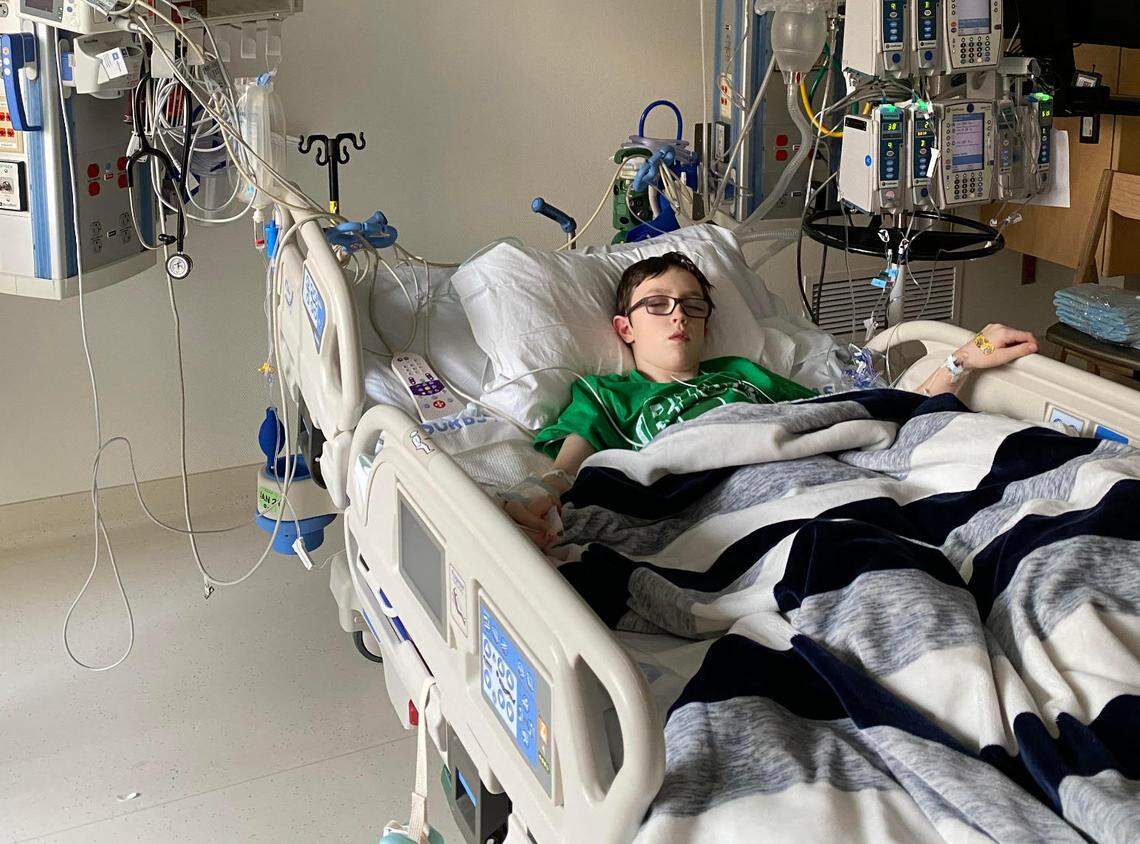
“The ICU stay was the worst. It seemed every inch of his arm was littered with IVs or PICC lines,” she wrote. “They were painful. He wasn’t allowed to eat or drink for the first day and a half and it was awful for him because the MIS-C caused so much dryness and cracking of his lips on its own.”
On top of it, Jensen said Jonah was heavily medicated — causing him to be “either tired or aggressive” — and physically weak because of the impact the MIS-C was having on his vascular system and heart. Jonah slept a lot, and when he was awake, he cried and complained about discomfort.
“There were no good days,” Jensen wrote.
The stay was equally hard for Jensen, who because of COVID restrictions at Seattle Children’s, was the only family member allowed to stay with Jonah. She described the experience as “overwhelming,” as she had to watch her 10-year-old with three IVs and two PICC lines fight for his life.
At one point, she said she counted 11 medications running at one time.
“It was absolutely the most terrifying experience in my life as a parent,” Jensen wrote. “There were many moments, especially in the first 48 hours, that I wondered if he was going to make it. To watch your perfectly healthy little boy suddenly lifeless and hooked up to more machines and medications than you’ve ever seen in one person, be told over and over by doctors and nurses that his heart is weak and they’re having trouble stabilizing his blood pressure, that he could have long-term heart complications from this… it was devastating.
“I’m his mom and I couldn’t help him. It was an experience beyond anything I can describe.”

‘They saved his life’
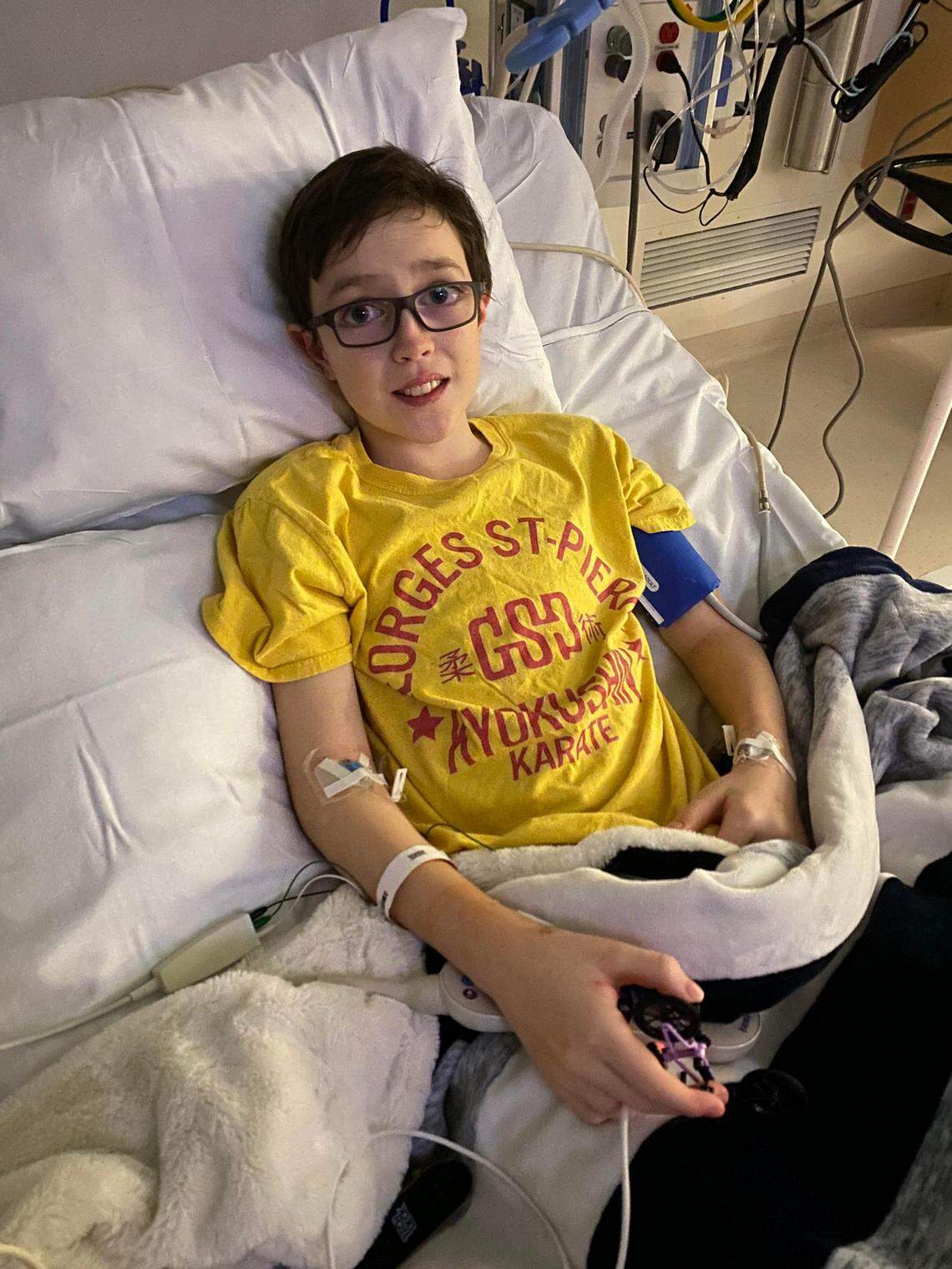
Jonah eventually began to improve and was moved out of the Seattle Children’s ICU to the Special Care Unit, Jensen said, but he remained on two medications to help stabilize his blood pressure, which was low throughout his stay.
On Jan. 3, Jonah got to come home.
“Being home has been wonderful,” Jensen wrote. “Jonah is still very weak and on high doses of medication, but every day he gets just a little bit better.”
Jonah has been able to return to Xbox for small amounts of time, Jensen said, though other activities have had to wait as both she and Jonah remain “exhausted from the whole ordeal.”
Jensen said she has received a lot of outreach from the Bellingham community, adding it’s “been uplifting and a great help.”
Jonah remains on two oral medications to held reduce his inflammation and prevent blood clotting, Jensen said, and he will have to have regular blood draws and cardiologist visits in Seattle because he remains at risk for long-term heart complications due to his battle with MIS-C. She reported Friday that his first heart check-up was promising and that he is returning to regular, every-day life a little more with every passing day.
“Overall, Children’s was great,” Jensen wrote. “They knew what they were doing every step of the way. They saved his life.”
‘Real wake-up call”
Before Jonah developed the fever on Christmas Eve, Jensen said she was one of the many people who believe COVID doesn’t have the same impact on children as it does older, more vulnerable adults.
“While MIS-C is a very rare complication, you never know whether it will affect your child or not,” Jensen said. “I think it’s important that we continue to follow social distance guidelines, and while certain mandates are inconvenient, I learned the hard way why they are in place. We had no idea Jonah ever had COVID; MIS-C occurs three weeks to a month after a child recovers from it.”
Additionally, Jensen said she and her family were already taking proper precautions.
“We don’t go many places, we always wear masks when in public, we haven’t (had) visitors outside our immediate family,” Jensen said. “No one we were around had symptoms or knowingly had COVID. The idea that he had it and have no idea on where, when, or how he got it, and then acquiring a serious complication from it was a real wake-up call. Jonah could have died and is still at risk of lifelong heart complications from this.
“It’s mind-blowing and really showed me that it could literally happen to anyone.”
Jensen said she also hoped sharing Jonah’s story would help inform others, including healthcare providers, about the dangers of MIS-C for children.
Even after Jonah was diagnosed with the disease Dec. 29 at Seattle Children’s, she said she spoke to staff in Bellingham that had never heard of MIS-C.
“I feel like the second ER doctor was very close, as the symptoms mimic Kawasaki Disease, but it seems to me that if he’d known about MIS-C, he never should have sent us home with those symptoms despite a negative COVID test,” Jensen said.
This story was originally published January 17, 2021 at 5:00 AM with the headline "‘I’m his mom and I couldn’t help him’ — Bellingham 10-year-old wins battle with COVID illness."
