
Aging Hanford tank is leaking radioactive waste into the ground, feds say
An underground Hanford tank holding 123,000 gallons of radioactive waste appears to be leaking contaminated liquid into the ground, according to the Department of Energy.
This is the second of Hanford’s 149 single-shell tanks believed to be currently leaking waste, although in the past 67 tanks are suspected of leaking.
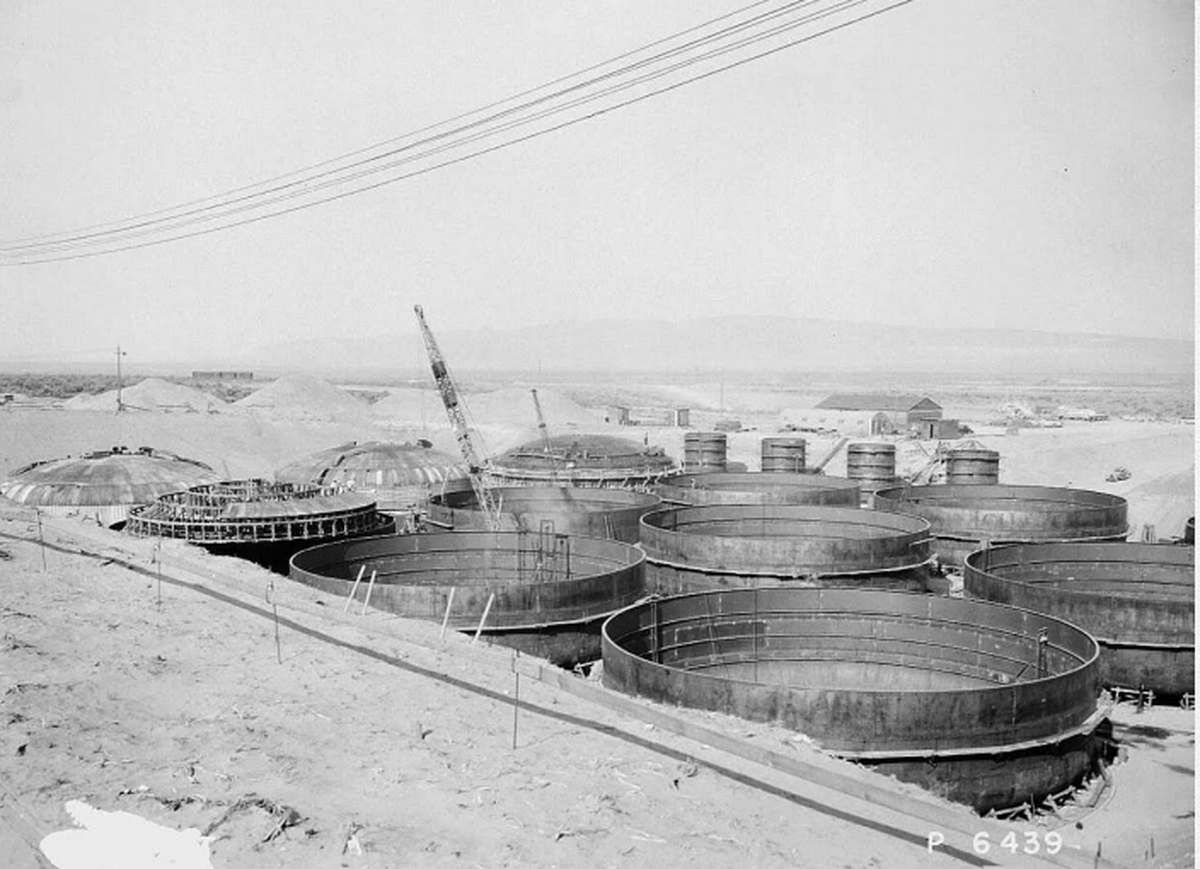
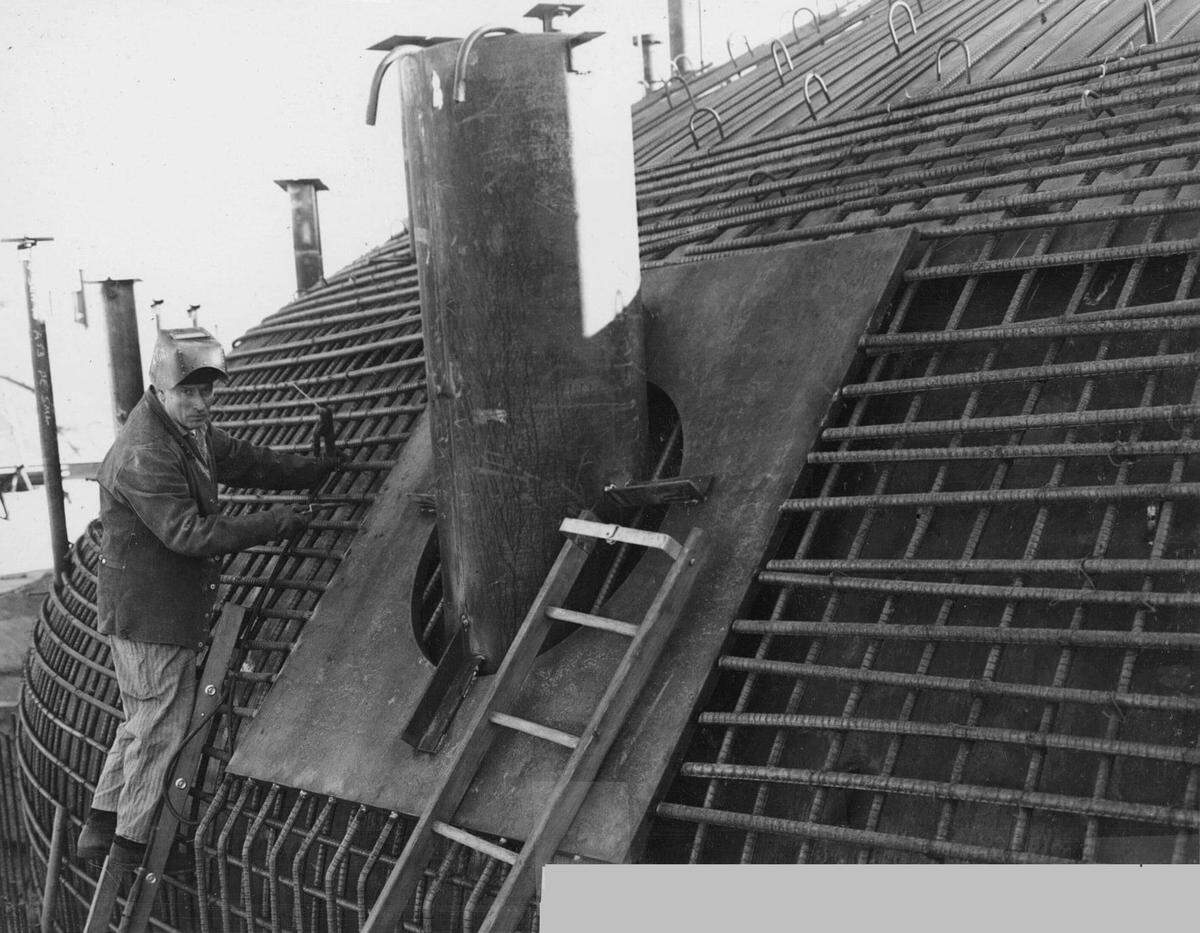
The most recently discovered leaker is Tank B-109, which was one of the earliest waste storage tanks built. It was constructed during World War II and received waste from Hanford site operations from 1946 to 1976.
Hanford’s 149 single-shell tanks were built to hold a mix of high-level radioactive and other hazardous chemical waste from chemically processing irradiated uranium to remove plutonium.
The Hanford site in Eastern Washington was used from WWII through the Cold War to produce about two-thirds of the plutonium for the nation’s nuclear weapons program.
The Washington state Department of Ecology and the U.S. Environmental Protection Agency, both Hanford regulators, were notified Thursday morning that the tank was likely leaking.
“There is no increased health or safety risk to Hanford workers or the public,” the Department of Energy said in a message to Hanford site employees Thursday.
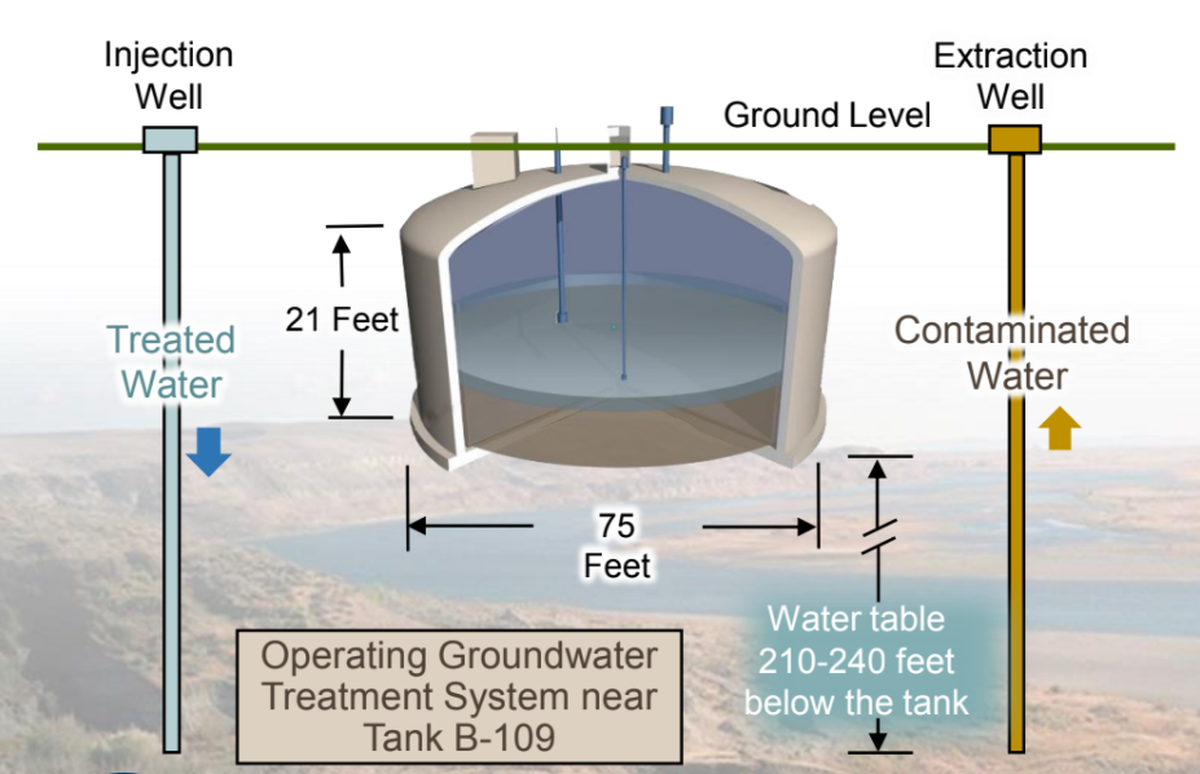
Any contamination from the leak is expected to take more than 25 years to reach the water table, which is about 210 to 240 feet below the tank.
The groundwater flows slowly over decades toward the Columbia River from central Hanford, where Tank B-109 is located.
Up to 3,000 gallons leaked
Tank B-109 was initially observed to be leaking up to 3.5 gallons of radioactive liquid a day, but may be leaking far less on many days, according to DOE.
At a maximum it may have leaked about 3,000 gallons of waste, said Ben Harp, the deputy manager of the DOE Office of River Protection.
It appears to be leaking waste at a higher rate than the other single-shell tank that has had a leak confirmed in recent years.
In 2013 when DOE confirmed that Tank T-111 was leaking, it said liquid levels were decreasing at a rate of 150 to 300 gallons a year, or half a gallon to a gallon a day.
From the 1990s to about 2005, DOE removed as much pumpable liquid as possible from the single-shell tanks, leaving radioactive sludge and saltcake in the tanks to address concerns about leaks.
“This is one we did empty out,” Harp said of Tank B-109.
DOE estimates that the tank, which has a capacity of 530,000 gallons, has about 2,000 gallons of liquid waste sitting above the sludge and saltcake solids that it holds.
In addition, an estimated 13,000 gallons of liquids may be held up in the tank’s solid waste, similar to the way a sponge holds water, Harp said.
Tank B-109 is not one of the previously suspected leakers.
Hanford soil contaminated
But it is in an area that has soil already contaminated with radioactive material.
“Contamination in this area is not a new issue and mitigation actions have been in place for decades,” DOE said in its message to Hanford employees.
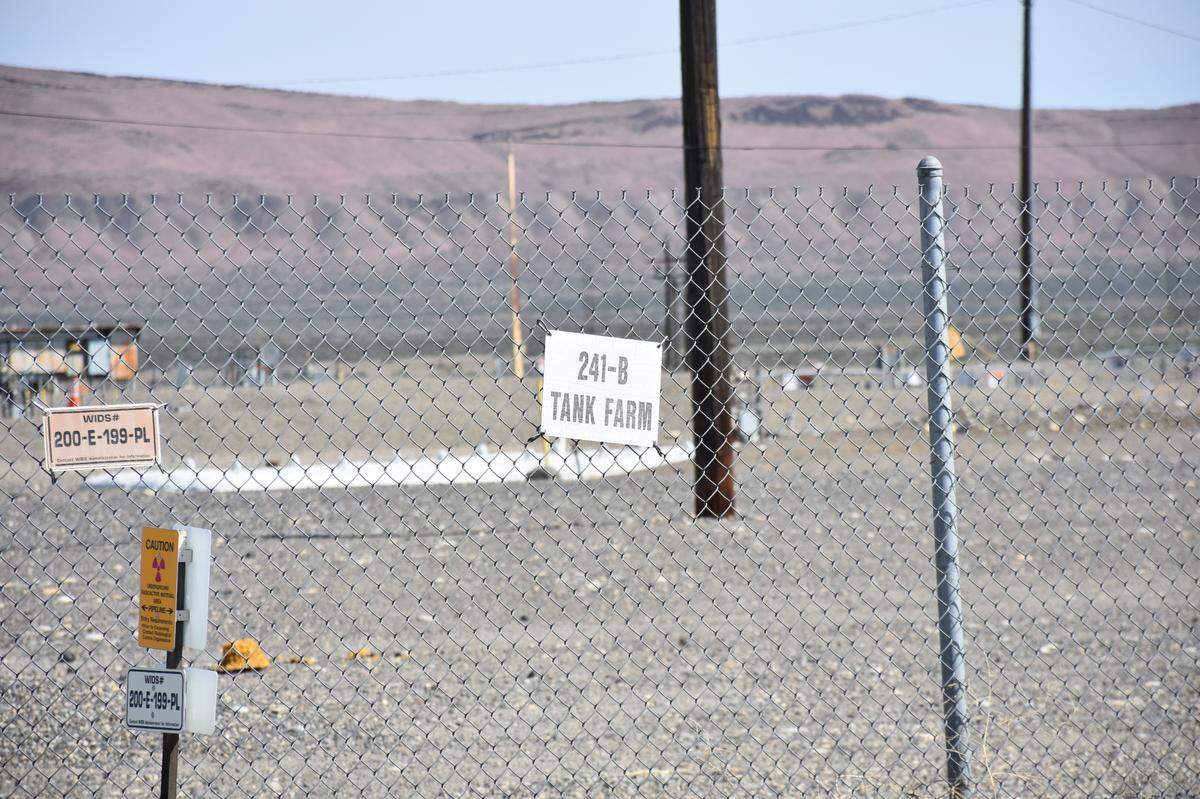
The 16 underground tanks that make up the B Tank Farm had 10 assumed leaker tanks previously. They are estimated to have leaked or spilled 157,000 gallons of liquid tank waste into the soil beneath them.
In addition two adjoining Tank Farms, the BX and BY tank farms with a total of 24 single-shell tanks, are believed to have leaked or spilled about 200,000 gallons of waste in the past.
However, the largest source of contamination comes from the historic practice of disposing of radioactive liquids in trenches and tile fields. At the B, BX and BY tank farms, an estimated 51 million gallons of contaminated liquids were poured into the ground.
With some contamination already reaching groundwater in central Hanford, DOE is pumping up contaminated water and cleaning it at the Hanford 200 West Pump and Treat plant.
One of the extraction wells to pump up contaminated groundwater is near Tank B-109.
Hanford officials are concerned about the radioactive iodine and technetium in the leaking waste because it does not bind to the soil like other radioactive isotopes in the waste, making it move toward groundwater faster.
Both are radioactive isotopes the 200 West Pump and Treat plant was designed to remove from groundwater.
Tank leak suspected
The leak from Tank B-109 was first suspected in March 2019 by DOE tank farm contractor Washington River Protection Solutions after a normal reading in December 2018.
There appeared to be a drop in the level of the liquid sitting atop solid waste, but monthly checks that started in March 2019 showed the level stable until July 2020. Then another drop was detected.
The level of waste in the tanks can fluctuate as small amounts of liquid from precipitation may enter the underground tanks, liquid evaporates, and waste moves and settles.
In July 2020 a formal leak assessment was launched. It included continued monthly checks of waste levels and lowering cameras through risers, or pipes from inside the tank to the ground surface, to observe the surface of the waste.
The final step in determining that the tank likely was leaking was a meeting of a contractor technical review board on Thursday to review data and findings.
What’s next for leak
DOE has some possible methods to address the leak and resulting soil contamination, Harp said.
DOE has installed three ground-level plastic or asphalt barriers over areas of two tank farms to prevent rain and snow melt from carrying contamination already in the soil deeper toward groundwater.
A barrier also could be installed over the B Tank Farm.
There is a barrier installed over the T Tank Farm, which was constructed before the leak from Tank T-111 was detected.
An exhauster also was installed in Tank T-111 to help evaporate tank liquids.
Less likely is removing as much liquid waste as possible from the tank and mixing it with a concrete-like grout for disposal, possibly outside of Washington state.
Emptying the tank is possible, but would be expensive.
To date most of the waste from at least 17 of the site’s 149 single-shell tanks have been emptied into sturdier and newer double-shell tanks until the waste can be treated for disposal.
DOE is working to start glassifying some of Hanford’s liquid tank at the $17 billion vitrification plant by the end of 2023, preparing the waste for permanent disposal.
Hanford has 27 double-shell tanks after a 28th tank was emptied and taken out of service when it sprang a leak between its shells, with the waste believed to be trapped between shells as the tank was designed to do.
However, Tank B-109 is in the 200 East Area about two miles from a double-shell tank.
Infrastructure associated with the tank dates from the 1940s. Constructing piping to move the waste from Tank B-109 to a double-shell tank could cost hundreds of millions of dollars, Harp said.
Now DOE is working on emptying single-shell tanks with updated infrastructure in place.
This story was originally published April 29, 2021 at 9:00 AM with the headline "Aging Hanford tank is leaking radioactive waste into the ground, feds say."