
Start the countdown. Washington astronaut blasts off this month to live in space
Kayla Barron is about to embark on the trip of a lifetime around the globe — nearly 3,000 times.
She’s been preparing for a few years with intense physical, psychological and technical training.
But for the 2006 Richland High grad the reality that she’s about to live in space may not fully hit until the rocket booster lights and she’s on her way.
Barron is one of four SpaceX Crew-3 astronauts who will leave earth at the end of October for a 6-month science mission aboard the International Space Station.
“Our crew definitely is getting really excited. We feel ready to go as a team and as a crew, and as the larger NASA and SpaceX teams that are supporting our launch,” Barron recently told the Tri-City Herald in a phone interview.
“But I’m not sure I’ll really believe it until we climb into the capsule on launch day and start the countdown.”
NASA and SpaceX just announced the launch is set for 2:43 a.m. EDT Oct. 30 (11:43 p.m. PDT Oct. 29), with a backup launch time of 2:21 a.m. EDT on Halloween (11:21 p.m. PDT Oct. 30).
The SpaceX Crew Dragon spacecraft and Falcon 9 rocket will launch at Kennedy Space Center in Florida. They are going as part of NASA’s Commercial Crew Program.
Barron is a mission specialist who will monitor the launch and re-entry phases of the flight. Once aboard the ISS, she will become a flight engineer for Expedition 66.
The rest of the crew is: Raja Chari, spacecraft commander; Tom Marshburn, pilot; and Matthias Maurer, mission specialist.
Maurer is a German astronaut with the ESA, or European Space Agency.
Aside from Marshburn, who’s making his third spaceflight, this is will be a first for the rest of the crew.
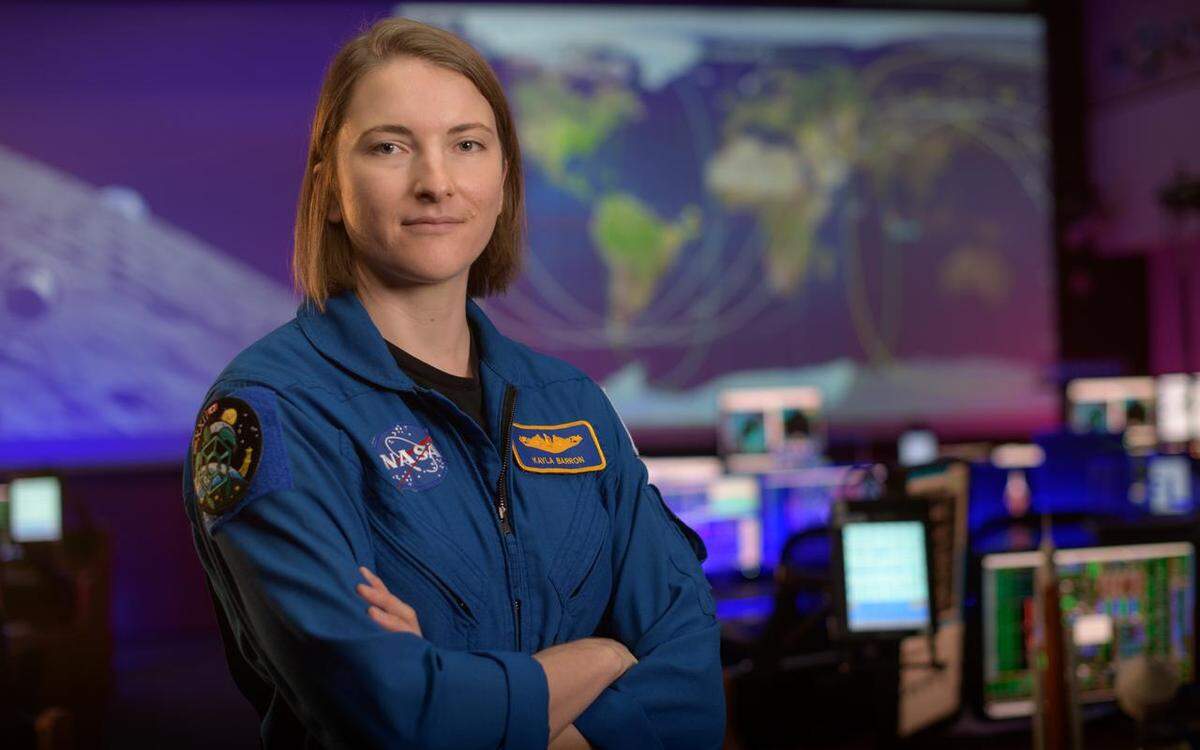
‘Having big goals’
Barron didn’t dream of going to space as a child, but she knew at a young age she wanted to join the military.
“It’s important to allow yourself the freedom to take things one step at a time,” she said. “I think it’s important to dream and have big goals and things that you’re shooting for, but ... where I expected to be as a kid is different than the path I ended up taking, because along the way I was always evaluating the set of opportunities in front of me.”
Barron said she wanted opportunities that were the most challenging and developmental, so she could work on her weaknesses while continuing to develop her strengths.
“I wanted to make a difference and I wanted to contribute to something that really mattered to me,” she said. “So I looked for things that would push me but also that I cared a lot about. Because doing hard things that you don’t like is terrible, but doing hard things that you’re passionate about is wonderful.”
And key, she added, is to never lose the sense of curiosity and willingness to dream or push herself to the next adventure.
Barron’s parents, Lauri and Scott Sax, still live in Richland.
After graduating from Richland High, Barron earned a bachelor’s degree in systems engineering from the U.S. Naval Academy. She was commissioned as a Navy officer in 2010 and went on to earn a master’s degree in nuclear engineering from the University of Cambridge in England as a 2010 Gates Cambridge Scholar.
As a Submarine Warfare Officer, she was a member of the first class of women commissioned into the submarine community. She was assigned to the USS Maine, a ballistic missile submarine, and did three strategic deterrent patrols.
New challenges
Barron said it was only after her first tour aboard a submarine that she had a chance meeting with an astronaut who’d help build the early space station.
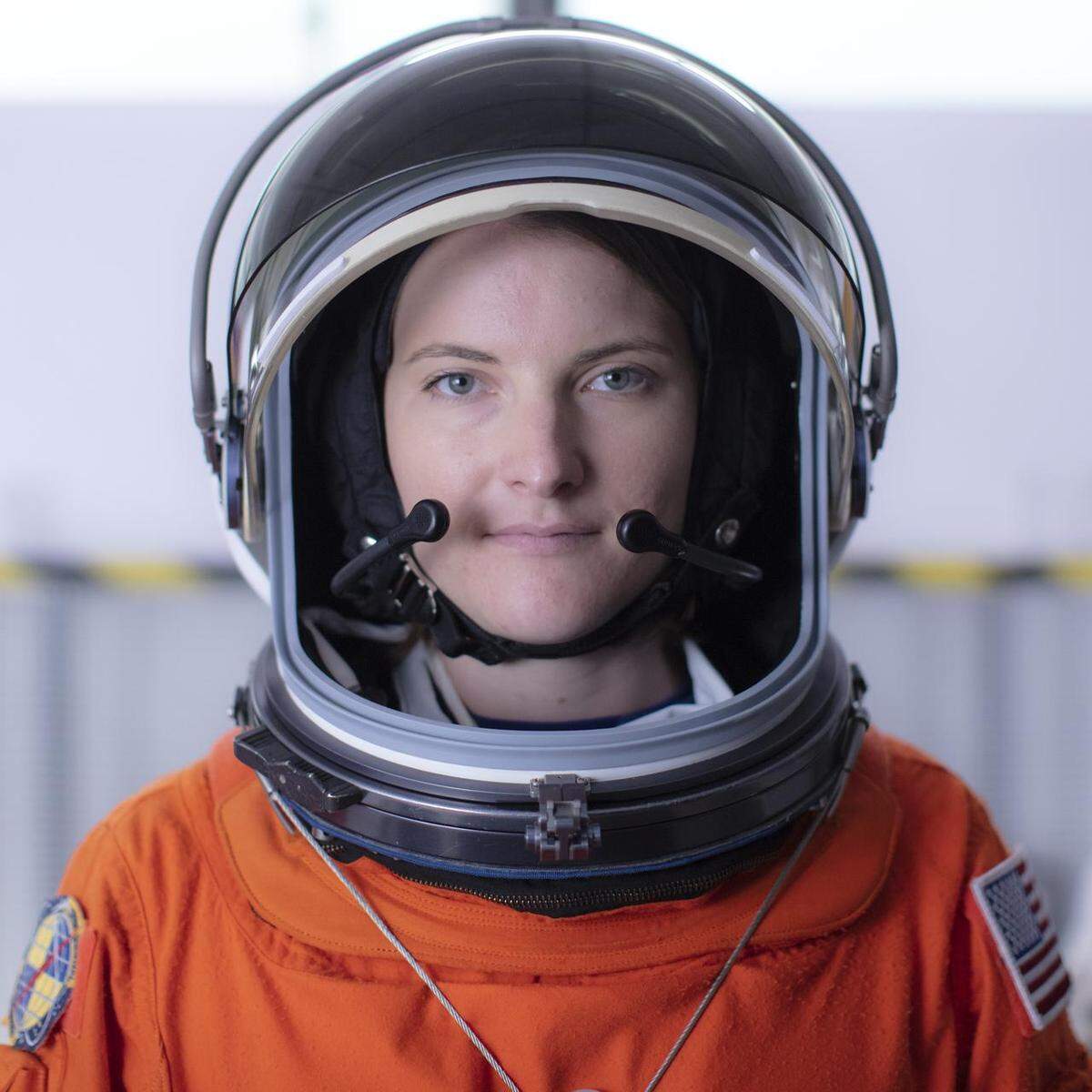
When Barron heard about the engineering challenges that crew had faced and the teamwork required to succeed in a place where humans are not really supposed to be, she connected to her time on a submarine and decided to apply.
Barron credits the teachers, coaches, professors and mentors who pushed her along the way to believe in herself.
“It’s easy to talk yourself out of those things and kind of get nervous about those challenges,” said Barron. “But I’ve had fantastic influences in my life and in my family ... who always encouraged me to go for it ... and not to expect that I would always do everything right and always succeed. That failing is OK, that you can learn from those challenges as well.”
“I definitely feel like I didn’t get here by myself,” she added.
Barron was selected to join the 2017 Astronaut Candidate class.
Now, she’s about to join a select group of astronauts who have lived on Earth, under the sea and in space.
“It does feel like a really unique connection,” she said. “I’m constantly finding new parallels between what it takes to live, work and accomplish a mission aboard a submarine and in space.”
Space station
The International Space Station is a microgravity and space environment research laboratory that has been in low-Earth orbit for nearly 23 years. It circles Earth every 90 minutes.
In preparing to live aboard the space station, Barron and the crew have trained to walk in space, operate robotics and collect samples for ongoing scientific research.
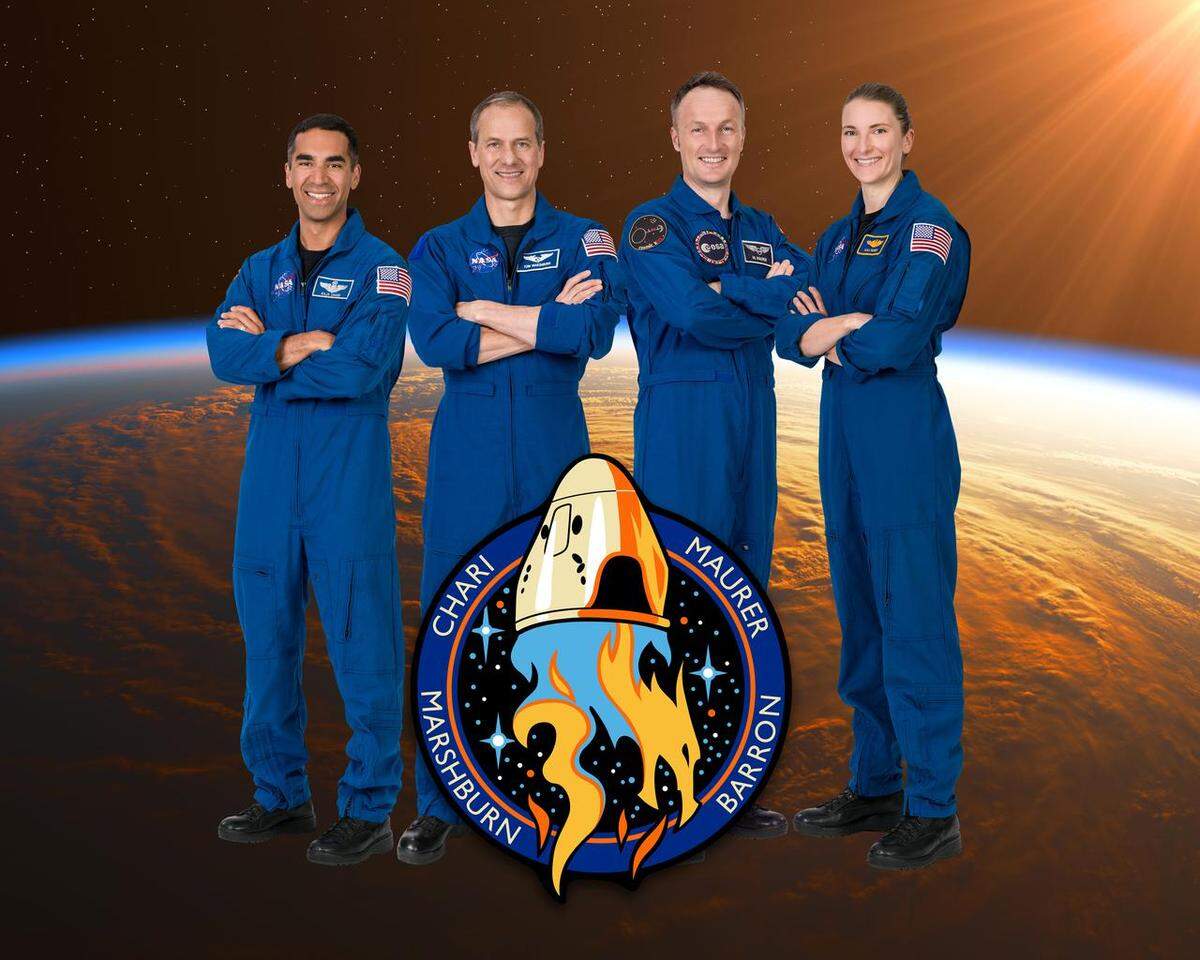
They’ve trained not only for normal situations but emergency response situations — to expect the unexpected.
The majority of the training has been in Houston at NASA’s Johnson Space Center and at SpaceX in Hawthorne, Calif. The crew also traveled to Germany and Russia a few times to train with their international partner agencies, and did remote training with the Japanese space agency due to COVID concerns.
She has been staying in shape, and thus staying healthy, by weightlifting, cycling and running.
But outside of the normal workday prep, she’s also trying to get herself and her family ready for this experience “that could be hard to relate to, where you’re taking some risks on and stuff like that.”
Barron, who is married, said it may be easier for some people to relate given the ongoing COVID-19 pandemic that has people used to staying in touch from a distance, instead of getting together in person.
Home life
Her husband, Tom Barron, was in the Army for 10 years. Both of them have experienced being deployed, and both of them have been at home while the other was gone.
“I think a lot of our context for preparing for this and thinking about it comes from those experiences of being in the military,” she said. “I think we’ve both learned that it’s always harder to be the person at home because, when you’re the one out doing that kind of work, you know everything that’s happening. You’ve trained for it, prepared for it, so for you, you’re in your element.”
Meanwhile, the person at home doesn’t have real-time access to the same information.
But Barron said they feel lucky because of the amazing resources aboard the space station. She can call Tom over an internet protocol phone any time she wants, though there will be a slight delay, and she can video chat with him once a week on the weekend.
“We have the ability to talk to each other almost as much as we have time to and want to,” she said. She’s also planning to share her experiences through journaling and emails.
There will be a short crew handover period with the SpaceX Crew-2 team scheduled to leave the space station in mid-November.
Space visitors
Barron said they also will be welcoming visitors during her 6-month stay.
They include two Japanese private citizens who partnered with the Russian space agency to travel to space for a couple weeks on board a Soyuz, and a 4-person crew facilitated by NASA aboard a SpaceX Dragon as part of Axiom Space.
The first mission of private astronauts from the United States will visit for eight days.
“This is kind of unique because it’s definitely kind of the start of this new era where we’re really taking the public-private partnership opportunities to the next level, and allowing private entities like Axiom and SpaceX to fly private customers to the space station,” said Barron.
“It’s definitely a really cool thing to be a part of. It’s been cool to watch the success of the Commercial Crew Program and have SpaceX flying NASA astronauts to the space station every six months now has been really exciting,” she continued. “This is just kind of the next phase of bringing a lot of private entities into low-Earth orbit.”
NASA is encouraging that, said Barron, so then they can focus efforts on returning to the moon as part of the Artemis program, and eventually traveling on to Mars.
“We’re kind of ready to hand over low-Earth orbit operations to our private partners so that at NASA we can focus on exploration again,” she said. “... Unlike Apollo, we’re hoping to go to the moon to stay. We want to build permanent habitats. We want to explore new areas of the moon.”
Barron said it is “pretty surreal” she is about to take this first step in what she hopes will lead to a future trip for herself to either orbit or land on the moon.
“It’s hard to believe sometimes that it’s true, it’s real. That I’m actually going to be going to space in a little over a month,” she said.
“You spend years training, and NASA has gotten good at finding opportunities for good analog and simulator training that feel pretty real. You kind of get into this rhythm where it feels like your job is to pretend to be in space, and so it’s hard to imagine that you’re really going to do it finally.”
This story was originally published October 2, 2021 at 2:11 PM with the headline "Start the countdown. Washington astronaut blasts off this month to live in space."