Northwest Indian Fisheries Commission elects Quinault leader as chair
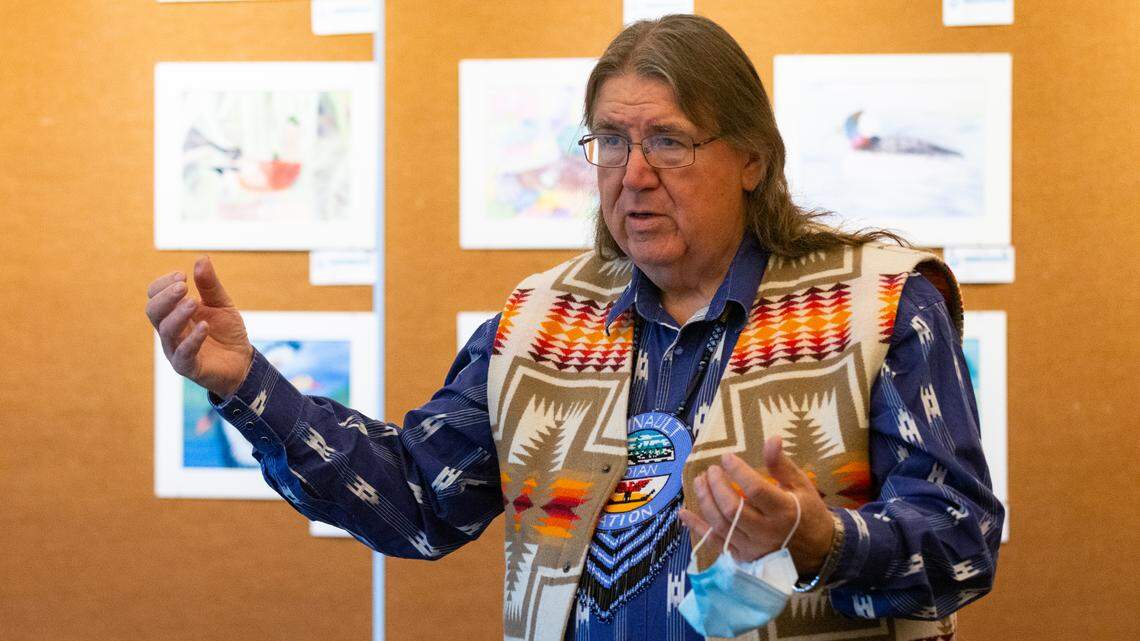
The Northwest Indian Fisheries Commission has elected Ed Johnstone of the Quinault Indian Nation as its chairperson.
“The treaty tribes of the Northwest Indian Fisheries Commission have a responsibility to make tough decisions as stewards for the resource and to work with our state natural resources co-managers to protect fish for our children and their children,” Johnstone said in a news release. “Fish and fishing have been an inseparable part of my life for as long as I can remember, providing food, income and spiritual connection to being Quinault.”
Johnstone succeeds Lorraine Loomis — who, before her death in August, dedicated her life to protecting treaty fishing rights as the Northwest Indian Fisheries Commission chairperson and Swinomish fisheries manager. Serving the remainder of her term through May 2022, Johnstone will continue to carry on her work and that of fisherman, environmental leader and treaty rights activist Billy Frank Jr. — chair of the commission for 30 years until his death in 2014.
“Being chosen to follow the footsteps left by Billy and Lorraine is a great honor and I take the responsibility seriously,” Johnstone said. “The challenges we face today are huge, but not insurmountable. Tribes can’t go it alone. We have to tell others of who we are and what we stand for, remind our federal trustees of their responsibilities, and forge enduring partnerships to succeed.”
Johnstone has extensive experience previously representing the Quinault Indian Nation as the fisheries policy spokesperson, a Tribal council member and the Tribe’s commissioner to the Northwest Indian Fisheries Commission. He also serves on the Southern Panel of the Pacific Salmon Commission and the Intergovernmental Policy Council — a forum of Tribal and state co-managers of the ocean area that includes the Olympic Coast National Marine Sanctuary.
“In the 21 years I’ve represented the Quinault Nation, I’ve learned that tribes have to be at the table to protect our treaty rights and the fisheries resource,” Johnstone said.
He is also well-versed in the management of salmon, steelhead, crab, clams, black cod and halibut.
“Fisheries management has become more challenging every year with the ongoing loss of habitat, declining salmon runs and impacts of climate change. Sometimes, it seems like we’re losing more than we’re gaining, and we need to run just to try to keep up, but we have to keep fighting for those who don’t have a voice – the generations of fish and people still unborn.”
In October, Johnstone underscored the importance of working with Tribes to protect fish, the environment and treaty rights in a consultation with Brenda Mallory, chair of the White House Council on Environmental Quality, and later at the Centennial Accord Meeting — an annual meeting attended by the governor and representatives from the state’s 29 federally recognized Tribes and a few other Pacific Northwest Tribes to focus on cementing the government-to-government relationships.
BEHIND THE STORY
MOREPlease help support this reporting
Natasha Brennan covers Washington state tribes’ impact on our local communities, environment and politics, as well as traditions, culture and equity issues, for McClatchy media companies in Bellingham, Olympia, Tacoma and Tri-Cities.
She joins us in partnership with Report for America, which pays a portion of reporters’ salaries. You can help support this reporting at bellinghamherald.com/donate. Donations are tax-deductible through Journalism Funding Partners.
You can sign up for her weekly newsletter here.
“In Washington, we’re about ground zero for the impacts of climate change. Our Tribes don’t want to just have meetings, we want action — to move the dial, ” Johnstone said at the meeting with Mallory.
Headquartered in Olympia, the Northwest Indian Fisheries Commission is a support service organization for the 20 treaty Tribes in western Washington that co-manage the region’s natural resources with the state. The commission provides a forum for Tribes to address shared natural resources management concerns and to speak with a unified voice as well as services such as fisheries management, habitat protection and fish health.
This story was originally published December 10, 2021 at 1:27 PM with the headline "Northwest Indian Fisheries Commission elects Quinault leader as chair."