
Paralyzed at 15, this WSU Tri-Cities student is fighting back
Climaco Abarca isn’t sure what he hit when he dove into the river near Burbank when he was 15.
He remembers that he didn’t touch the bottom, but he did see a lot of blood as he started sinking.
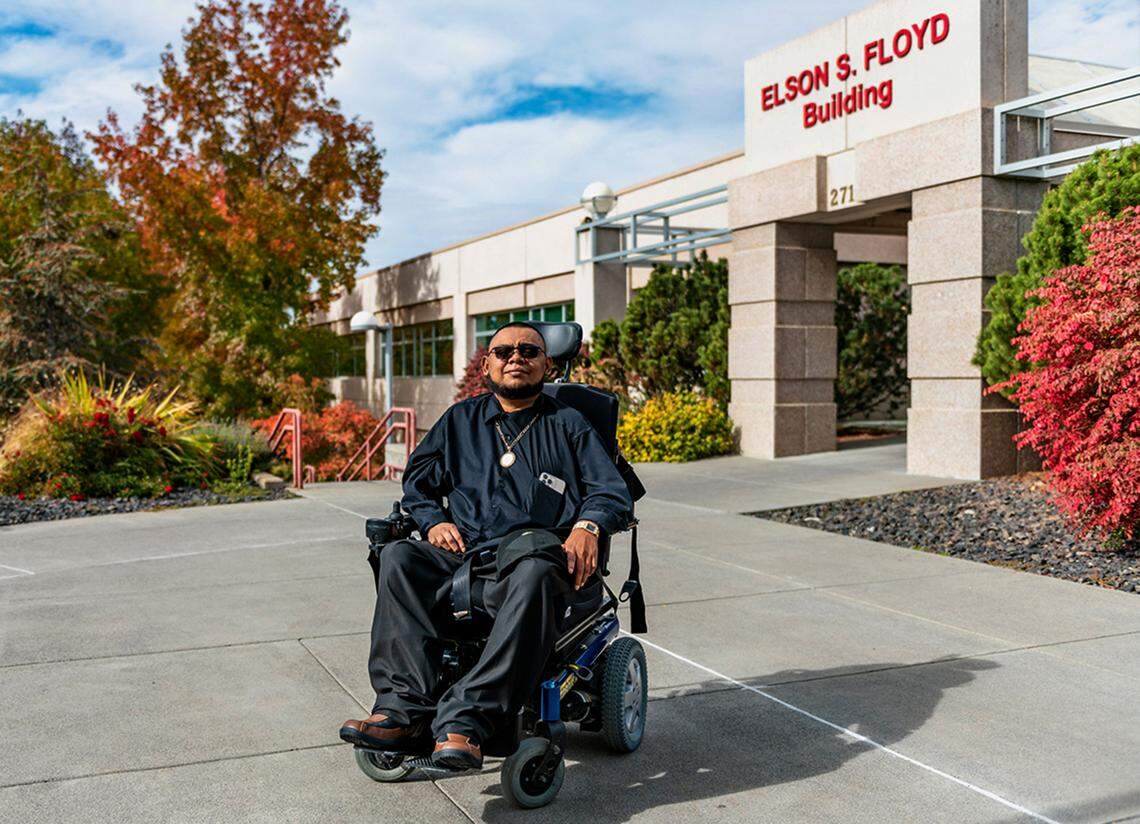
Now more than 20 years after the accident that left him paralyzed, Abarca wrapped up his first complete semester at Washington State University Tri-Cities on his way to pursuing a law degree.
“There is no way that I could live off Social Security,” he said. “Eight-hundred dollars a month doesn’t pay the bills. .... That’s the main reason I did it, so I could have a better tomorrow.”
The journey to get back here wasn’t simple for the now 36-year-old Pasco man. He’s dealt with years of fighting infections and a system didn’t let him save money for college until recently.
Abarca’s cousin saved him from drowning during that April trip to the river, but that was just the start of what would turn into a complicated recovery. He spent a month in the hospital and more time in rehabilitation.
Through hard work, he was able to get some mobility back, and returned in Pasco High School that fall.
He attended classes with the help of an aide and joined the Running Start program at Columbia Basin College, allowing him to take college courses while still in high school.
After a delay caused by his injury, he graduated in 2005. And the next year, he earned his associate’s degree from CBC.
Things were looking up for him when started at WSU Tri-Cities, but his success was soon derailed.
Decade of delays
In 2007, Abarca developed an infection on his tailbone that cut short his ability to attend classes while he got the treatment he needed.
The infection persisted off and on for years. Surgeries helped his condition for a while, but the problems would soon return.
During a period of reprieve in 2012, he tried returning to WSU, but the infection forced him to drop out again.
“I didn’t think I was ever going to finish,” he told the Herald.
Eventually he found a treatment that worked and was preparing to return to classes in 2020, but then the COVID-19 pandemic struck.
Educational costs
Abarca was able to take advantage of a federal program that lets people receiving Supplemental Security Income (SSI) to save money without fear of losing their benefits.
Without access to the Washington State ABLE Savings Plan, he wouldn’t be able to save more than $2,000.
“But with the program, you can save up more funds. It takes money you earn from your pay stubs every month and then you can use it for large purchases like school and other things. Without that program, I would never have been able to save up enough for school,” Abarca said in a WSU Tri-Cities release.
While he wasn’t able to return to class yet, Abarca still spent time volunteering.
He helped at Grace Clinic and served on the Tierra Vida Community’s homeowner’s association board. He also volunteers as an interpreter.
And he spent this past year working as a contact tracer for the Benton-Franklin Health District.
Return to class
With his heath doing well and classes back in person lon the Richland campus, Abarca was ready to return to school. He said it was important for him to show others to not give up.
“I do have my nieces. I always encourage them to do better at school and that is the only way that they can be successful in life,” he said.
After a decade away from class returning proved to be a bit of a struggle.
While it was tough, he realized his health was good, and he wasn’t going to let a lower grade discourage him. He sought out the help of the WSU Tri-Cities tutoring programs and was paired with a supplemental instructor who helped get him back on track.
“I came back to school thinking I would be where I was when I left school, but had a rude awakening about that,” he said. “You realize you have lost some of those skills you had when you were regularly taking classes. But honestly, because of the support and with the help of tutoring, I’m getting back to earning those grades I was used to earning.”
He ended the semester getting above an 80 percent in one class, and has seen success in his other two classes. He is hoping to finish his bachelor’s degree in psychology, and pursue a law degree at Gonzaga University in Spokane.
He wants to use that degree to help people like himself. When he was hurt, he didn’t find people who knew the law and could help him.
“If there is something they can do to better their situation, I want to be able to help,” he said.
For now, Abarca is preparing for another semester, and is hoping to get an internship at a law firm.
“I want people to know if you have your health, you can do it,” he said. “Things happen, but you can overcome as long as you have your health.”
This story was originally published December 26, 2021 at 5:00 AM with the headline "Paralyzed at 15, this WSU Tri-Cities student is fighting back."