
Youngest and smallest. UW helps baby born at 1.2 pounds, 12.21 inches survive
For Lizlet Robles, this last year has completely redefined the word “motherhood.”
At 11:30 p.m. on July 19, 2021, she gave birth to her third child: Savannah. It was the Kennewick couple’s first daughter.
It was an “emotional roller coaster” of a pregnancy. And it wouldn’t end after the family left the hospital.
Length: 12.21 inches.
Weight: 1.2 pounds.
Savannah came into the world an extreme preemie baby — four months premature.
At just 22 weeks gestation, her birth was extremely early compared to a full-term baby of 37-42 weeks.
If she’d been born even one year earlier, Savannah’s chances of survival would have been very little.
In January 2021, the University of Washington Medical Center-Montlake launched a new program aimed at giving extreme preemies a greater chance at living. But even then, it’s a 50% chance.
Most hospitals in the U.S. aren’t equipped and staffed with the specialists to care for extremely preterm babies born at less than 23 weeks.
She was among the youngest — and smallest — the hospital had cared for.
“Honestly, I’m forever grateful for them because they took real good care of us, always answered every question I had,” Lizlet Robles told the Tri-City Herald. “I’m just grateful for every person who took care of her and helped her out, because it’s definitely not easy going through NICU (neonatal intensive care unit).”
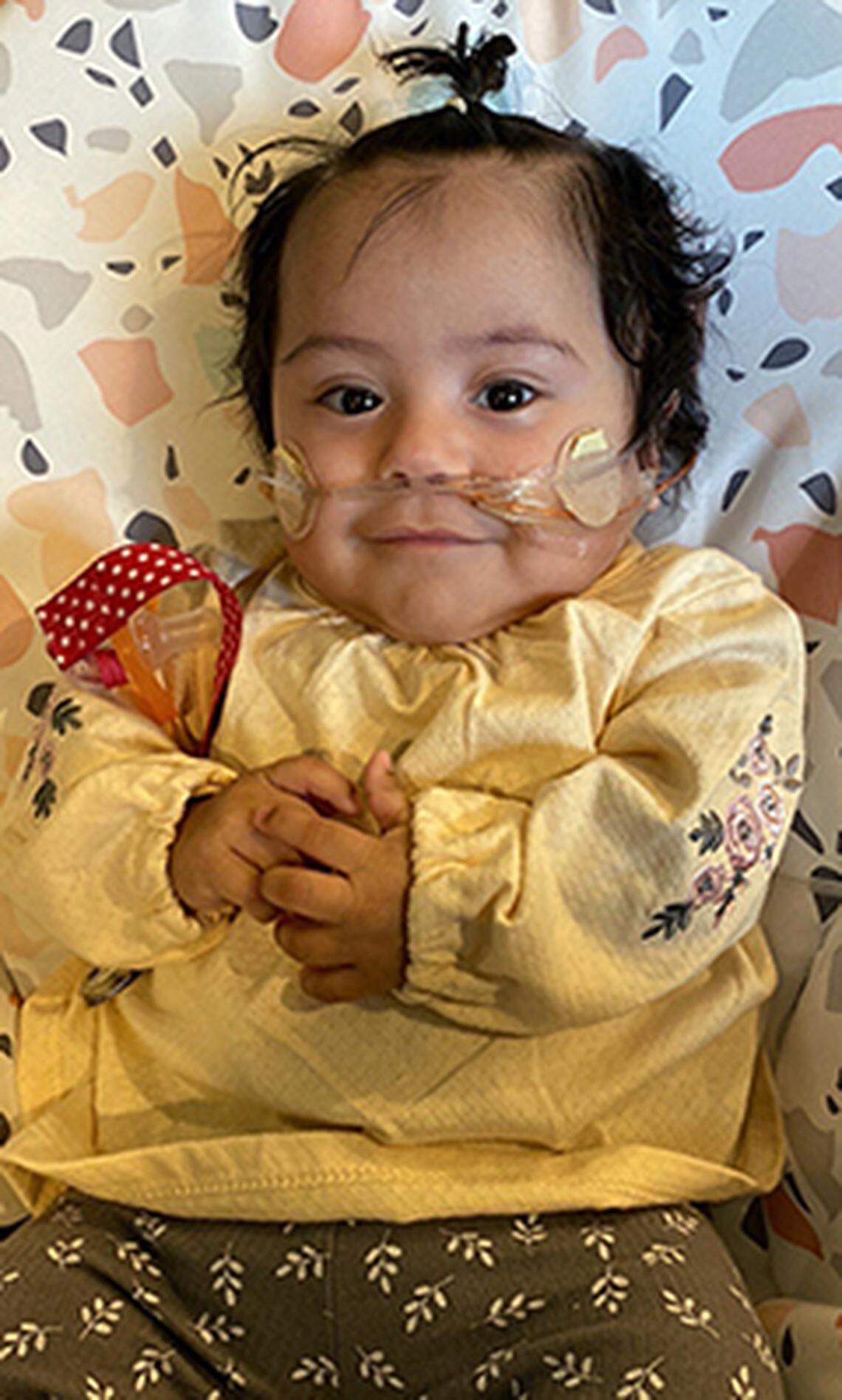
After almost six months in the hospital, away from her family, Savannah came home to the Tri-Cities for the first time on supplemental oxygen in January.
Now, on Mother’s Day, she’s looking much healthier at 17 pounds, 14 ounces.
“It just makes me happy having her home, just being together,” Robles said.
Early pregnancy
The Robles were excited to introduce their daughter into the world. Up until 21 weeks, things had gone “perfectly fine,” Robles told UW Medicine.
“After a scan, things began to feel off,” said Robles, who worked as a bank teller at the time.
A checkup with her doctor revealed her body was already preparing to give birth. She was 2 centimeters dilated — baby Savannah was almost here, and ready to meet the world.
The couple checked into UW Medical Center-Montlake after learning about the nascent program for early deliveries.
Doctors determined a procedure to close her cervix to prevent an early delivery would be too risky. So would a Cesarean section.
So, Robles gave birth to Savannah, and afterward she was immediately taken into the neonatal ICU.
“They just rushed her out,” Robles recalled. “I remember just crying and praying the whole time. It was a lot. She was born, and I didn’t get to see her 4 or 3 hours after she was born. I remember seeing her the first time and being guilty.”
Savannah was covered in bruises and had trouble breathing. She was very small, and questions about her survival still loomed.
“She was as big as my husband’s hand,” Robles said.
Delicate care
Born between 22 and 25 weeks — about five months, not even into the second trimester — extreme preemies face challenges others early-born babies may not.
They can have problems breathing because of undeveloped lungs, chronic lung damage, scarring and bowel perforations.
They often don’t survive, and when they do they face health risks including cerebral palsy and development disabilities.
Delicate and detailed care is needed for these tiny patients: small breathing tubes, special ventilators, special fluids and nutrients, incubators to retain humidity and constant attention from NICU staff.
UW Medical Center-Montlake NICU is the only center in the Pacific Northwest offering this type of care.
“We have developed a team of neonatologists, respiratory therapists, nurses and others dedicated to taking care of these extremely preterm babies,” Dr. Thomas Strandfjord, a UW neonatologist at the Montlake NICU, said in a statement.
UW also helps parents with emotional support and with resources to guide the process. This program, though, is only available to babies as undeveloped as Savannah was.
She’s certainly the exception for babies her age, Strandfjord said.
“Savannah shows what’s possible,” he said in a statement. “It’s nice we can offer this option. Until recently we’d say there’s no hope, but now there is some hope. It’s still a choice, it’s still a challenge, but we give the parents everything they need to make a decision.”
Savannah had to be transferred to Seattle Children’s Hospital to fix small perforations in her intestines.
Continued hurdles
The Robles say they’ve finally entered into a routine after several months of confusion, worry, prayer and hope.
Recently, 10-month-old Savannah was completely weened off her feeding tube.
She still needs an oxygen supplement while she sleeps, though. As her lungs grow stronger, she eventually won’t need that too.
The family is easing into a sense of normalcy. Robles is just starting to think about what her daughter’s first birthday party will look like. It’ll have to be an “unforgettable” party, she said, and likely outside due to continuing COVID concerns.
Her sons, 11 and 13, are proud brothers and excited to help care for her.
Robles gave this advice to mothers: “Take it day by day. Just talk to them and spend every day like it’s the last day.”
“Just enjoy every moment you have with them, because they definitely are strong babies.”
This story was originally published May 7, 2022 at 2:03 PM with the headline "Youngest and smallest. UW helps baby born at 1.2 pounds, 12.21 inches survive."
