‘Big feelings’. How one Tri-Cities after-school program teaches tweens to manage emotions
Middle school is hard. It was hard before the pandemic, and it’s especially hard now as students wrap their first “normal” school year up in three years.
Most kids currently in middle school haven’t spent a full year, without interruptions, in a classroom since they were 8 or 9.
So with all the stress of life and social changes at that age, they now have to adjust to a changed world without the bonding opportunities that the last few years should have afforded them.
During a recent after-school activity at the Boys and Girls Club’s Kennewick clubhouse, a group of middle school girls learned to build coping skills for when they’re worried, stressed or anxious.
It’s part of a 7-week course led by the organizations director of behavior health, Jenny Vollmer.
Big feelings
Each week Vollmer, a former teacher and school counselor, and staff lead the girls through fun and engaging activities designed to teach them how to recognize their feelings, share and then work through them in healthy ways. The group is 5th-grade girls going into middle school next school year and current 6th-graders.
“We are working on a culmination of things we’ve been focusing on the last month or so,” Vollmer said. “(We’re) talking about our big feelings we may be experiencing on the inside and really narrowing in on some self regulation strategies that these girls can do on their own to calm themselves down when they’re feeling those big emotions, those overwhelming feelings.”
“It really helps that nervous system get centered again and learn that they are in control of their feelings and emotions, and that all feelings and emotions are OK, it’s really what we do with those feelings and emotions that matter.”
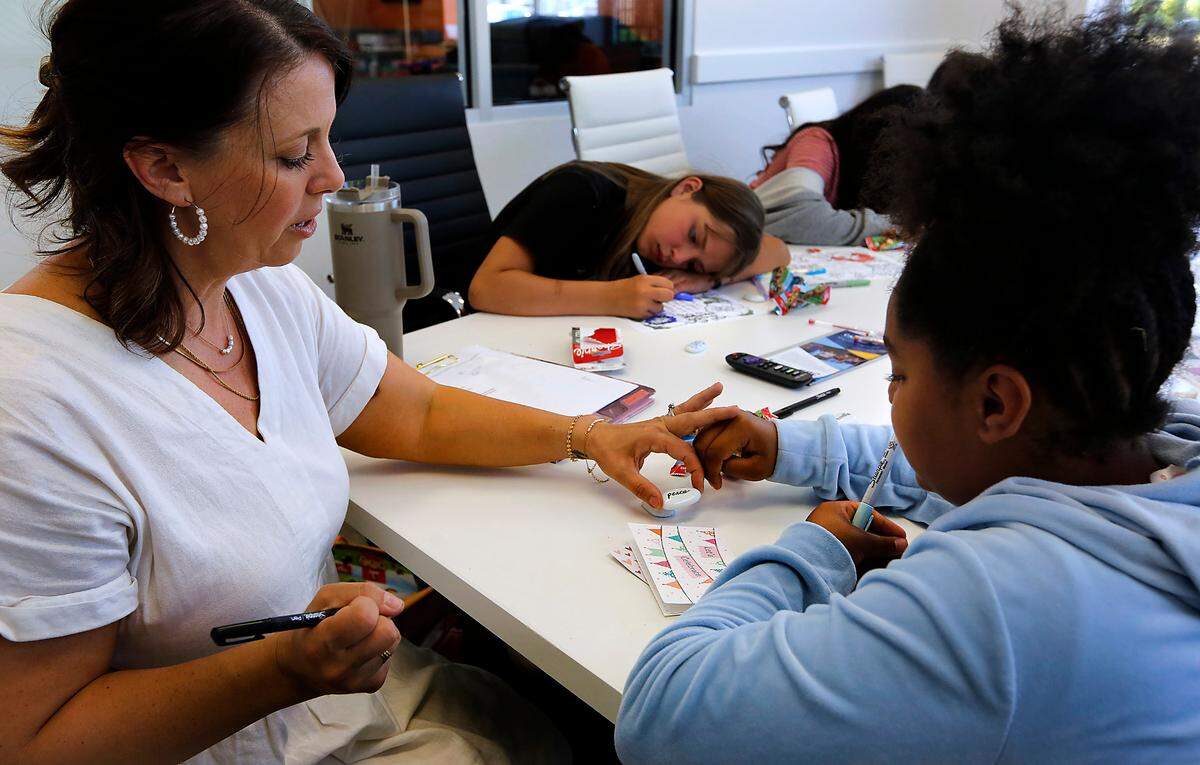
During the activity, the girls each took a clay stone and painted a message for themselves on it, to help ground them when they are stressed.
“Be yourself’”
“Be kind’”
“Imperfect’”
Each message holds a special meaning for the girls, helping to remind them of the coping skills they’ve gained through the activities.
They’ll keep the rocks in their pockets, as a physical reminder that they are strong, and capable, and can regulate their emotions.
“I’ve been running all sorts of different small groups at our campuses, of 5 to 10 kids focusing around different themes and topics,” Vollmer said. “Typically our branch director will identify a specific issue that they see with a particular group of kids and ask me … to come in and run a small group setting for a while.”
Vollmer said that over the past five weeks she has really seen the group open up and begin to acknowledge their feelings, and learn how to work through them.
At first, she said, it was a struggle to just get them to stay in the room for 15 to 20 minutes, but now they look forward to the half hour activities. Some even said outright that they just don’t talk about their emotions.
“We built trust and we made it fun, and we kind of normalized the human experience of ‘we all experience difficult things,’” she said. “We all have feelings of feeling left out and feeling angry and feeling sad. We’ve built trust with one another and they’ve created a safe place to share those things honestly and openly.”
Sixth-grader AvaLee Cisneros told the Herald the group has been a great way to learn to cope with things that are happening in life, and has helped her feel comfortable talking to Vollmer about emotions and challenges.
She also feels closer to the other girls in the group.
“It’s a good way to get to know other people and talk about things that are happening in our school,” Cisneros said. “It’s been easier (dealing with emotions), and I know what to do when something’s wrong.”
The week before Vollmer had the girls sit outside with their thoughts.
“It was really good to sit with emotions that are a little uncomfortable, to chase those thoughts a little bit,” she said. “They’ve really grown. You can only really dose it out a little at a time at this age.”
Vollmer said that teaching students these coping techniques when they’re feeling good, means they’ve got the skills in their toolbox when they really need them.
“So that when they are feeling overwhelmed or disregulated, they can access the things they learned in the more calm moments,” she said.
Mental health initiatives
The group is just one of many that Vollmer and other staff lead each week across the Boys and Girls Club’s 17 sites in the Tri-Cities area.
Each group is catered to the specific needs of the students.
For example, one group that recently wrapped up with Pasco High School girls focused on journaling, using similar concepts centered around identifying and regulating emotions, but using different tools because they’re a bit older and better able to express their emotions
The Boys and Girls Club of Benton and Franklin Counties has sites at campuses in Richland, Kennewick and Pasco, as well as standalone community clubhouses in Kennewick, Pasco and Prosser.
Clubhouse membership is only $20 per year for children in kindergarten through 5th grade, and free for students in 6th through 12th grade. After-school programs at campus sites vary by location, but assistance is available for families that qualify.
They will also offer Summer Camps, running Monday through Friday from June 15 through Aug. 25.
For more information, visit GreatClubs.org
This story was originally published June 11, 2023 at 5:00 AM with the headline "‘Big feelings’. How one Tri-Cities after-school program teaches tweens to manage emotions."