‘Be grateful for what you have.’ How a homeless Tri-Cities man uses art to cope with life
READ MORE
Hunger, homelessness and mental health
The Tri-City Herald is putting a renewed focus on covering issues related to hunger, homelessness and mental health. Here are some of the stories, and how you can help.
Expand All
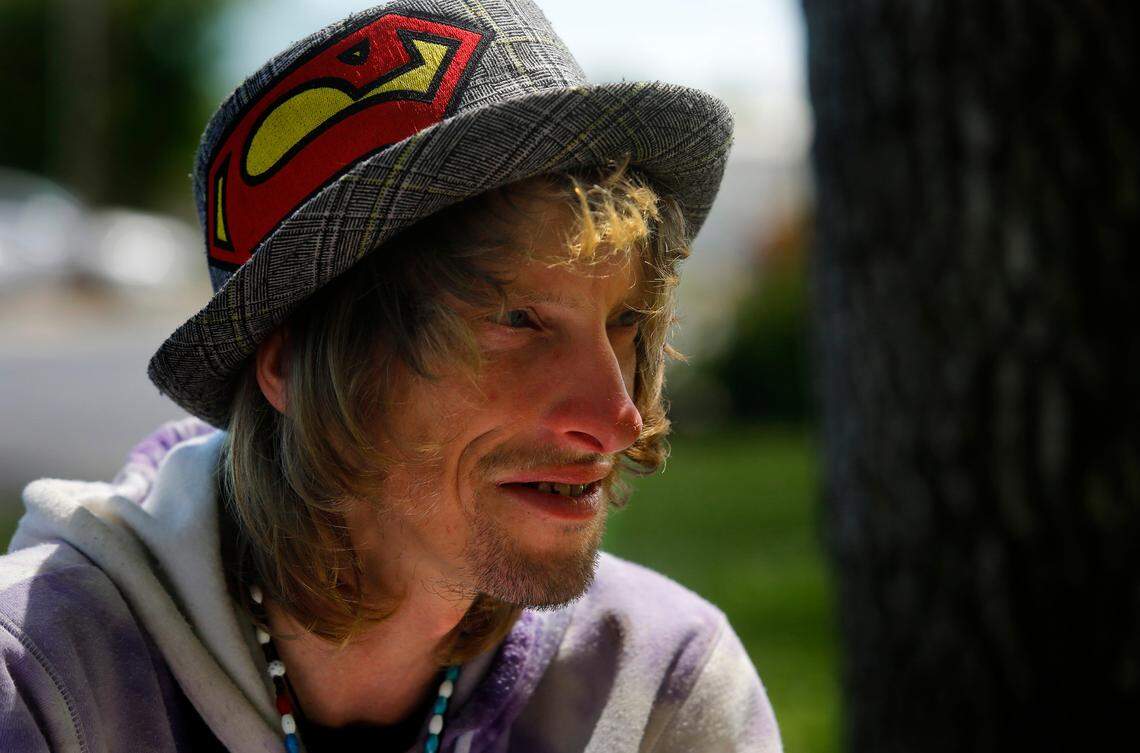
Steve-O Wold has been on the streets since he was 16.
When people look at him, they don’t see his potential or what he could be with help and guidance, they see everything he’s not. They see someone they think is lazy or a burden.
What they don’t see is who he really is — an artist struggling to express himself and make sense of a world that mistreats and mistrusts him and others in similar situations.
Wold, now 29, wants to use his art to bring people together and help them communicate, but that’s difficult when people make assumptions about him and decide he and other homeless people are a nuisance.
He said people will just look at him and scream, “Get a job!” as if getting and maintaining employment while you have nowhere to live is just that simple.
Wold said so many living on the streets continue to use drugs because the stress of long-term homelessness wears you down. You’re forced to jump through hoop after hoop to try and get help, often just to face judgment and rejection.
“There’s people every day that are like, ‘Get a job,’ and I’m like, ‘Give me one!’” Wold said. “They’re just out there wanting to put someone down. But the person they’re putting down is the first person to put themselves down. Obviously being homeless in the Tri-Cities, it’s pretty easy to put yourself down.”
“They assume that it’s that easy or they don’t even assume at all. A lot of these people don’t understand how hard it is living on the streets,” he said. “Mainly because you can’t go anywhere. There’s really nowhere to go. Like, yes, there’s the mission, but I’ve been robbed there so many times, and I’m not gonna have religion forced upon me.”
Anywhere but here
Life involves constantly being on the move, and being uncertain of whether someone is trying to help or going to call the cops to have him run off.
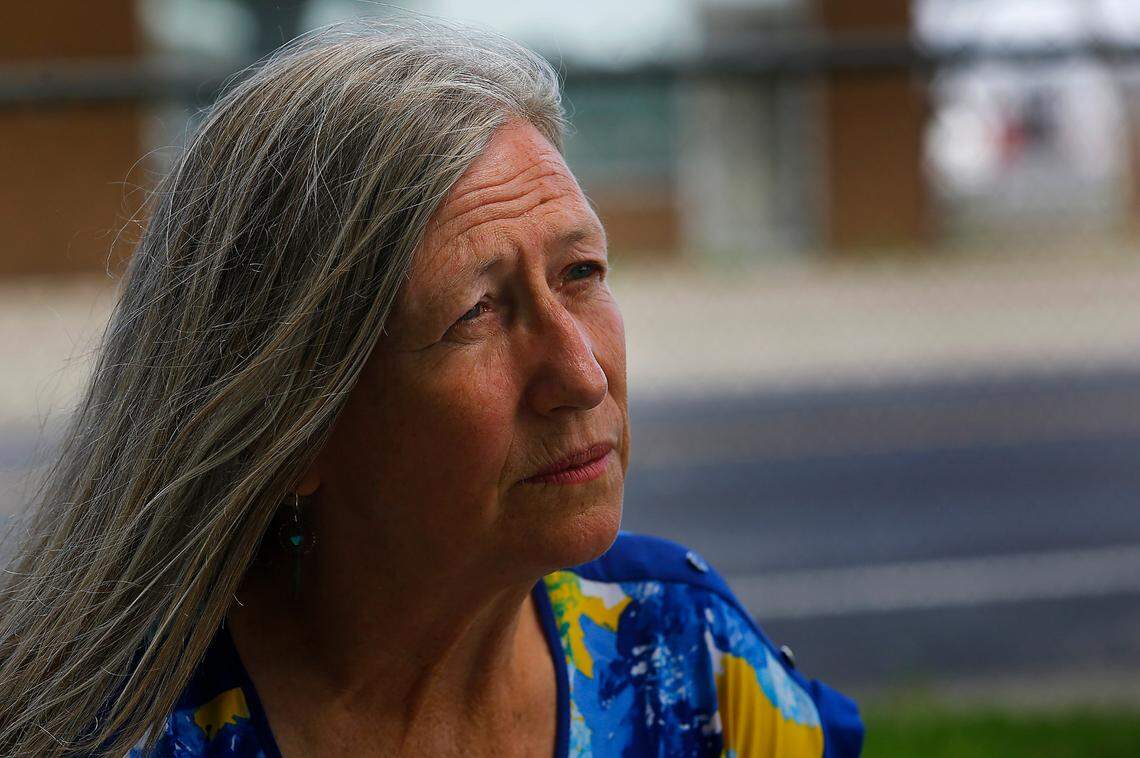
It took a while for Cindy Fish to build trust with Wold. She met him while serving a weekly free meal at Keewaydin Park in Kennewick. She’s seen a huge difference in him since he began gaining confidence in himself and his art.
Fish said that while she understands why business owners might want the city to pass ordinances aimed at the homeless population, those moves make it harder to help them and harder for people experiencing homelessness to build any kind of stability to lift themselves up.
A recently passed extension of Kennewick’s “No Sit, No Lie” ordinance, expanding it through the downtown area, has forced many farther from downtown and, in turn, away from the places, nonprofits and churches that have been helping them.
Wold calls it a struggle between people in good standing in the community and people at “the bottom of the totem pole” with no power or influence, who often can’t even get those in charge to have a conversation with them.
He said it feels like some community leaders view people having mental health issues as animals and the rest of the homeless population as nuisances to be shooed away “like a fly on their leg.”
Fish said that just because businesses and cities run off homeless people, it doesn’t mean they’re gone. They’re just pushed into more desperate situations.
“We used to find him down(town). But once (the city) said, ‘Hey, you can’t do that ...’ Well, it has pushed them away from there, but they’re still here and they’re just having to continuously move from here to here to here.”
“I find him down at the river, you know, and I chase them because I’m trying to be a mentor to him and try to get him on the path so that we can get him into housing,” she said. “He’s trying. He is trying, but he doesn’t have the opportunity to go sit and talk to them and say this is me, you know, this is what I want to do. It’s always through a second party somehow and it makes it very difficult.”
Wold knows that some people experiencing homelessness may be making bad decisions or acting out, but he points out that those people need help.
They’re having a mental health crisis or are suffering through addiction. Instead of helping though, people just want to get rid of them, which he said leaves others afraid they’re going to be treated the same.
Revolving door
“Imagine having to deal with just your life in general, like your simple needs like using the shower and eating. What are you doing? You’re trying to keep your mind busy, so you’re trying not to think about other things. All the while your brothers and sisters on the streets are going through the same thing as you,” he said.
“That not only adds anxiety and more depression with the fact that you’re hearing the same thing that you’re already feeling. So you’re getting reminded. Getting put back into a cycle, then you go to a feeding place, only to have the people there that are feeding you saying the same thing. It’s like a revolving door, but instead of moving with the door you’re stapled to the ground.”
He said the biggest fear of people in his shoes is ending up a statistic.
He’s seen the way fentanyl has completely taken over the lives of others on the street, and how hard it is for people to get clean once they begin using it.
He’s grateful that he had the foresight to say no to it. He hopes that the proposed recovery center can help, but knows there are people currently homeless that aren’t going to get the help they need.
At the time he spoke with the Herald, Wold had been clean for almost a week. He said that he typically uses meth or marijuana to help deal with stress and mental health issues.
“I use meth so I can be social because ironically, it’s pretty funny in my opinion, is that I’m an agoraphobic and introverted, and I’m homeless. It’s like Pandora’s Box.”
He also has issues with his vision, which he said is made worse by the anxiety when he doesn’t immediately know what he’s looking at.
Finding stability
Wold believes that he can stay clean for as long as he needs to, but the stress and depression of being homeless is too much to bear sometimes. He was in sober housing for about two years until issues with his funding, due to the COVID-19 pandemic, left him back on the street.
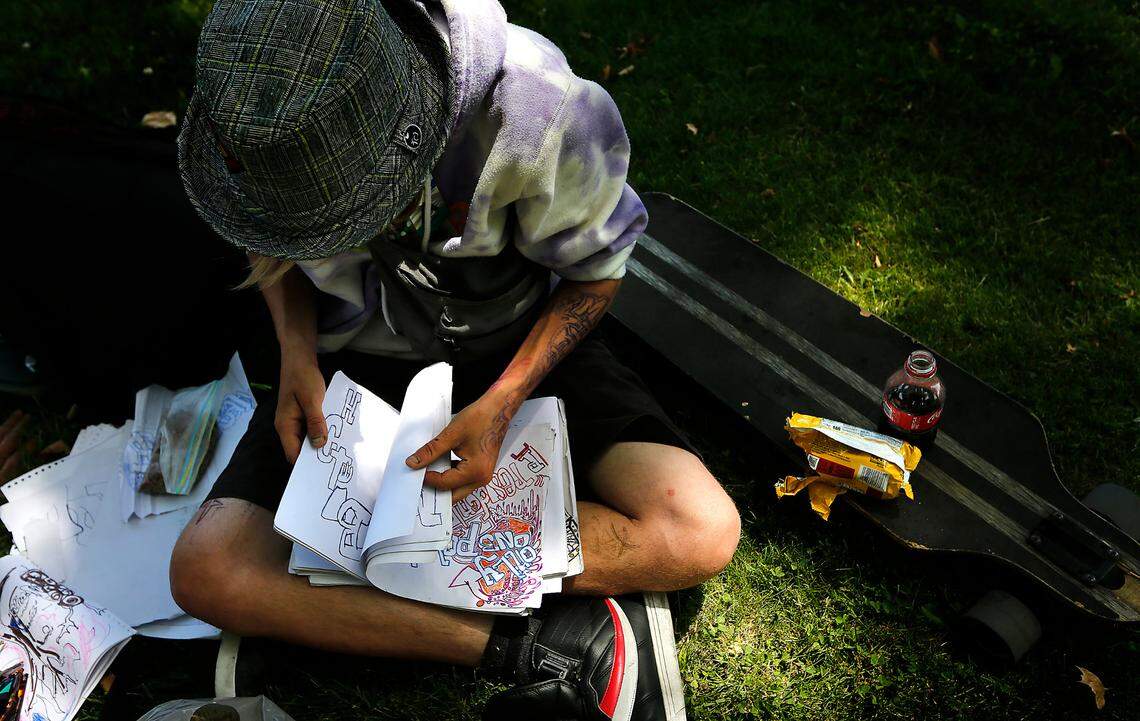
Over the past few years though, he’s increasingly turned to his art to cope, instead of drugs. He’s also been taking care of a stray kitten that he’s named Calypso because despite everything going on in his life, he saw an animal that needed help.

“I heard this saying, ‘Art is meant to comfort the disturbed and disturb the comfortable.’ When I heard that, I thought it was amazing, because what else is art?” Wold said. “Be grateful for what you have, I wouldn’t say I’m (completely) blind, but I don’t know if what I’m seeing is what I’m seeing. And I suffer from paranoia, which is probably on account of the anxiety, and they work hand in hand.”
He’s also found people he can trust, like Fish, who truly have his best interests at heart and see him as a whole person worthy of love and compassion.
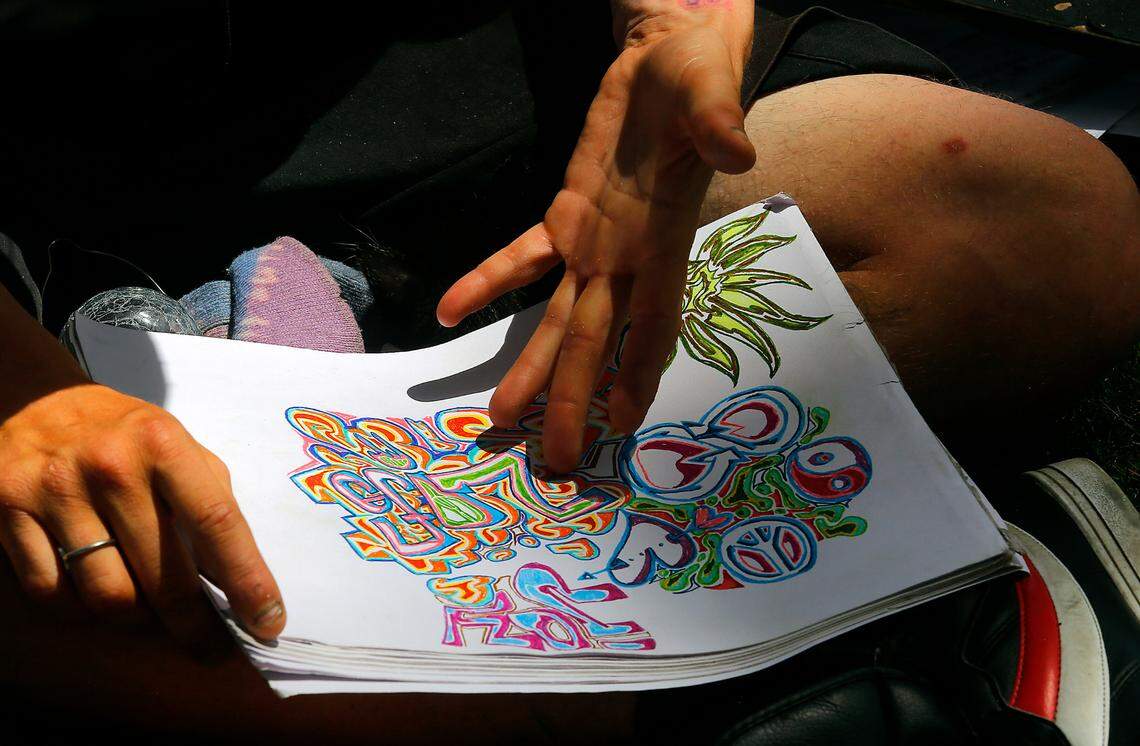
Years ago he said he had no idea he was capable of being an artist, and now he has hundreds of intricate drawings, exploring themes and words that have meaning to his life. All because people around him saw his talent and encouraged him.
“What I want people to know is just because a person is homeless and they’re in a situation unlike yours, believe it or not … Our minds are always gonna be the same,” he said. “We’re all gonna be thinking pretty much along the same lines. We’re all going through the same things, no matter what it’s always gonna be the same. Just because a person is from more of a (better) background than another person doesn’t mean anything. Don’t judge someone at face value is what I’m saying. I couldn’t draw, but now look.”
Wold is hoping that once he finds some stability, he can find a way to make a living off of his art and music. He has an idea of how to start, but right now it seems so far off.
He knows that some of the greatest artists in history were a lot like him, struggling with mental health, addiction or melancholia.
His art is often based around words he wants to explore or discuss, with the lettering feeding into colorful designs. He often finds a way to incorporate double meanings or hidden details into the work.
“I have the utmost respect for pretty much everybody in history who expresses themselves with art,” he said. “Because those people are the strongest people in the world. All I want to do in this town is make it colorful and where we can still use words to express our feelings rather than what we’re using now.”
He’s also hoping that someday the rest of the community will see his passion for art. He wants to create a mural for his brothers and sisters who didn’t make it off the street, to remind others that their stories mattered too.
Misconceptions
Fish said that for her part, she has learned that it’s so much harder to escape homelessness than she had imagined.
“It’s not like everyone thinks. It’s not as easy as ‘you just follow these steps,’” she said. “The community, has this perception as well, you know ‘just send them this direction and then they can get on this list and they can get off the streets’ and it doesn’t work like that.”
The Tri-Cities does not currently have any shelters that are not faith based.
While they don’t necessarily force religion on people staying there, it can still make people with hangups or religious trauma wary. They also require those staying long term to enroll in recovery programs, which can be difficult for someone in the throes of addiction.
Union Gospel Mission is currently the only shelter in the Tri-Cities, and Catholic Charities has a new supportive housing complex for longer term help. Both are in Pasco.
Getting a job is also a lot harder than people imagine. Some obstacles include lack of ID or the documentation required for tax purposes, if they’re only recently sober or if they don’t have access to clean clothes or a shower.
Sent to Serve, a nonprofit in Kennewick, is currently raising funds for an outdoor shower to help eliminate that barrier.
On top of all that, housing experts predict a spike in people becoming homeless or unsheltered this summer as COVID-19 related federal housing aid expires.
Fish didn’t know what to expect two years ago when she began volunteering with a group of moms and grandmothers serving a free meal on Wednesdays at Keewaydin Park.
What she has learned though, is that the people in our community who most need help are often the first to be written off.
She’s also seen just how big of a difference a little encouragement and empathy can make in people’s lives.
“It’s not gonna go away. The problem is not gonna go away, right? We really have to figure out a way to address it and I personally think they need to be loved,” Fish said.
“They need to be loved, even if some of them are not functioning. They feel so, like (Steve-o) said, they feel like they’re at the bottom of the totem pole. If we in the community can reach out to them and try to love on them a little bit and share some of our life with them and try to help them, maybe we can help get someone off the street.”
This story was originally published June 24, 2023 at 5:00 AM with the headline "‘Be grateful for what you have.’ How a homeless Tri-Cities man uses art to cope with life."