State ranks above national average for trash on roadways. Here’s how bad it’s gotten
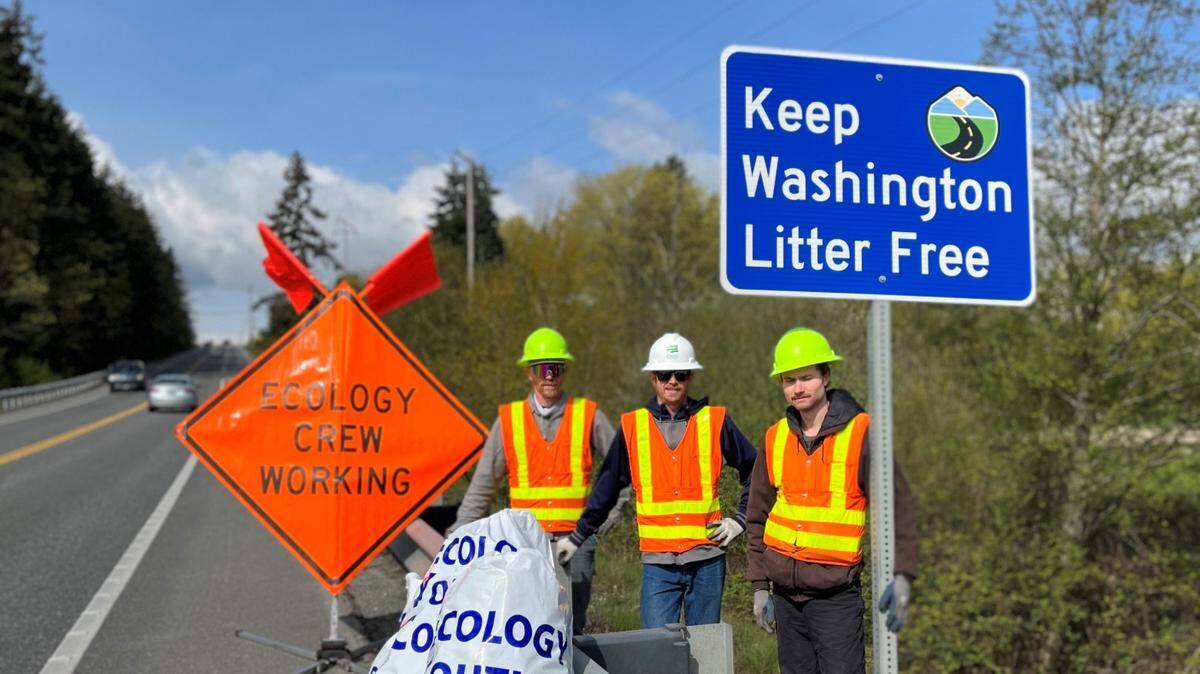
Washington state ranked above the national average with litter on roadways and public areas, according to a new study released on Monday.
The national average is 5,714 pieces of litter per mile according to a 2020 nationwide study. Washington state clocked in at 8,112 pieces per mile according to the statewide litter study commissioned in 2022 by the Washington State Department of Ecology that was released Monday, although the agency said they are unsure why there is significantly more litter in the state compared to others.
The study samples 182 sites throughout the state, including roadways, interchanges, and high-use areas in rest areas, state parks, and land owned by the Department of Natural Resources.
The Department of Ecology estimated that nearly 38 million pounds of litter accumulates every year on roads and in public areas throughout the state. That averages out to about 5 pounds of litter per resident in Washington.
While county and state parks had the most pieces per year, roadways get the most pounds of litter.
Trash associated with homeless encampments was not included in the study, the agency said. The litter that accumulates on roadways and on-off ramps “comes from travelers who either toss it out, fail to clean out their truck bed or do not properly secure their cargo.”
Cigarette butts, food wrappers, snack bags, glass bottles and construction debris were named as some of the most common items found on the roadside, according to the study.
Additionally, more than 300 traffic crashes and 30 injuries were caused by debris from unsecured loads, the Department of Ecology said. Five deaths were attributed to debris from unsecured loads.
“It’s no surprise to us that litter is a serious challenge for our state. Ecology and our partners have already picked up over 6 million pounds of litter in the first half of this year — nearly an all-time high,” said Department of Ecology Director Laura Watson in the news release. “But we can’t clean our way out of this. This new data really underscores the work we still have ahead of us and the importance of preventing litter at the source.”
According to the study, 75% of Washingtonians self-reported that they do not litter. Men between the ages of 18-44 were the biggest offenders among the remaining 25%.
The research by the Department of Ecology noted that “not having a trash bag in the car” is one of the main reasons people litter.
In 1971, a litter tax was established in the state. For 50 years, that tax rate has not changed and only certain items are covered under the tax such as cigarette butts, food wrappers, and snack bags. This means that only 69-76% of litter pieces and 42-62% pounds of overall litter are covered by the tax.
New funding from the Legislature will offer some relief for litter pick up and prevention, the Department of Ecology said.
“Ecology is working with the Washington State Department of Transportation, the Washington State Patrol and a number of other state agencies and local governments to increase the amount of litter cleaned up each year — and decrease the amount of litter that gets dropped in the first place,” the release noted.
So, what can individuals do to help?
The “We Keep WA Litter Free campaign” will be expanded this month and part of the campaign includes ways to “stop litter at the source” such as keeping a bag for litter in vehicles, covering unsecured loads, keeping a portable ashtray in vehicles, throwing away trash at gas stations and encouraging “friends and family to live litter free too.”
Litter pick-up programs funded by the Department of Ecology cost taxpayers nearly $6 million in 2022.
This story was originally published September 19, 2023 at 5:00 AM.