
Tickets on sale for tours of Tri-Cities mammoth bone dig. They’re expected to go fast
Ticket sales for spring tours of the Coyote Canyon Mammoth Site just outside the Tri-Cities, Wash., have begun and tour slots are expected to be snapped up quickly.
On-site tours of the dig site where a mammoth is being unearthed, along with a presentation about the site and a look at laboratory activities and unearthed specimens, are scheduled April through October.
Reservations are being accepted now for 20 tours on 10 days in April, May and June. On June 1 reservations will open for tours from July through October.
Tours usually last 90 minutes to two hours. Directions to the dig site not far from Kennewick will be sent after registration for tours.
Cost is $10 for all ages, with an additional $2.51 online service fee. Go to mcbones.org/public-tours.html and click on “Purchase Tickets.”
Group tours also may arranged from the same Internet page. MCBONES also offers school field trips at no cost.
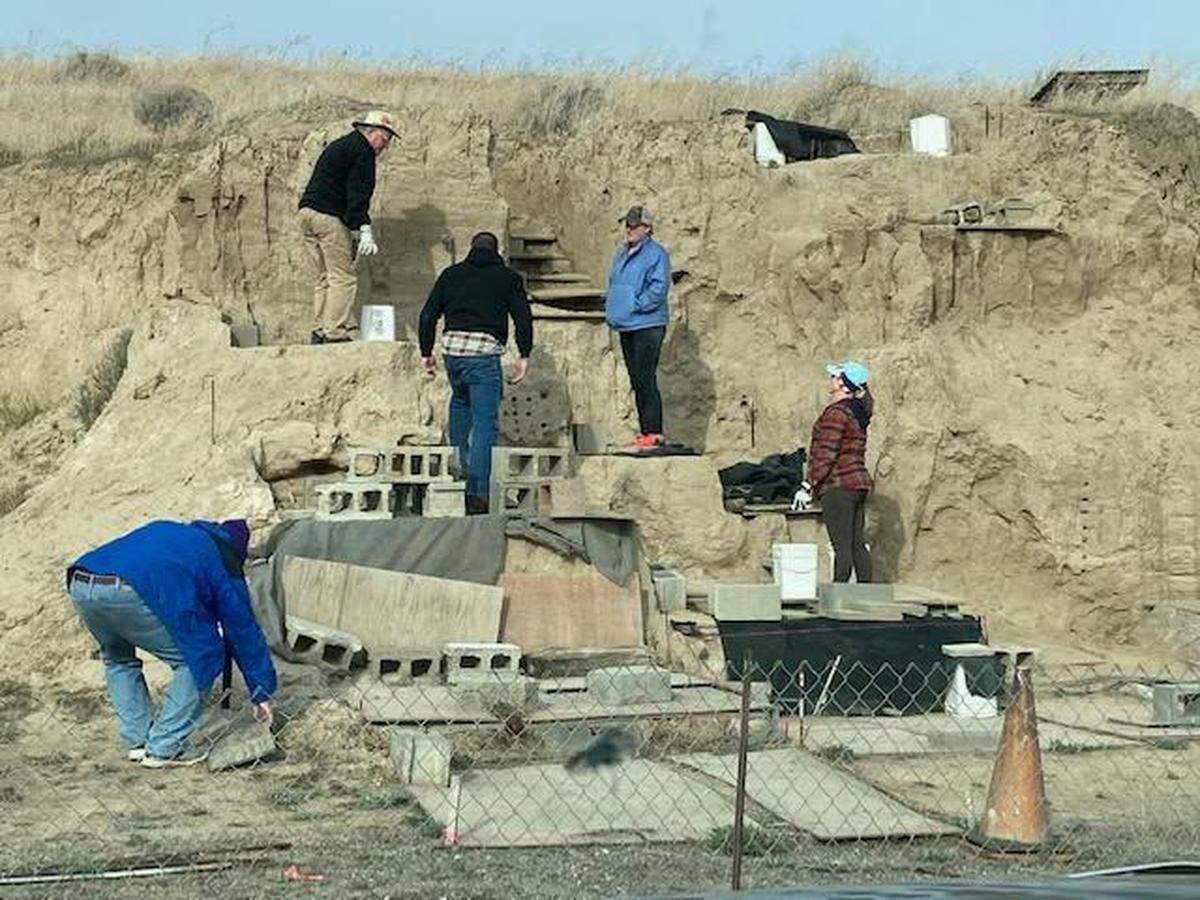
The nonprofit MCBONES operates the site as an outdoor classroom and laboratory for natural science research in an all-volunteer effort.
Not only are the bones of an ice age mammoth being unearthed, but small objects, such as beetle wings, ground squirrel teeth, mice bones and mollusk shells, found in the soil are being collected.
Changes in objects at different levels of the dig provide information about the changing environment of the Tri-Cities area over thousands of years, including the environment at the time the mammoth lived 17,000 years ago.
Money raised from the tours will be needed as MCBONES has radiocarbon dating done on some of its finds. It also will need to pay for professional identification of some microbiology species.
More volunteers are needed at the site for a wide range of tasks. Volunteer opportunities are available to adults and to high school students, if accompanied by an adult.
If you are interested, contact Gary Kleinknecht at gary.kleinknecht@charter.net.
About the mammoth
The mammoth being unearthed appears to be a male, because bone growth plates take longer to fuse in males. He likely was about 40 years old when it died with a front leg growth plate still unfused.
The animal was large, likely standing 10 to 13 feet tall at the shoulder, making it bigger than modern day elephants.
During the ice age flood water backed up as it hit the narrow Wallula Gap to cover what is now the Tri-Cities. The dig site is at an elevation of about 1,060 feet, and floods may have been deep enough to reach the area about seven times.
The mammoth could have been drowned in the flood, and then the carcass could have been deposited on the hillside as waters receded.
The bones have been found relatively intact — the ribs somewhat jumbled, for example, but not scattered over a wide area.
Among bones already retrieved are a left shoulder blade, two upper front leg bones, two tail bones, two foot bones, and numerous ribs and vertebrae.
Some bones, including the lower jaw bone, ended up in private hands before the MCBONES Research Center Foundation took control of the site.
The initial discovery of mammoth bones at the site was made in 1999 during excavation on private property.
Excavation halted, and when the land went up for sale a local farming family purchased it to turn it into a nonprofit research center for teachers, students and community volunteers.
In 2008, MCBONES was established as an educational nonprofit, and work to recover the bones began a couple of years later.
This story was originally published January 13, 2024 at 2:17 PM with the headline "Tickets on sale for tours of Tri-Cities mammoth bone dig. They’re expected to go fast."