
Looking to liven up your office? Here are nine office plants to add to your workspace
Returning to the office after several months or even years of working from home due to the pandemic can seem daunting for many, but it doesn’t have to be.
According to a 2023 Pew Research Center study, about 63% of U.S. hybrid workers say their employers requires them to work in person a certain number of days per week or month, but 34% of hybrid workers say they’d prefer to work from home all of the time.
A good way to ease the transition of going back to the office in-person is to add plants to your workspace.
Alex Bergman, the customer experience manager at Watson’s Nursery in Puyallup, said in an interview that adding plants to your office or cubicle can bring about more benefits than just making your space pretty.
“Plants just bring a livelihood to a space and it’s really nice to have a pop of color and another living thing that you’re kind of sharing the space with,” Bergman said. “We also know that houseplants clean the air around us, so they make it a little bit healthier for us and just provide that sense of a breath of fresh air and I think that it can make a space very homey and very comfortable.”
According to the National Library of Science, plants can be a cost-efficient solution to reducing the levels of indoor pollutants since they are able to absorb airborne molecules and purify the air from pollutants.
Adding plants to your office space can also has other benefits such as stress reduction, improved productivity, increased comfort, better workplace acoustics and boosts in creativity, according to Indeed.
In order to choose the best plants for your office space, you need to first determine if your office gets high, medium or low natural light or if the lighting is mostly artificial. Although plants need light to grow, there are still options that would thrive in environments with little to no sunlight or even artificial light.
Determining the lighting situation will not only help you choose the best plant for your office, and it will also help identify how the plant should be cared for, said Bergman.
“When I think about house plant care, I think about light and water holding hands the entire time, so no matter how much light you get, that’s going to change the amount of water,” Bergman said. “So sometimes on the Internet, it says water once a week and I find that to be very much not true. We want to treat our little plants as individuals who have individual needs based on where they’re living.”
Bergman recommends using a moisture meter for office plants that will be shared and cared for by more than one person in order to make sure the plant isn’t being over-watered or under-watered.

Popular office plants
Here are nine office plants that are recommended by Bergman, Zircon Interiors and The Spruce:
- Spider plant: This low-maintenance plant can be placed anywhere with low to indirect bright light. This plant is also known to help clean the air wherever you place or hang them.
Pothos: This trailing houseplant can add a pop to your office space and is one of the easiest plants to care for. Pothos can grow in low-light areas as well as in spaces that only have fluorescent lighting.
Fittonia: Also known as nerve plants for its veiny appearance, is a good plant to have you if you have limited space. Fittonias can grow in anything from low light to bright, indirect light, but brighter light can bring about brighter colors on the leaves.
Dracaena: Dracaenas are very easy to grow indoors and require little care. These plants can adapt to their environment which means they will thrive in brightly lit spaces as well as in dimly lit spaces like offices.
Snake plants: This plant is part of the Dracaena family and is an easy-to-grow houseplant that can withstand drought and low light which makes it a good option for office spaces and beginner plant parents.
ZZ plants: The ZZ plant is an ideal plant for an office space because it does well in low-light and artificial light.
Cactus: Cactus plants can be a great addition to indoor spaces and although they prefer bright light, some cacti can thrive in low-light conditions.
Haworthia: A Haworthia is a succulent plant that resembles a mini aloe plant, but has distinctive white bands all over. This succulent is usually grown indoors, but prefers to be in bright light.
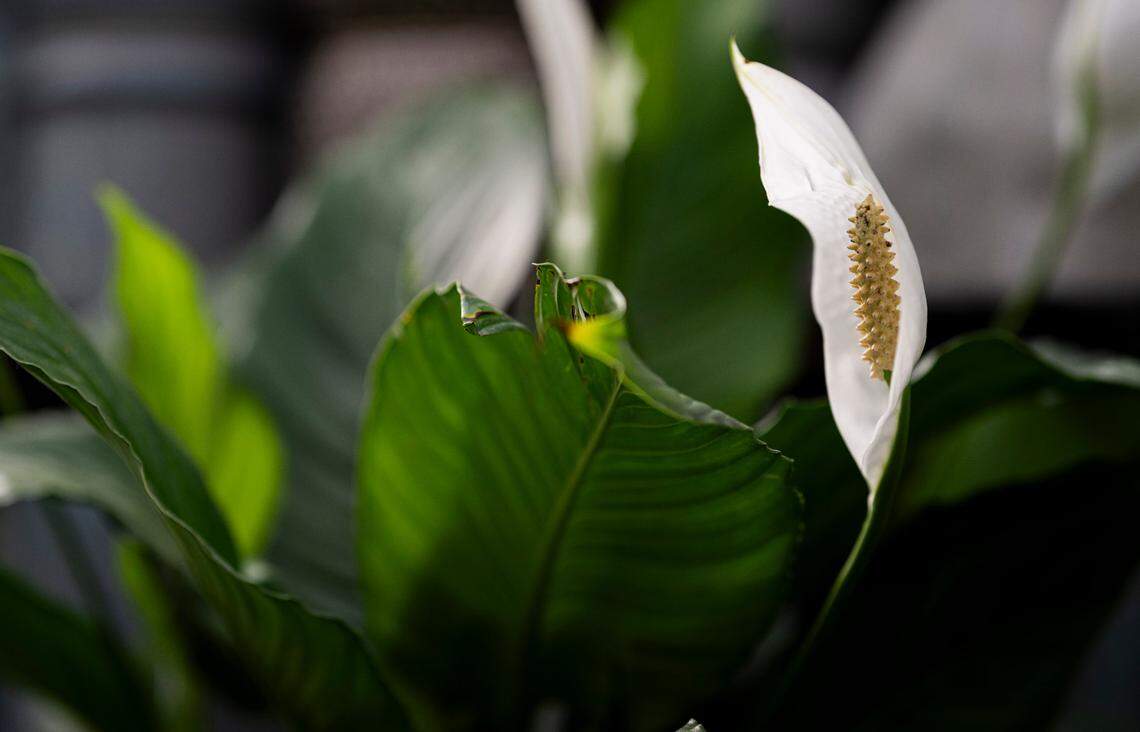
- Peace lily: Peace lilies are easy to care for and do well in low-light situations.
This story was originally published April 23, 2024 at 5:00 AM with the headline "Looking to liven up your office? Here are nine office plants to add to your workspace."
