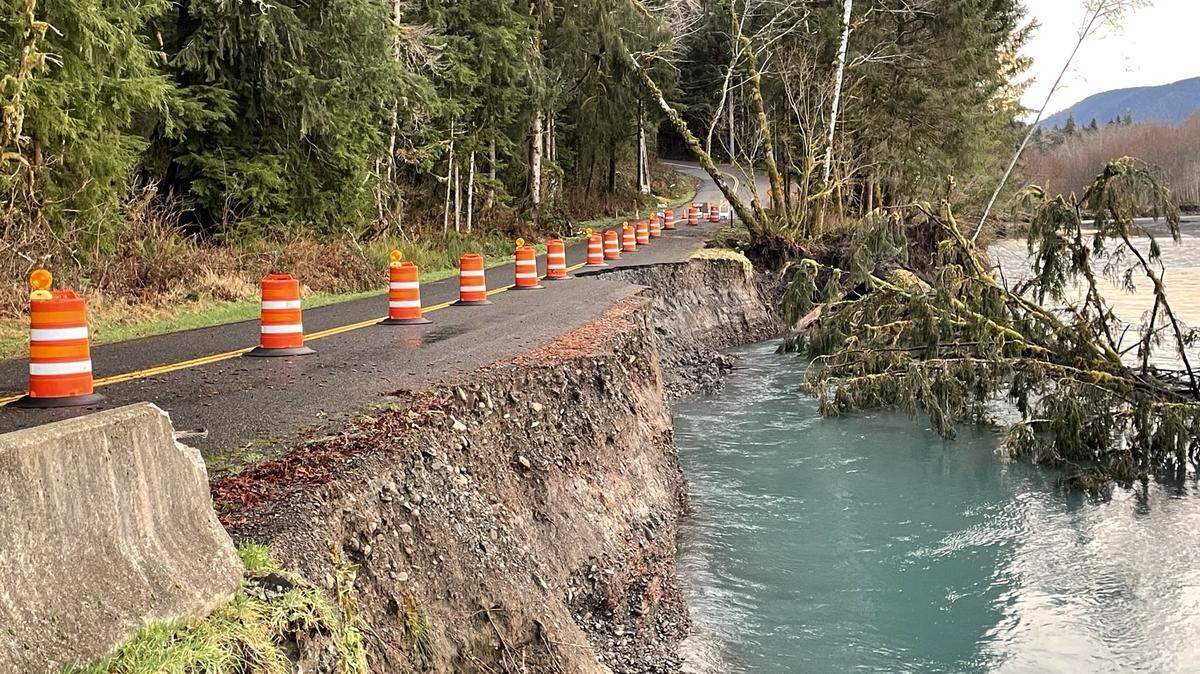
Storm damage caused a washout along the Upper Hoh Road in Jefferson County, blocking access to Olympic National Park’s Hoh Rain Forest.
Courtesy Jefferson County Public Works
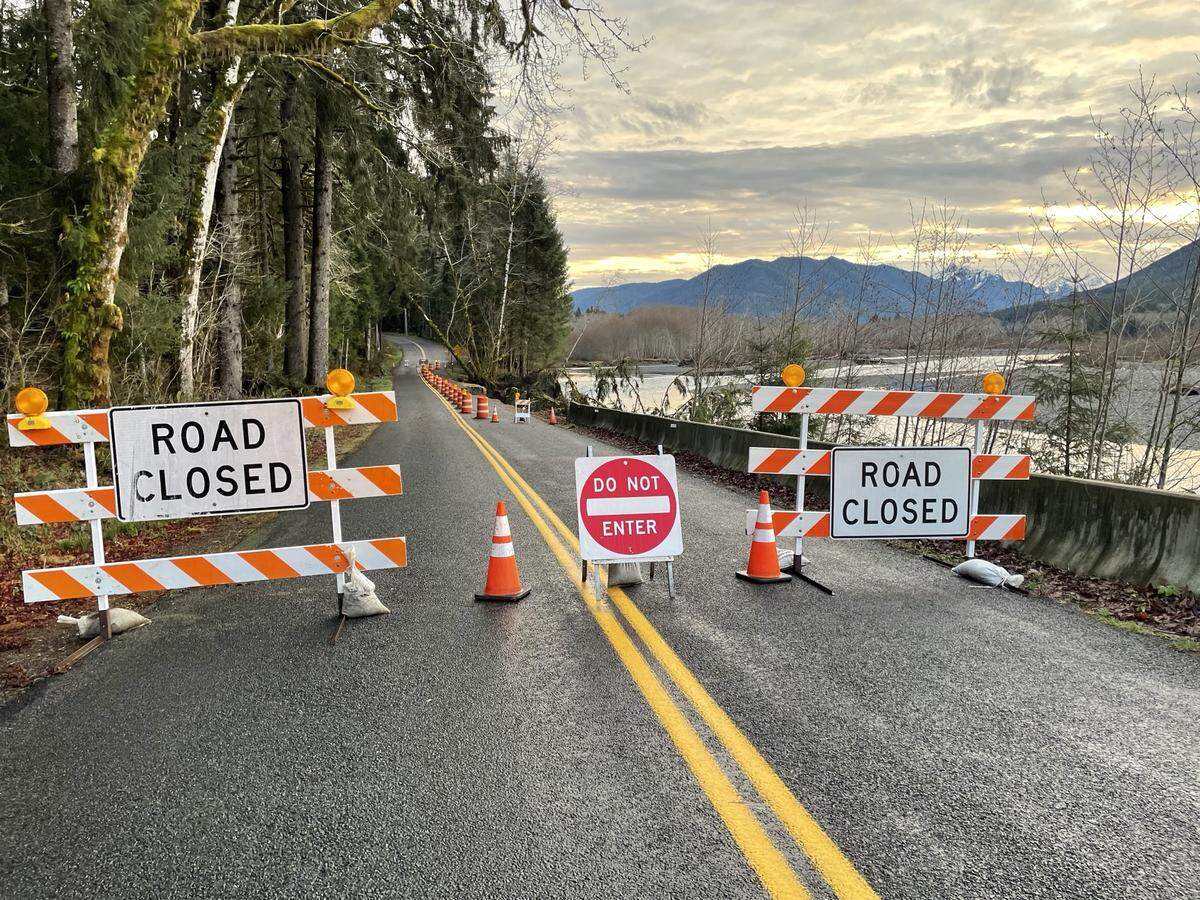
One of Washington’s most popular natural wonders is currently closed and faces significant issues before it can open for the summer in a couple of months. Olympic National Park’s Hoh Rain Forest, one of “North America’s best remaining examples of a temperate rainforest,” according to the National Park Service, is currently inaccessible to visitors due to a road closure.
“With regard to the Upper Hoh Road (and Quinault South Shore Road), Jefferson County Public Works does not have the funds to complete the repairs,” Eric Kuzma, Jefferson County’s assistant public works director, told McClatchy in an email. “The cost of these repairs is currently estimated at $1.28M.”
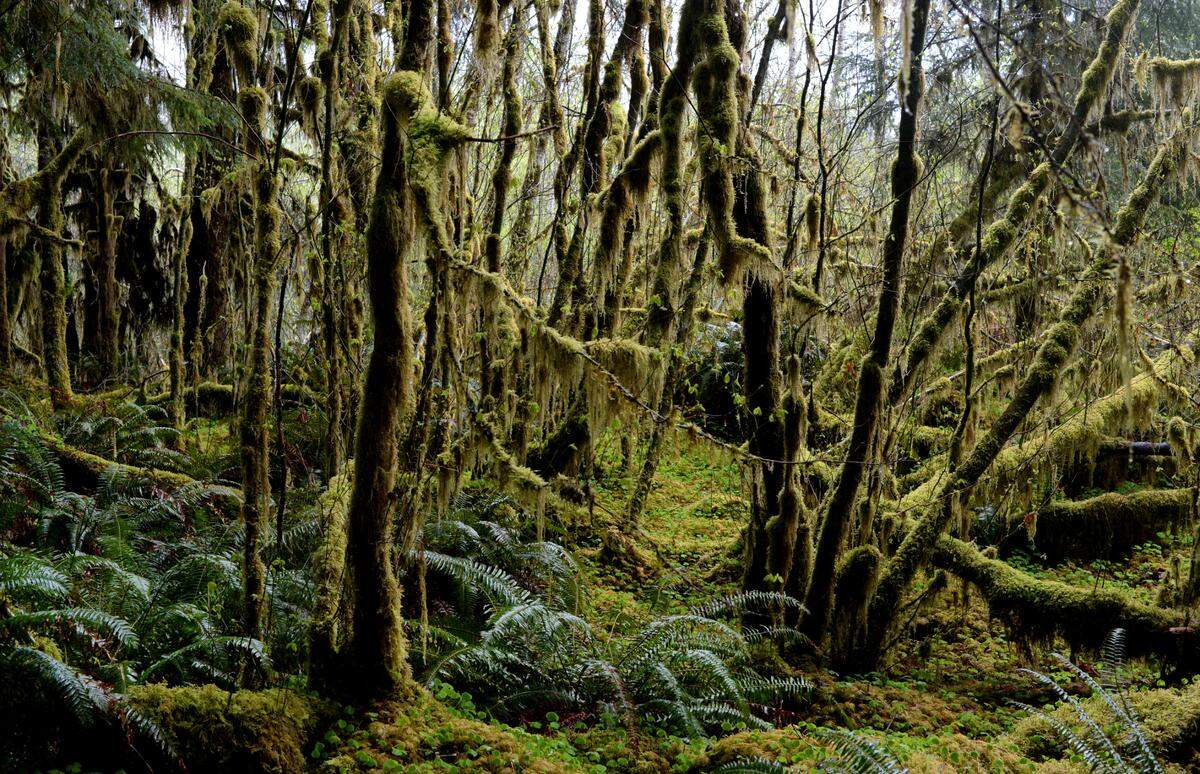
A trail in the Hoh rainforest in 2014. Olympian file photo
“To be eligible, a road must be of a certain classification, the damage must be connected to a qualifying storm event, and the cost must exceed a specified threshold,” Kuzma said. “In this instance the damages appear to meet all of these criteria. Yet despite countless meetings, emails, and calls, a decision has yet to be made by the Federal Highway Administration and the [Washington] state governor’s office regarding funding eligibility.”
Speaking on background, a Federal Highway Administration spokesperson told McClatchy late Friday that the repair isn’t eligible for the Emergency Relief Program since there wasn’t an emergency declaration made in response to the storm that caused the washout along the Upper Hoh Road. The department said it plans to work with the county to find other potential funding options.
Options for Hoh Rain Forest road repair
Should the Emergency Relief Program funding not work out, there are other potential options.
In an email to McClatchy, a Washington State Department of Transportation spokesperson said that the department doesn’t have emergency funds for non-state highways and that it often seeks federal emergency funds as well. WSDOT is currently seeking federal emergency funds for damage caused by November’s bomb cyclone but said it would be a “challenge” to get funding for the Jefferson County road since the washout occurred a month later.
The County Roads Administration Board, a state board responsible for oversight and accountability in county public works departments, has an emergency loan program. Typically, loans are taken out while counties await the approval of federal funding, which is then used to repay the loan. In an email to McClatchy, a department spokesperson said that a loan was offered to Jefferson County but the county was unwilling to accept it until federal funding was lined up.
According to Kuzma, Jefferson County has explored its options and considers the Federal Highway Administration to be its best bet.
“We have explored quite a few with the most viable still being funded via the [Federal Highway Administration] Emergency Relief Program,” Kuzma said.
That’s largely due to the accelerated timeline that the program allows for.
“ER funds allow us to get emergency authorization to immediately proceed with repairs and temporarily delay permitting that is estimated by [the Washington State Department of Transportation] to otherwise take at least 18 months,” Kuzma said.
If a full repair can’t be funded, Kuzma said it’s unlikely that a less-expensive, temporary solution can be found.
“There have been discussions about temporary bypasses, alternating one-way traffic, and/or signals,” Kuzma said. “Unfortunately, these are not currently feasible alternatives; the county will reassess once the storm season ends.”
Will Hoh Rain Forest open summer 2025?
The county only has a few months to complete the repair before Olympic’s busy season begins. However, Kuzma said that once the funding is secured, the repair shouldn’t take too long.
“If federal Emergency Relief funds, or alternative funding, is authorized, the county could have the two repairs each done within a month, contingent upon contractor availability,” Kuzma said.
Olympic is taking steps to ensure that access is restored quickly once the road is prepared, a spokesperson for the park told McClatchy.
According to Tim McNulty, vice president of Olympic Park Advocates, it’s difficult to imagine the repairs won’t be completed before the end of the summer, given how popular the Hoh Rain Forest is.
“No one at the park has offered any predictions I’m aware of, but it’s hard to imagine that the road will be closed for the entire summer season,” McNulty said.
A road closure threatens access to Olympic National Park’s Hoh Rainforest this summer. Courtesy Jefferson County Public Works
What if Hoh Rain Forest doesn’t reopen?
While nobody lives beyond the washout, the county said that the repair is important to its economy due to the number of visitors the rainforest brings in.
“There are no full time county residents who live beyond the current Upper Hoh Road washout. With that being said, the County understands that preserving access on the Upper Hoh Road has substantial economic ramifications and has worked hard to maintain it,” Kuzma said.
If the repair isn’t made, McNulty said that it would likely have a big impact on park visitation this summer, since the rainforest is one of its primary attractions.
“Almost certainly,” McNulty said. “The other rainforest areas of the park have sketchier access, gravel roads, no visitor centers, no developed campgrounds… Temperate rainforests define Olympic National Park, and the Hoh Valley is unparalleled.”
Last year, the Hoh Rain Forest saw nearly 185,000 visitors between June and August, the third-most of any part of the park, according to NPS data. That accounted for 12% of the park’s 1,563,073 recreational visitors over that time period.
“Per Olympic National Park’s website, an estimated 459,072 people visited the Hoh Rain Forest in 2024,” Kuzma said. “This visitation is vital to both the Olympic National Park and the Jefferson County-Clallam County west end communities.”
This story was originally published March 7, 2025 at 2:11 PM.
Daniel Schrager is the service journalism reporter at the Bellingham Herald. He joined the Herald in February of 2024 after graduating from Rice University in 2023.Support my work with a digital subscription