
‘There’s nothing else like this’: Take a look at the Capitol Campus gardens in full bloom
AI-generated summary reviewed by our newsroom.
- The Sunken Garden blends historic design and diverse plantings to engage visitors.
- The Pollinator Garden promotes native species and supports pollinator life.
- Capitol grounds integrate horticulture and history to enhance public experience.
Bees happily float from flower to flower on a sunny Tuesday morning in late May. Steps from the Legislative Building in Olympia, a passerby pauses to admire the colorful tapestry of the Sunken Garden from a bench.
The Capitol Campus is much quieter now that Washington’s 2025 legislative session has wrapped, but the gardens of the surrounding grounds are still buzzing with springtime activity.
Kailee Moulton, grounds operations specialist for the Department of Enterprise Services (DES), has seen lawmakers take time to stroll through the cottage-style Sunken Garden. And visitors from as far as Arizona and Hawaii have stopped by to marvel at its offerings.
“There’s a lot of people from all over the country (who) come in here, and it always surprises me how in awe they are,” Moulton said, smiling.
“And they tell me, ‘There’s nothing else like this.’”
Sunken Garden
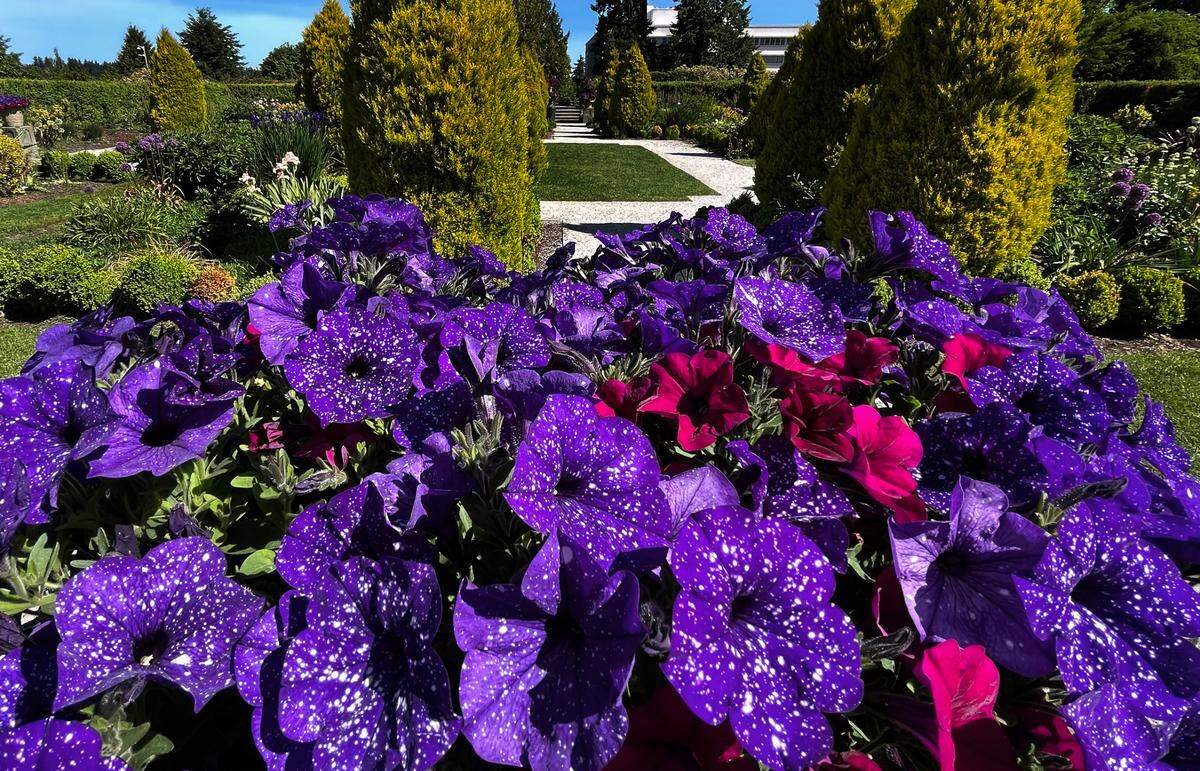
With its straight lines and symmetry, the Sunken Garden’s layout is steeped in elements of formal European garden design. Rectangular beds are home to a blend of perennial and annual plants. The dome of the Legislative Building serves as a stunning backdrop, peering out from between the trees.
Moulton explained that the West Campus’ Sunken Garden was created as a rose garden more than a century ago. It’s since evolved to include of a much broader range of flora.
Tufts of violet allium stand tall on long stems. Moulton’s favorite daylilies wait in the wings, readying themselves to bloom.
“It’s an all-emerging landscape: always blooming, always something going on in here,” she said. “Nothing is ever blooming at the same time. They’re always in procession of each other.”
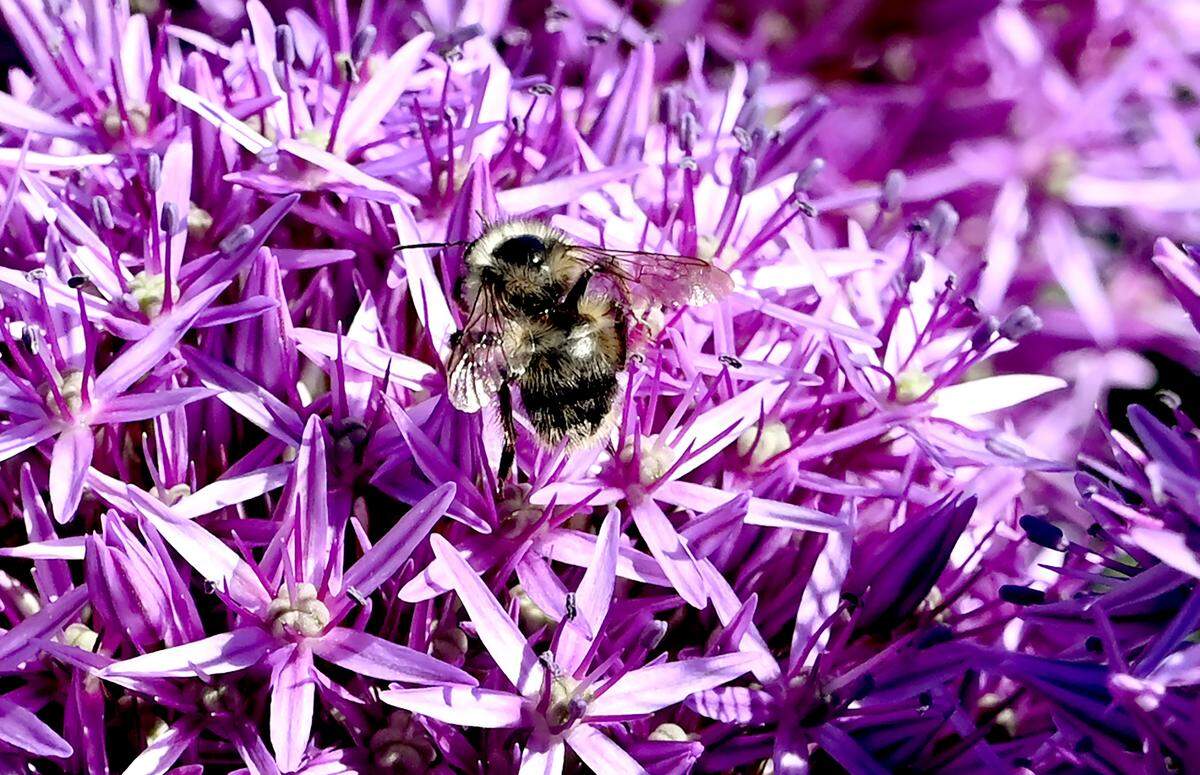
Although the garden veers toward the formal, Moulton referenced Monet’s impressionist paintings as a rough touchstone: a romantic merging of vibrant hues and varying textures.
The “Sunken Garden” is an apt title. It sits about 4 to 5 feet below the bordering grounds, Moulton said. Consequently, the plot has its own micro-climate, which registers about 5 to 10 degrees hotter or cooler than its surroundings, depending on the season.
“A lot of it is actually experimental,” she said. “We don’t know what’s going to die in the winter and come back in the summer.”
Most plants love living in the Sunken Garden, Moulton said. But similar to plenty of homeowners’ yard struggles, not everything flourishes. She pointed out some boxwood shrubs: “The ones that are turning orange hate life.”
When is the peak season to pay a visit? April through June, particularly at during the golden hour before sunset, Moulton said.
“There’s a lot of activity going on in here — bees, birds, people, animals — and it’s really quiet in here at dusk,” she said.
The Sunken Garden was originally designed by the Olmsted Brothers, the famed, family-founded landscape architectural firm established at the turn of the 20th century.
Brent Chapman, Capitol Campus horticulturist and grounds property manager, said part of the Olmsted legacy has been to include a range of plants. The brothers were far ahead of their time in terms of plant diversity, a tenet he said is key to supporting climate resiliency for the Capitol Campus’ future landscape.
Today, DES is increasing the diversity of species, and more than 120 different tree types are on campus, Chapman said.
“It’s really risky to put all your eggs in one basket,” he said. “If you just had three different kinds of trees across campus — like a lot of formal government locations — and an insect or disease comes along, you could lose over half your landscape or more. But with genetic diversity, you’re really spreading the risk.”
Pollinator Garden
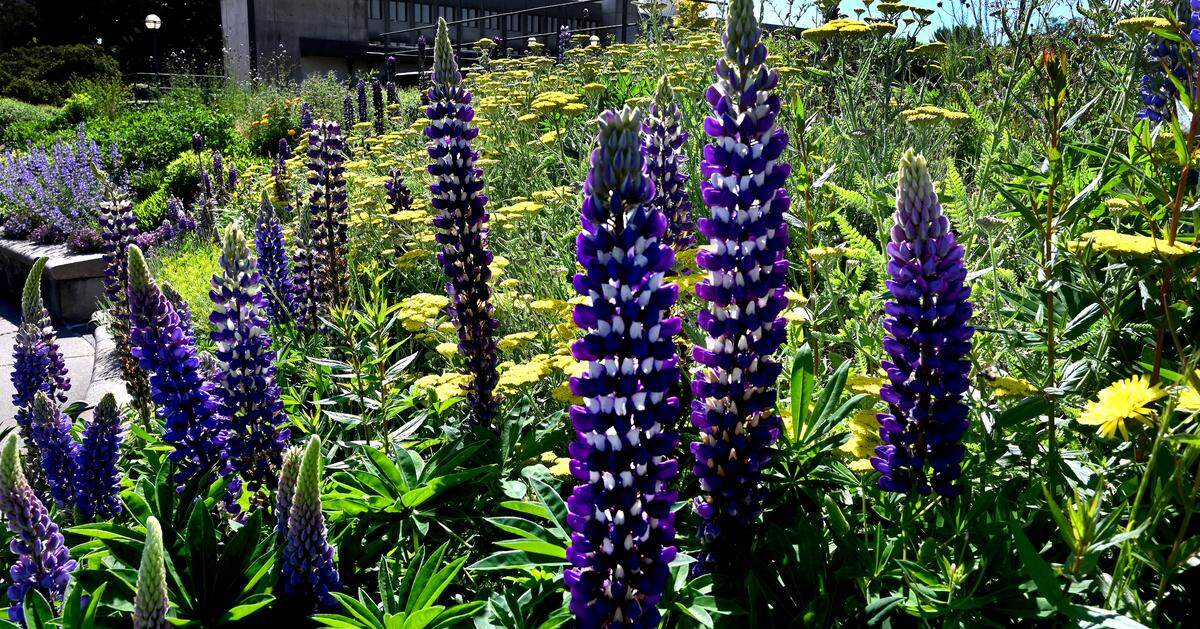
A relatively new addition to the state-government grounds, the Pollinator Garden was created in 2023 on the East Campus. There, several beds of mostly native perennials form an open circle, acting as a magnet for pollinator insects and birds.
“There’s a progression of bloom and pollen and nectar sources throughout the seasons,” Chapman said.
The Pollinator Garden was developed for educational purposes, serving as a model for the rest of the state, he said. And it benefits pollinators with more than just food: It offers water sources and protective cover, too.
Orangish-red native Columbine was in bloom on recent day in May, and Moulton pointed to a spot where strawberry plants “took over.”
She explained why native plants are a strong choice for any garden.
“They know the weather here. They grew up here. They’re from here,” Moulton said. “They don’t need as much water, and they’ll thrive.”
Gardens to balance the stress
The Capitol plants sometimes face external threats, which the grounds workers aim to mitigate. Dwarf azaleas have been lost to the region’s hotter, drier summers, and some trees require tubes around their trunks to stave off rutting deer.
Chapman highlighted the devotion of DES buildings and grounds staff, who keep the gardens growing in harmony “and the history alive.”
Adam Holdorf, communications consultant with DES, said the state Capitol is where the people’s business is done. The surrounding campus design is meant to invite participation, such as via straight lines that lead the eye directly to the Legislative Building.
But the Capitol landscape also channels restoration, he said.
“When you think about doing the hard work of participatory democracy,” Holdorf said, “and then leaving and feeling enlivened and refreshed by what you’re seeing in your surroundings, I hope that is something that people feel throughout the year when they are here.”
Moulton agrees.
Standing near the campus’ thoughtfully planned World War II memorial, she acknowledged that the Capitol can be a stressful place for many.
“But once they leave the building, I don’t want them to be stressed because there’s a weed,” she said. “We want it to be as nice as possible for whoever’s here.”
This story was originally published June 1, 2025 at 5:00 AM.
.jpg)