
Glowing plankton light up WA waves. Here’s when, where to watch in Bellingham

On summer nights, the waters off the coast of Western Washington glow brighter than usual.
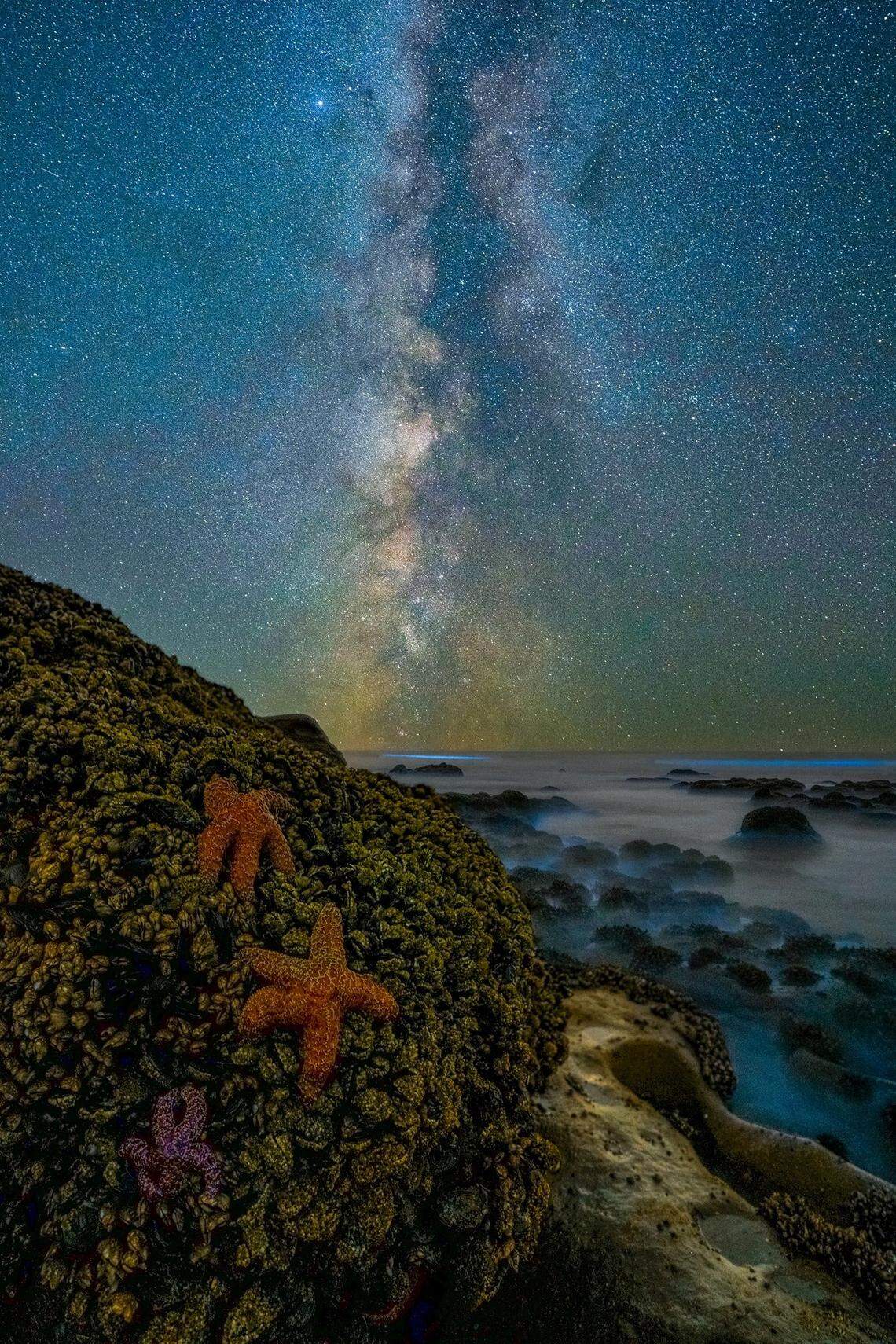
The reason for the stunning sight is a natural phenomenon: electric blue, bioluminescent plankton.
The Salish Sea often sees large blooms of dinoflagellates, a variety of microscopic plankton that emit light when disturbed, according to the Community Boating Center.
The surface of the water sparkles when the aquatic algae are stimulated, whether by the movement of a wave or an object.
“Sometimes you can see it with the waves, but really, it should be right on the shoreline in really bright blooms,” Sara Welsh, director of community development at Fairhaven’s Community Boating Center, told The Bellingham Herald in 2024. “Like even if you’re walking on the beach, the sand will start to glow and it’s like you’re walking on stars.”
According to Sophia Rouches, owner of Moondance Sea Kayak Adventures in Bellingham, which offers guided kayak tours to see the bioluminescent plankton, the highest number of plankton come to the surface during the sunnier months of the year.
“The best time to see the bioluminescence is during the summer months when the plankton bloom in high numbers,” Rouches said in an email. “June, July, August and even September all have proven to be great months to view the glowing plankton.”
Here are the best times and places to spot the sparkling sight:
When are best times to see bioluminescent waves?
Rouches, whose company offers kayak trips to see the glowing plankton, recommends going to see bioluminescence around the new moon, when the sky isn’t as bright.
“The key is to make sure the sky’s the darkest it can be,” Rouches said. “We typically recommend trying to see the bioluminescence at least an hour after the sun goes down, or even later into the evening.”
Similarly, it’s easiest to see bioluminescence the further away you are from any light pollution.
Where to view glowing plankton near Bellingham
Teddy Bear Cove, ljust south of city limits, is considered a go-to spot to see the plankton in Whatcom County, while a pair of local bioluminescence tours leave from Larrabee State Park.
However, both locations technically close at dusk.
“A lot of the city and state parks close around dusk, which does make it difficult to view the bioluminescence from these public access points,” Rouches said. “We would love to see more areas allow for public viewing, but it’s also difficult because of the added safety concerns at night.”
According to Rouches, you can spot the glowing waves at night from most protected bays away from the city.
“The best places to view bioluminescence near Bellingham are calm, protected bays that are far from city lights,” Rouches said.
“Getting away from urban areas is key,” she said. “You’ll want to look for locations with minimal light pollution and still waters, which help enhance visibility of the glowing plankton.”
You don’t necessarily have to get away from the city to see bioluminescence.
Sightings are occasionally reported at Taylor Dock in Bellingham?
What are prices for Whatcom County kayak tours?
Seeing bioluminescence can be as simple as going to the beach in Whatcom County after dark.
Some local companies offer guided kayak tours to see the plankton.
Moondance Sea Kayak Adventures’ tours cost $105 a person and can be booked online.
Bellingham-based Dragonfly Kayak Tours offers bioluminescence paddle tours starting at $109, while the Community Boating Center tours cost $100.
“Some people choose to explore on their own using personal kayaks or paddle boards, launching from places like the Fairhaven boat launch,” Rouches said.
However, Rouches wouldn’t recommend going on your own, unless you’re properly prepared, experienced and carrying the right safety equipment.
“Paddling at night can be very dangerous if unprepared with safety equipment,” Rouches said. “The water is extremely cold and hypothermia is quicker to onset at night. There have also been issues with increased litter and damage at night, placing extra strain on park staff and resources.”
Where else can I see sparkling algae blooms in Washington?
If you’re willing to get on a ferry, The Lonely Planet named Garrison Bay and Westcott Bay on the northwest side of San Juan Island among the best places in the world to see bioluminescence in 2024.
According to State of Washington Tourism, other great places to see bioluminescence in Washington include the Hood Canal, Fort Flagler, Whidbey Island and Port Gamble.
This story was originally published July 31, 2025 at 5:00 AM with the headline "Glowing plankton light up WA waves. Here’s when, where to watch in Bellingham."