
Rent your home? ‘Know your rights’ flyer details protections under rent-cap law
AI-generated summary reviewed by our newsroom.
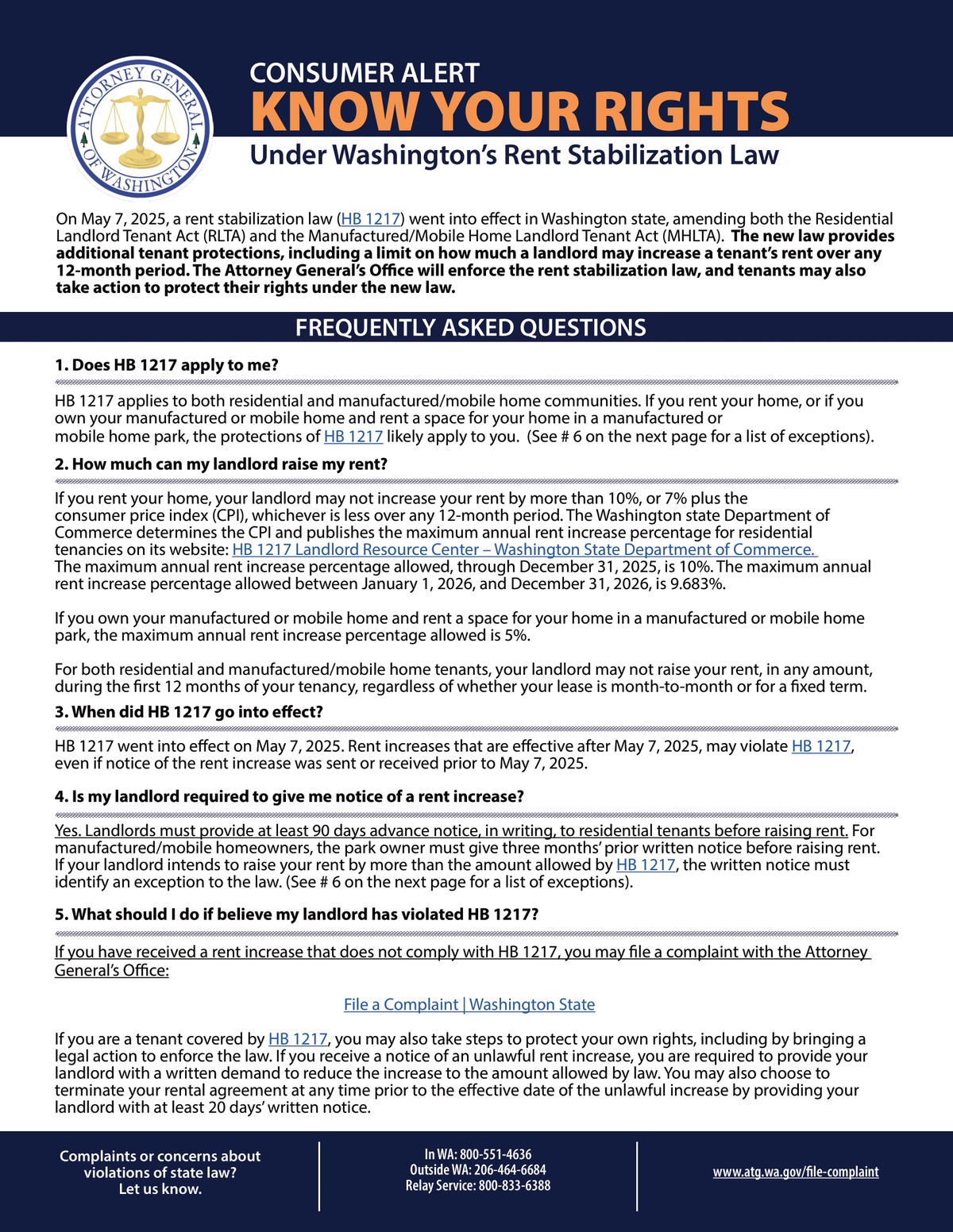
- Washington capped rent hikes for tenants at 10% or 7% plus inflation, whichever’s lower.
- Landlords must give 90 days’ notice and can't raise rent in the first lease year.
- 147 rent violation complaints filed since May; King County led with 36 cases.
Washington state has a new law limiting annual rent increases — a policy that has been broadly supported by housing advocates and tenants.
During the 2025 legislative session, state lawmakers adopted House Bill 1217. The new law caps residential rent increases for existing tenants at 7% plus inflation or 10%, whichever is lower. Mobile and manufactured home rent increases have a 5% limit.
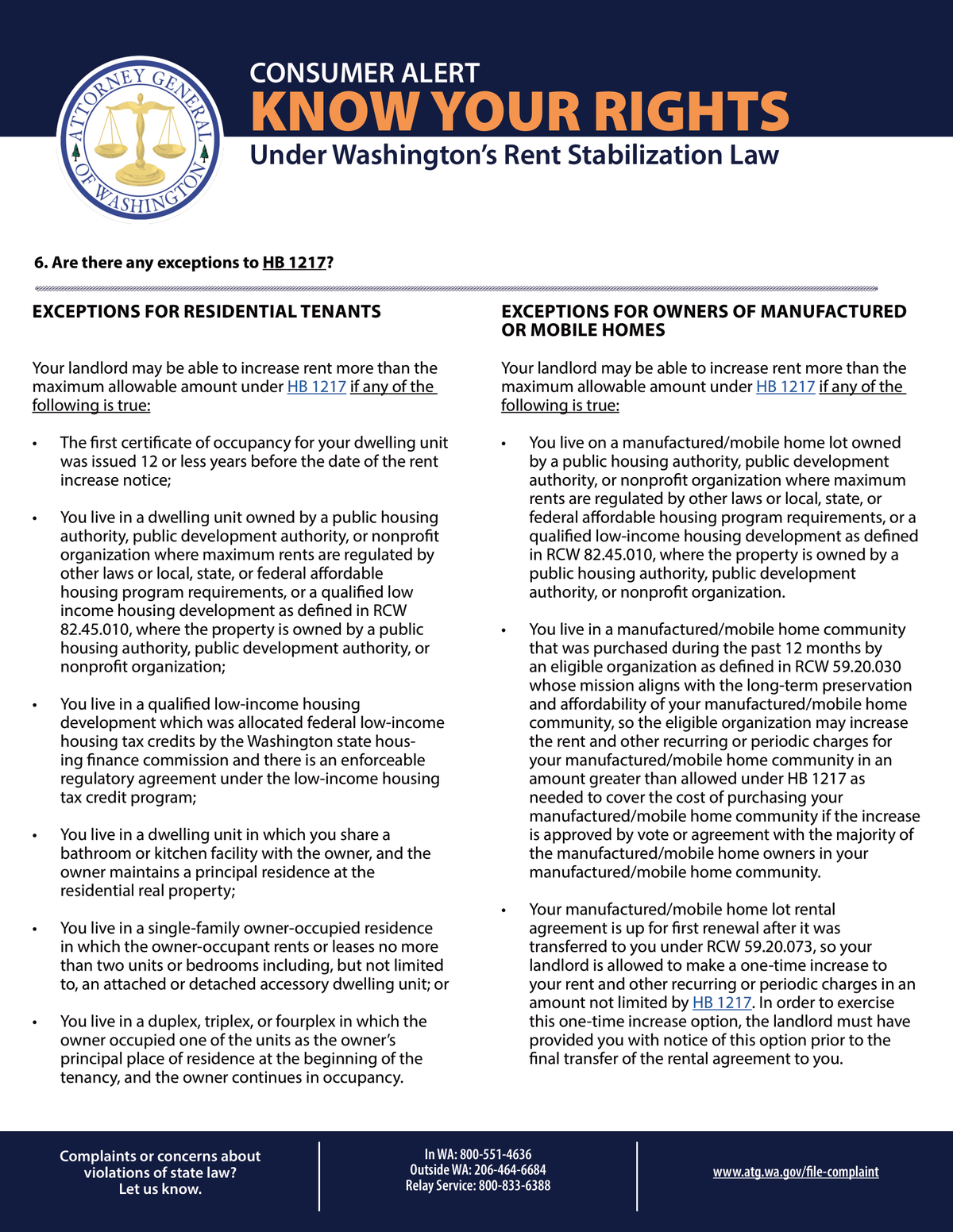
Now the state Office of the Attorney General is sharing a “know your rights” flyer about the new rent-stabilization law. The flyer is available in 12 languages and explains certain exceptions, noting that landlords are barred from raising rent during the first 12 months of tenancy.
Landlords also must give at least 90 days’ notice — in writing — before raising the rent.
HB 1217 took effect immediately after Gov. Bob Ferguson signed it into law on May 7. This year’s cap was set at 10%; the cap for next year has been set at 9.683%.
“Housing stability in Washington is essential,” Attorney General Nick Brown said in a news release. “As attorney general, I am committed to using the full power of my office to make sure everyone in Washington can have a place to call home — no matter where they’re from or how they communicate.”
Renters who believe that their rent increase violates the new law can file a complaint online at atg.wa.gov/file-complaint or call 800-551-4636 in Washington or 206-464-6684 outside Washington.
The AG’s office notes that renters can also bring their own legal action to enforce HB 1217.
The law does feature some exemptions, including for certain new construction, regulated or government-subsidized affordable housing units, nonprofit-owned rental properties and single-family owner-occupied residences.
How many HB 1217 violations have there been?
Data provided by the AG’s Office paint a picture of where the most complaints of purported HB 1217 infringements have been filed in the state.
Deputy communications director Mike Faulk told McClatchy via email that the numbers are pulled from the office’s Catalyst Complaint database, and that they’re approximate. The data shows complaints that have alleged a violation of HB 1217 from May 7 through Aug. 28.
During that time, 147 such complaints have been made.
King County leads the way with 36 alleged violations, followed by Pierce and Snohomish counties, which have each counted 17. Thurston and Whatcom counties, meanwhile, have the next-highest number at 9 apiece.
One alleged HB 1217 violation has been flagged so far in Benton County, while Franklin County has seen three.
Relief from rent-cap law
Michele Thomas with the Washington Low Income Housing Alliance said many tenants are relieved to know the maximum rent increase they might see in the coming year. However, others who aren’t covered by the law are still getting excessive rent hikes.
“We heard from a senior who lives in a property that is under one of the exemptions, and her and her neighbors just got really massive rent increases,” Thomas said. “So, there’s still work to be done, there’s still gaps to fill, and there’s still people who aren’t covered.”
Housing advocates would have preferred to have seen a no-more-than-7% rent cap, which is where the bill started earlier in the year before lawmakers struck a compromise. Still, Thomas noted that the final deal offers protection against excessive rent-gouging.
Some landlords issued large, preemptive rent increases before HB 1217 was signed into law, often citing the bill as the reason, Thomas said. But many wound up later rescinding those notices because they realized that they were probably illegal, she added.
Washington is the third state in the nation to pass state-level protections for renters, she said. HB 1217 features good components in her view, including the fact that it’s enforced by the AG’s Office with significant fines and penalties for bad-actor landlords.
“I think the passage of it in Washington state is being seen by tenants’ rights advocates across the nation as inspiration for their work,” Thomas said.
This story was originally published September 1, 2025 at 5:00 AM.
.jpg)