
Split decision in WA vote to release teen murderer of beloved Tri-Cities area coach
AI-generated summary reviewed by our newsroom.
- WA board rules on release for murder accomplice of Benton City coach Bob Mars in 2004.
- Widow led community campaign highlighting murderer’s lack of accountability.
- Board cited prison violence, gang ties and inconsistent testimony in the decision.
A man found guilty of murdering a favorite coach and Benton City teacher will remain in prison after a Washington state Department of Corrections board determined that it is not safe to release him.
His accomplice, Jordan Castillo, then 14, stabbed Bob Mars after the coach let the two teens into his portable, middle-school classroom to use the landline phone when they said they had no ride home.
Mars, 44, bled to death.
He was an assistant football coach at Ki-Be High School, a teacher at Ki-Be Middle School and a wrestling coach at Kennewick High.
He lived in Richland with his wife and younger sons, then ages 11 and 9, while his oldest son, Bobby, was stationed at Camp Pendleton, Calif.
The Indeterminate Sentence Review Board of the state Department of Corrections decided in a 3-2 vote made public Tuesday that Robert Suarez was more likely than not to commit a new crime if released from prison.

Former Benton County Prosecutor Andy Miller credits the research, analysis and advocacy of Mars’ widow, Kris Mars, with convincing the board to keep Suarez incarcerated, despite Washington’s early release laws that Miller says favor the criminal.
Prison staff and a psychological evaluation recommended the release, helping stack the deck for Suarez’s release, MIller said.
Kris Mars rallied support on social media to keep Suarez locked up, convincing Tri-Cities area residents to write letters, email and attend a hearing in Lacey, Wash., in June.
The board then held a separate hearing with Suarez and his attorney.
Kris Mars listened to the hearing and was concerned that when Suarez talked about his crime, some of what he said did not match what she remembered from his trial, she said.
She called Miller, who prosecuted the case but has since retired, and Lee Cantu, a detective who investigated the murder, to confirm her memory.
On Miller’s advice, she ordered a recording of the hearing and then found timestamps for statements that were deliberately misleading, that she detailed in a letter to the state board.
Cantu and Miller also wrote letters backing up what Kris Mars thought were lies.
“To this day, 21 years later, he is not taking accountability for his actions,” Kris Mars told the Herald.
In a letter to the board, she also asked that Suarez not be allowed to live within 150 miles of Benton County. His plan is to settle again in the Tri-Cities.
Returning to the Tri-Cities would traumatize the Mars’ family and would represent a failure of justice and public safety, she wrote.
She also was concerned that Suarez’s gang affiliation was not being given enough consideration by the board. She maintains he is still violent and in contact with gang members in the Tri-Cities, Spokane and Walla Walla.
Board denies early release
The board’s decision to deny his release cited the concerns she raised.
The board agreed with Kris Mars’ that Suarez had a history of violence in prison connected to his gang membership.
From 2006 to 2019 he received multiple serious infractions that included either “assaultive behavior or some use of aggression,” the board said in its decision summary.
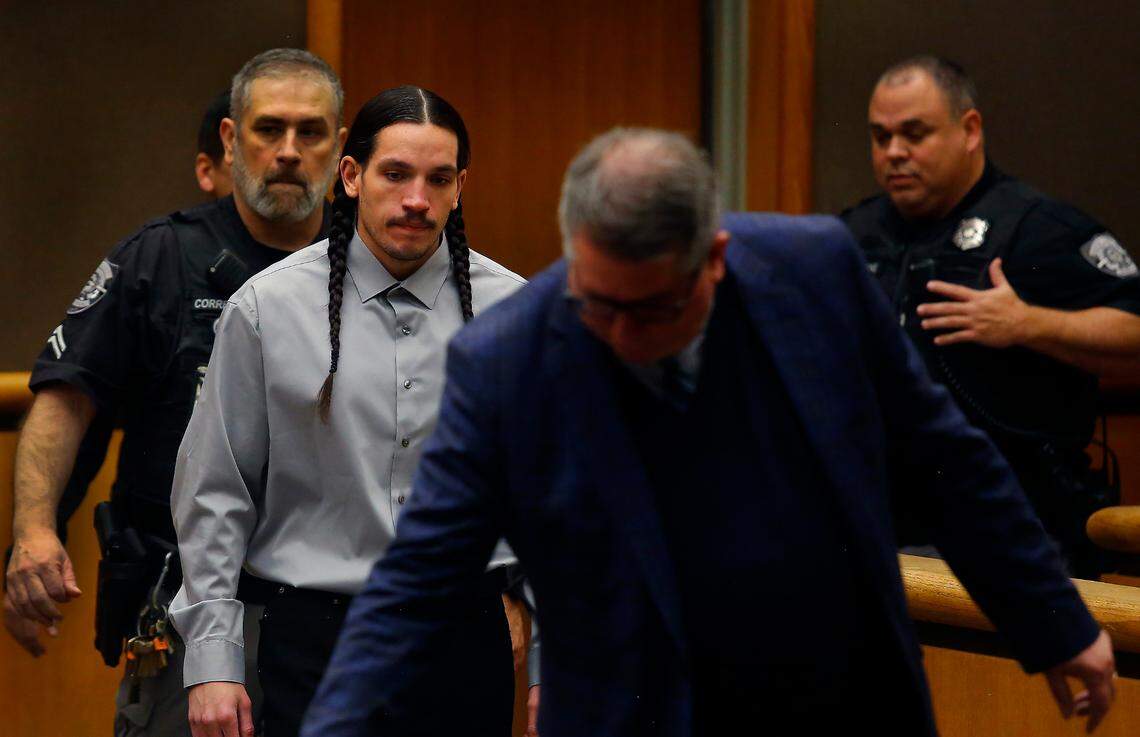
The board also was concerned that Suarez’s description of Mars’ killing in the board hearing differed from accounts in the case record, as Kris Mars had pointed out.
Suarez said at the hearing that before Castillo stabbed Mars, Suarez told him that he should not kill him, according to the board’s decision summary.
“This information is not captured in other file material and appears to be an attempt by Mr. Suarez to lessen his culpability,” the board said.
Suarez’s explanation of the events also did not include the preplanning of the murder, which was not believable, the board’s decision summary said.
“This apparent lack of transparency calls into question where he has taken responsibility for his crimes ....,” the decision summary said.
The board also was concerned that Suarez wants to return to the Tri-Cities.
That indicates a lack of understanding of the impacts of his crime on those who knew and loved Mars and the community as a whole, the board said.
A psychological evaluation of Suarez was largely favorable, but he scored in the second-highest category for risk of violence, according to the decision summary.
In that category 45% of offenders are expected to meet criteria for violence within five years of release, and that increases to 69% within 12 years.
The psychological evaluation also showed that he had a “seriously dysfunctional upbringing, which likely complicated his ability to develop trust, empathy/caring for other people, and prosocial decision making.”
Fight for Bob Mars justice not done
Kris Mars, a teacher, was in class on Tuesday when she got the phone call about the decision, but wasn’t able to answer it until after class ended 40 minutes later.
She could barely breathe until she could return the call, and then she “was stunned” that the board sided with her, she told the Herald.
Suarez had been sentenced in 2005 to 26 years and eight months in prison. He will not be eligible to petition again for early release for five years, about the time he finishes serving his sentence in late 2030.
Last fall, Mars family members were shocked when they were notified that the board decided to consider Suarez’s petition for early release.
“I was just flabbergasted,” Kris Mars said. “I cried my eyes out.”
The family thought that a decision in 2022 to deny a request to shorten the prison sentences for his murder would be the last legal action in the case.
“I remember thinking, ‘I’m going to wave the white flag. I just can’t do this anymore,’” she said. But she wasn’t able to give up on fighting for her husband’s justice, she said.
Kris Mars rallied support, including with news media in Portland and Seattle, and then on social media.
One board member said he had not seen a case that had so affected a community, Kris Mars said.
Tuesday night she posted a thank you to all who had helped convince the board that Suarez should not be released.
“I’m beyond elated to announce that WE did it!!” she posted. “This entire community spoke up, showed up, and WE made a difference! Suarez’s petition for early release was DENIED!!! He will not be released until 2030!!!!”
But the case is not done yet.
The Mars family was notified this spring that Suarez’s accomplice, Castillo, also has applied for early release. His hearing is expected in February.
Castillo was convicted at a separate trial after Suarez in late 2005 and sentenced to 29 years and nine months.
Certain offenders who were not yet 18 but sentenced as adults may ask the Indeterminate Sentence Review Board for early release after serving at least 20 years.
Night of the 2002 murder
On the night of the stabbing Suarez and Castillo were in Benton City to visit Suarez’s girlfriend at the restaurant where she worked.
They were looking for a ride home to Kennewick when they saw Mars’ truck in the Kiona-Benton Middle School parking lot.
They discussed a detailed plan to steal the truck, with Suarez making Castillo promise he would not back down, according to an account of the crime in the review board’s decision summary.
Mars had returned to the school to drop off a game videotape after a Saturday night celebration of the win of the Ki-Be High football team.
The teens approached Mars outside of his classroom and asked for money to call for a ride home, but Mars instead let them into his classroom to use the phone there.
As the teens left, Castillo stabbed Mars.
Mars ran to the main building, where his body was found inside on Sunday morning after his wife reported he had not come home Saturday night.
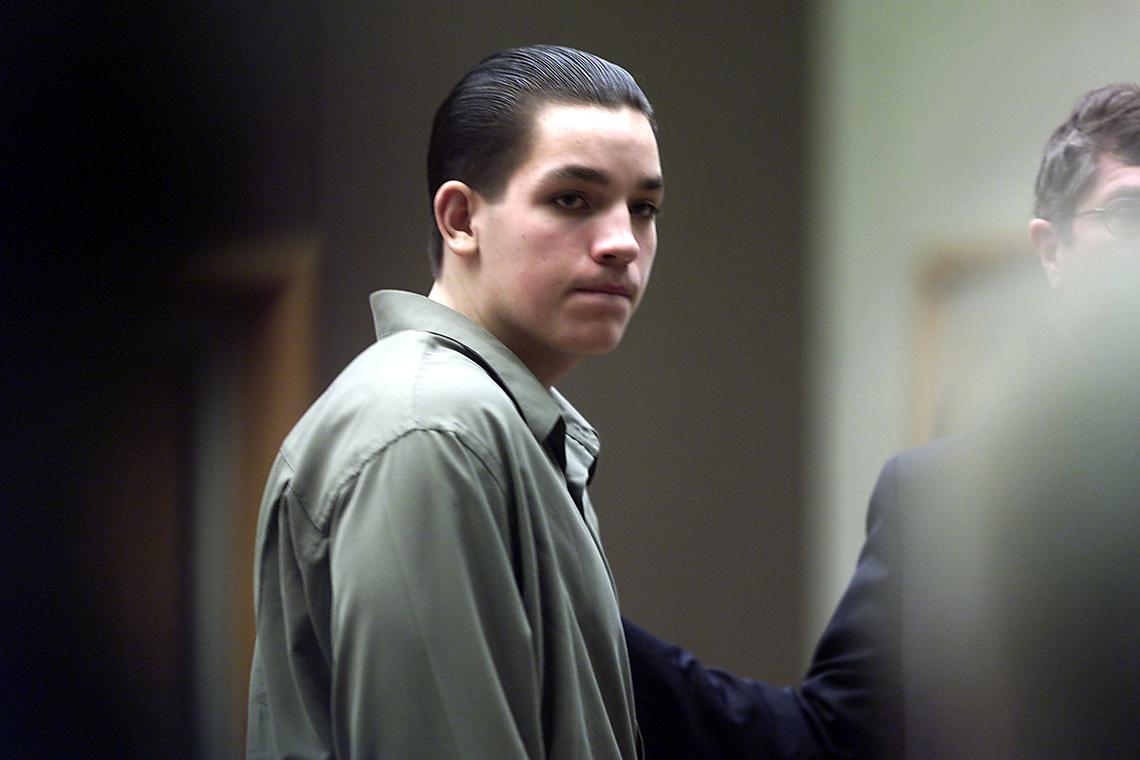
Because the killers did not get Mars’ truck keys before he ran, Suarez broke a truck window, and he and Castillo stole $474, which included the night’s concession stand money, plus a cell phone.
A sentencing memo in the case said that the two teens considered going back to finish killing Mars because they believed he had gotten a good look at their faces. But they were unable to get into the locked main building.
Suarez told Cantu after his arrest three days later that, “I was overjoyed about the money we found .... we got money, we have money for like, I mean, everything and nothing,” according to the decision summary.
Change to WA early release laws?
Miller said Kris Mars’ fight to keep Suarez in prison attracted attention around the state, and the Legislature may consider changes to the law regarding early release.
“I wish the Legislature and courts knew that every time a family gets notice like this (of an early release petition) it is like someone ripping off the scab,” he said.
Mars said there will never be enough ways to thank the community for its support.
“They really rallied around Bob’s memory ... ,” she said. “He didn’t know a stranger and everyone was his friend. And years later the community still feels that.”
This story was originally published September 24, 2025 at 4:21 PM with the headline "Split decision in WA vote to release teen murderer of beloved Tri-Cities area coach."