
Lunar New Year begins. What to know about Year of the Fire Horse
Break out the red envelops and hang the lanterns.
Tuesday, Feb. 17, marks the beginning of Lunar New Year.
The 15-day celebration is “marked by many traditions,” the National Museum of Asian Art said on its website, including house cleaning and shopping at open-air markets.
“At home, families decorate windows with red paper cuttings and adorn doors with couplets expressing auspicious wishes for the new year,” the museum said.
Here’s what you need to know about the history and traditions of Lunar New Year.

What is Lunar New Year? When does it start?
Lunar New Year has been observed for more than 3,000 years, according to National Geographic.
The holiday is widely celebrated in China, South Korea and Vietnam, as well as “countries with a significant overseas Chinese population,” the National Museum of Asian Art said.
“Lunar New Year marks the beginning of a new year in the lunisolar calendar, which was developed in ancient China,” National Geographic said.
The new year starts on the new moon nearest the midpoint between the winter solstice and the spring equinox, the publication said.
The start date for Lunar New Year “changes every year, falling no earlier than Jan. 21 and no later than Feb. 21” on the Gregorian calendar, online calendar Time and Date said.
In 2025, the beginning of Lunar New Year coincides with Mardi Gras, the final day of Carnival before the Christian observance of Lent.

Why is 2026 the Year of the Fire Horse?
A different animal is associated with each Lunar New Year with the order determined by the Chinese zodiac calendar, according to Wake Forest University Museum of Anthology.
“In order, the 12 Chinese zodiac animals are: rat, ox, tiger, rabbit, dragon, snake, horse, goat, monkey, rooster, dog and pig,” the Wake Forest University said. “2026 is a year of the horse.”
The last year of the horse was 2014.
According to National Geographic, 2026 has a special title: It’s the year of the fire horse.
“In addition to cycling through 12 animals each year, the Chinese lunar calendar also rotates between the five traditional Chinese elements — earth, wood, fire, metal and water,” National Geographic said. “While the animal rotates each year, the element only rotates every two years.”
What traditions are associated with Lunar New Year?
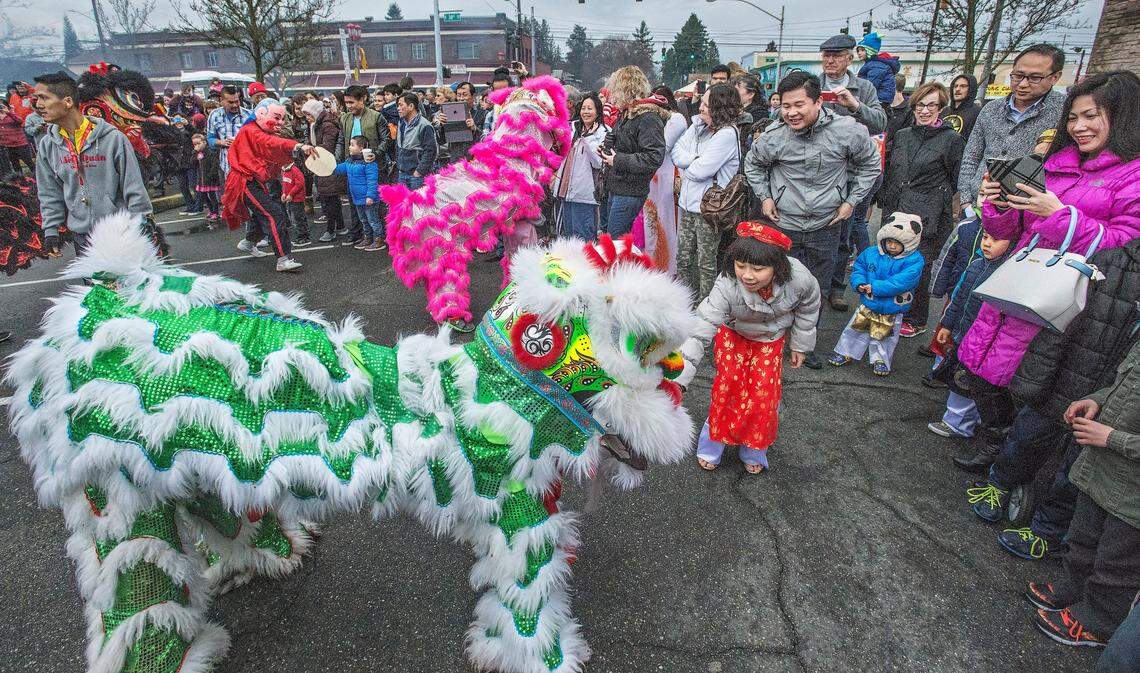
There are several traditions associated with Lunar New Year celebrations, including paper lanterns and lion and drago dances.
In the days leading up the Lunar New Year, it’s traditional to deep-clean your house.
“This signifies the removal of the old and welcoming the new,” according to the Wake Forest University Museum of Anthology.
In China, bright red envelopes containing money are given to children and unmarried adults, traditionally by relatives, in celebration of the new year, according to the Wake Forest University Museum of Anthology.
These envelopes, called “hong bao” in Mandarin or “lai see” in Cantonese, symbolize keeping evil away.

Fireworks are lit as a way to ward off evil spirits, according to Chinese tradition.
“Right after (midnight) on New Year’s Eve, fireworks will be launched to celebrate the coming of the New Year as well as to drive away evil,” the Wake Forest University museum said. “It is believed that the person who launches the first firework of the New Year will have good luck.”
Korean Lunar New Year traditions include paying respect to elders through ritual deep bows.
Food and fashion also play a big part in Lunar New Year traditions.
In South Korea, a rice cake soup called tteokguk is served to symbolize a fresh start in the new year, National Geographic said.
Hanboks, colorful outfits featuring full wraparound skirts, are also worn on the holiday, known as Seollal.
Vietnamese people create fruit trays, give children red envelopes filled with “lucky money” and don traditional clothes — tunics called áo dài —in celebration of the new year, known as Tết.
This story was originally published February 17, 2026 at 3:46 PM with the headline "Lunar New Year begins. What to know about Year of the Fire Horse."