
Feds think they can do Eastern WA nuclear waste cleanup faster, cheaper. Here’s how
AI-generated summary reviewed by our newsroom.
- Feds propose sending some radioactive Hanford vit plant waste offsite for treatment
- DOE says plan would be safe, save money and speed nuclear site cleanup
- Washington state Department of Ecology approval is needed after public comments
The Department of Energy is looking at a way to speed up Hanford nuclear site environmental cleanup by having some waste with low radioactive contamination from the vitrification plant turned into concrete-like grout offsite for disposal.
The proposal under review could allow the Hanford vitrification plant to glassify 10% to 20% more radioactive waste now stored in aging underground tanks.
DOE believes this proposed grouting, which is in addition to other radioactive waste grouting already under consideration, would not only speed up treatment of radioactive waste required for its disposal, but save money.
And, it will allow waste to continue to be emptied from leak-prone single-shell tanks into the limited space remaining in newer double-shell tanks. As waste is treated, more space becomes available in double-shell tanks.
“This is a common-sense step that supports both efficiency and safety,” said Ray Geimer, the DOE Hanford manager, about the proposal to grout some waste from the vitrification plant.
“It gives the site additional flexibility while continuing to meet regulatory requirements and protecting workers, the public and the environment,” he said.
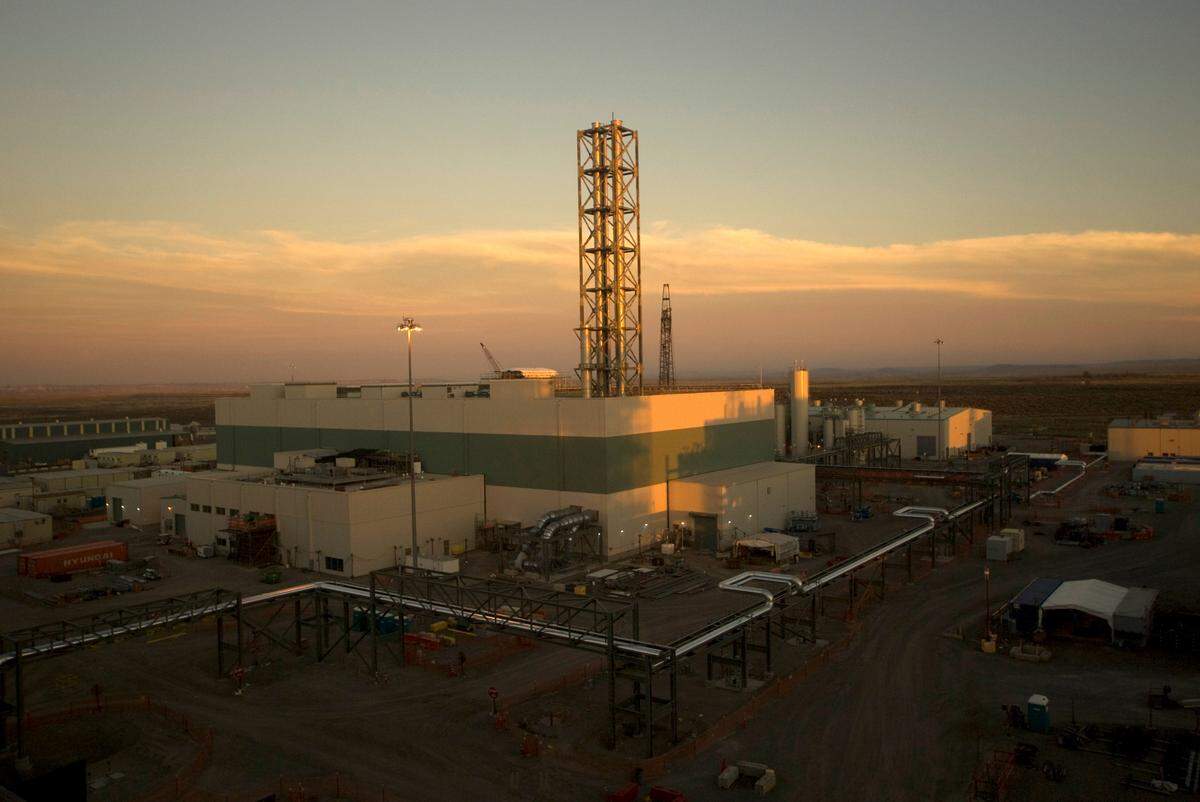
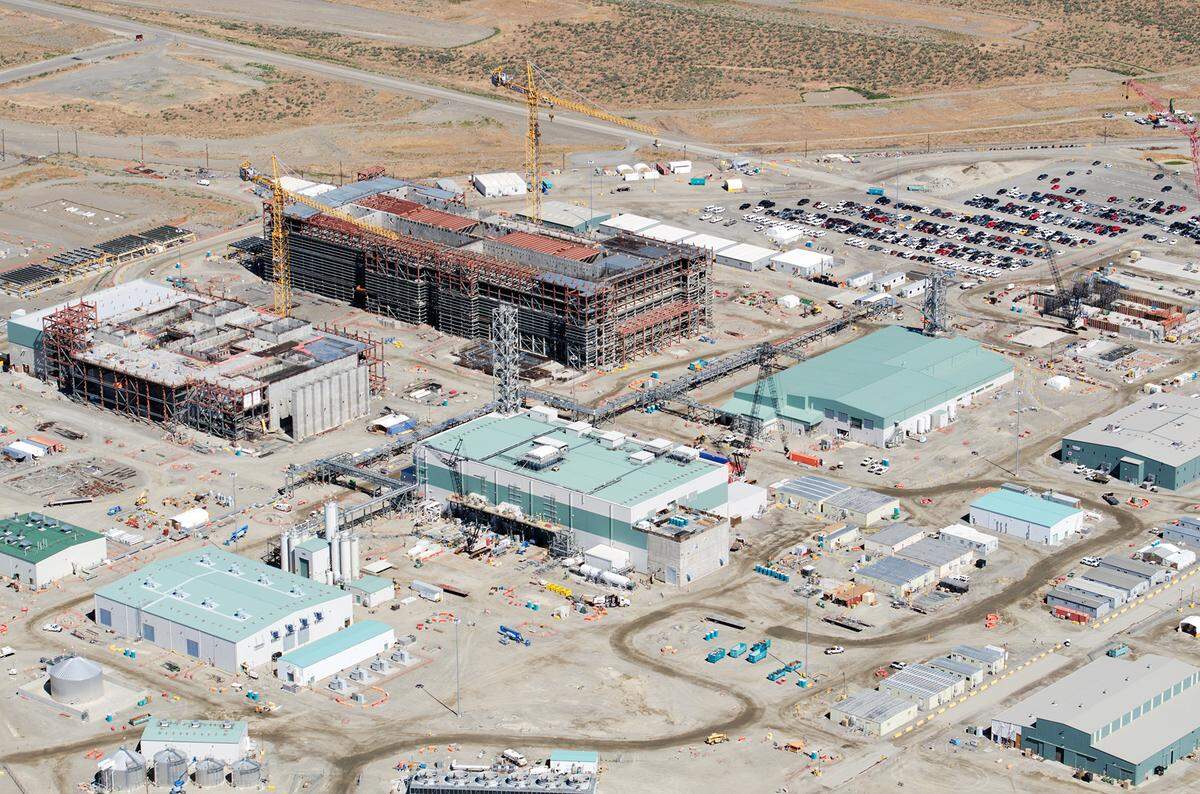
In October 2025, the massive vitrification plant in central Hanford started turning some of the least radioactive of 56 million gallons of tank waste into a stable glass form for disposal. At that point, construction, testing and commissioning of the vit plant and been underway for 23 years.
But as the plant treats waste, it also creates more waste.
DOE says that for every gallon of waste glassified at the vitrification plant, 1 to 3 gallons of less radioactive, and therefore less hazardous, secondary waste is created as a byproduct.
DOE is proposing grouting some of that secondary waste, using money already in the Hanford tank waste budget. That would allow the vitrification plant treatment to remain focused on glassifying waste from underground tanks, according to DOE.
The Hanford nuclear site in Eastern Washington near Richland was used from World War II through the Cold War to produce nearly two-thirds of the plutonium for the nation’s nuclear weapons program.
The plutonium was chemically separated from uranium fuel irradiated at Hanford reactors, leaving 56 million gallons of radioactive waste and hazardous chemical waste stored in underground tanks.
Grouting vit plant waste
At the vitrification plant melters heat a mixture of radioactive waste from underground tanks and glass forming material, with steam and gas from the melters captured in an off-gas system. Water is then used to cool some of that captured contaminated steam and gas.
As the cooling water is changed out, the initial plan was to evaporate that liquid secondary waste mixture into a sludge-like form containing glass forming material and some limited contamination from the radioactive waste heated in the melter.
The sludge would then be sent back to the vitrification plant to be added to tank waste and sent through the vitrification plant again.
The vitrification plant now has two melters to glassify low activity radioactive waste, with just one operating initially. It can generate about 9,000 gallons of sludge each month.
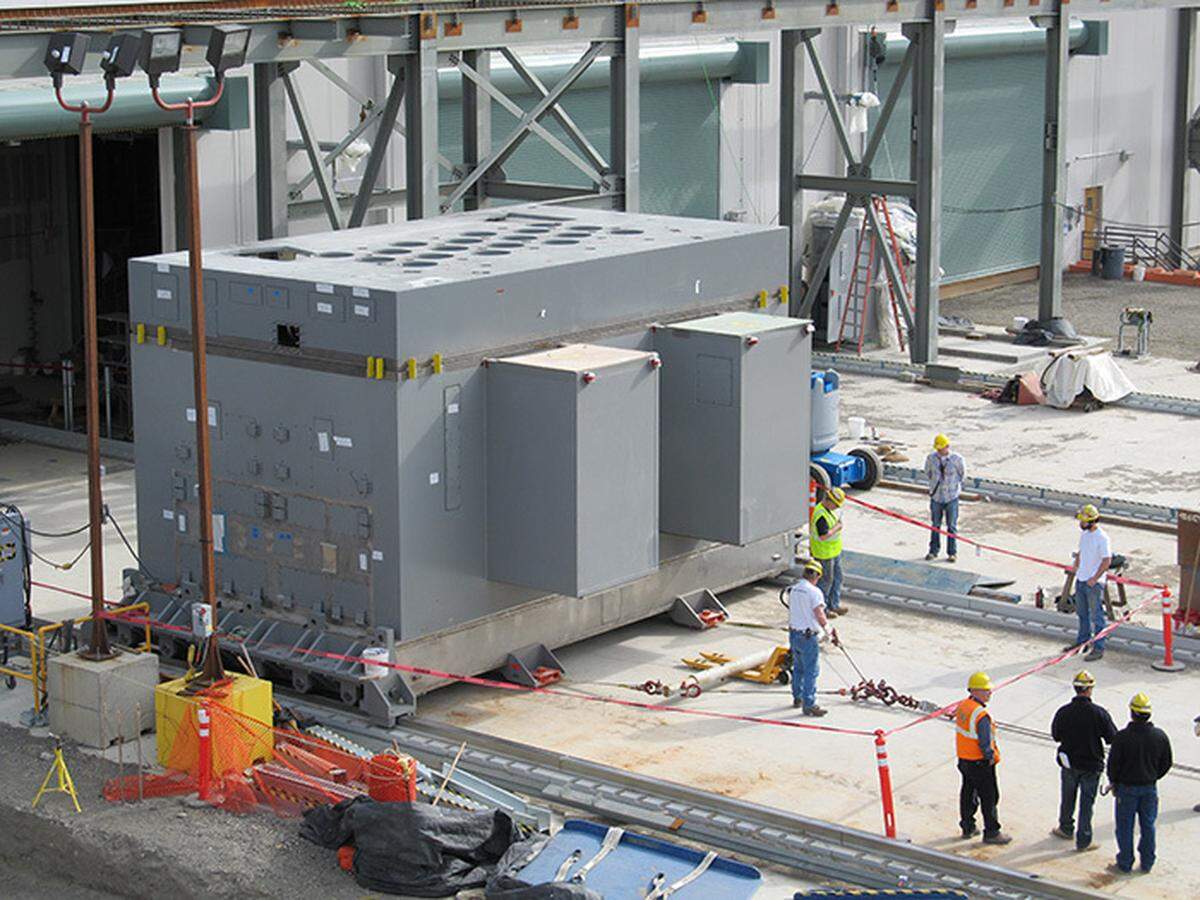
That secondary waste has proven less radioactive than the conservative estimates before the vitrification plant started up, prompting DOE to look at grouting it.
DOE is proposing that after evaporation of the secondary waste, the sludge be shipped just off the Hanford nuclear site to Perma-Fix Northwest on Battelle Boulevard in Richland to be grouted. It would then be sent to a commercial disposal site — likely an EnergySolutions facility near Clive, Utah — rather than being returned to Hanford.
The change of plans would require the Washington state Department of Ecology, a Hanford regulator, to approve the plan and issue a permit.
The state agency already has agreed to grouting some tank waste as part of a holistic agreement with DOE that was approved in January 2025 after more than four years of negotiations between DOE and regulators on a path forward for tank waste.
That agreement allows DOE to separate out the less radioactive waste — low activity waste — from 22 tanks miles away from the vitrification plant in central Hanford, grout the waste and then dispose of it at a site in either Utah or Texas.
Given the geology of Hanford and the proximity to the Columbia River, DOE is not allowed by Washington state to dispose of grouted tank waste at the Eastern Washington nuclear reservation near Richland.
Vitrified waste is considered protective enough of the environment to dispose of in a lined landfill in central Hanford.
Public commenting on Hanford grouting
The public can learn more about the plan to grout secondary waste from the vitrification plant at a public meeting at 5:30 p.m. March 24 at the Richland Public Library. Attend in person or through an app at https://bit.ly/4bVUR7R or a phone call to 509-931-1284, with conference ID 648 068 062#.
Comments can be made on the state permit needed to allow grouting of secondary waste from the vitrification plant at that meeting or in writing through April 26 online at https://bit.ly/4rqodjJ or by mail to Washington State Department of Ecology; 3100 Port of Benton Boulevard; Richland, WA 99354.
In addition, DOE is holding a separate public comment period related to grouting tank waste from single-shell tanks in the 200 West Area, which is several miles from the vitrification plant.
That comment period is open until March 26. Learn more at a fact sheet posted at the calendar at Hanford.gov on each day through March 26.
Comments can be emailed to WIR_WATT@rl.gov or mailed to U.S. Department of Energy; Attn: Dana Cowley; P.O. Box 450, MSIN H6-60; Richland, WA 99354.
This story was originally published February 25, 2026 at 1:22 PM with the headline "Feds think they can do Eastern WA nuclear waste cleanup faster, cheaper. Here’s how."