Kohberger murder case cost taxpayers millions. Defense expenses remain unclear
AI-generated summary reviewed by our newsroom.
- Public defense costs for Bryan Kohberger were nearly $5.5M, and counting.
- Conservative accounting shows total public spending on the murder case exceeds $8M.
- Many defense invoices and payment details remain sealed and are under legal appeal.
Mounting a legal defense for Bryan Kohberger on the public dime has cost nearly $5.5 million — and counting — according to an analysis by the Idaho Statesman.
But how Kohberger’s attorneys spent the millions in taxpayer money is still not clear. His public defense team’s invoices and expenses — including information that would reveal the sums paid to each lawyer who represented him — remain in a sealed civil court file over which the Statesman is actively litigating. Kohberger, 31, pleaded guilty to the November 2022 college student murders in Moscow last year.
In response to a request from the Statesman late last year, the North Idaho district court judge appointed to review and approve the defense’s spending for the criminal case ordered that at least some of the financial documents be unsealed. Kohberger’s attorneys had objected to releasing any of the records.
In his ruling, Judge Mark Monson of Idaho’s 2nd Judicial District in Nez Perce County granted that some of the documents are exempt from public disclosure and include “highly intimate facts or statements.” He also provided Kohberger’s attorneys a chance to make specific legal objections to the release of individual records in the case file.
Kohberger’s attorneys, who have continued to bill the state for their services, are now appealing Monson’s unsealing order to the Idaho Supreme Court, which has accepted the records case but has yet to schedule oral arguments. An attorney with the Idaho State Appellate Public Defender’s Office has been appointed to argue their case.
Overall, including total defense costs, a conservative estimate of the amount of public money spent on the high-profile case exceeds $8 million, the Statesman found through a detailed accounting. The total encompasses the documented expenditures since the day of the murders for the local and state police agencies, prosecution team and university, as well as the cost to hold Kohberger in custody dating to his arrest almost seven weeks after in late December 2022.
The amount does not include associated expenses for the FBI, Washington State University — where Kohberger was a Ph.D. student of criminology at the time — or the Idaho court system. WSU and its campus police force did not experience elevated costs associated with the case and the state judiciary is unable to attribute totals to an individual defendant, respective spokespeople said. The FBI, which helped city and state police with the sprawling investigation, previously declined to comment about financial obligations from its involvement.
Even without those additions, the Kohberger case delivered extraordinary cost to the state. Boise-based criminal defense attorney Edwina Elcox called it an “incredible amount of money.”
“It’s an enormous figure without even a trial,” she said in a phone interview. “But at the end of the day, what his attorneys were obligated to do was zealously advocate for their client. It’s not their obligation to worry about upsetting taxpayers.”
For comparison, the combined total for the three years of police investigation, prosecution and defense leading up to trial for the separate murder cases against Lori Vallow Daybell and Chad Daybell was just over $3.6 million, according to East Idaho News. Vallow Daybell’s six-week trial in Boise, where she was convicted, then cost another $1.8 million, The Post Register reported. That case is now on appeal, as is Chad Daybell’s after he also was later convicted.
Kohberger admitted to killing U of I students Kaylee Goncalves and Madison Mogen, both 21, and Xana Kernodle and Ethan Chapin, both 20, at an off-campus house on King Road in Moscow. In July 2025, he accepted a deal to plead guilty to their fatal stabbings in exchange for dropping the death penalty, which avoided a monthslong capital murder trial where the total cost of the case would have swelled even higher.
Academic studies in neighboring states have detailed how pursuing the death penalty in aggravated first-degree murder cases on average costs taxpayers as much as $1 million more than when prosecutors seek a life sentence. Peter Collins, a Seattle University professor of criminal justice, criminology and forensics, was the lead author of the two studies in Oregon and Washington state.
“Not one study has shown it’s cost-beneficial from an economic standpoint,” Collins previously said in an interview with the Statesman. “So the question about whether it’s worth it is up to the people running the show, and ultimately maybe the voters.”
County shoulders defense costs
Bearing the financial brunt of the case that garnered international attention was Latah County, at almost $3.1 million. On top of costs to the prosecution and the local sheriff’s office to house Kohberger at the county jail for more than 20 months, Latah County had to cover the initial half of expenses from his public defense team.
Beyond static annual salaries for county attorneys who led the state’s case from the prosecutor’s office, which are not factored into the total, Latah County paid more than $72,000 to private experts outside of law enforcement, public records showed. Five months of compensation paid to former U.S. Attorney for Idaho Josh Hurwit, who Latah County Prosecutor Bill Thompson hired specifically for trial work on the Kohberger case, amounted to more than $41,000.
The prosecutor’s office also spent nearly $34,000 on other expenses such as travel and trial preparations. Included in those costs, the prosecutor’s office got stuck with a $16,400 nonrefundable fee for lodging it reserved in Boise once the case was moved out of Moscow for trial. The Idaho State Police was set to spend $19,000 in a similar housing arrangement for the duration of Kohberger’s planned trial, but received a refund for all but $1,340 once it was no longer needed, records showed.
Jailing Kohberger on no bond for 619 days at about $194 per day over the course of pretrial court procedures cost Latah County about $120,000. The county also paid nearly $10,000 total for the four autopsies plus toxicology results for each victim, records showed.
The majority — 91% — of identifiable costs to Latah County came from having the burden of funding Kohberger’s public defenders and case once he was found by a judge to be indigent, meaning he couldn’t afford his own private attorney. According to county budget reports, that total reached almost $2.8 million from the end of December 2022 to the end of September 2024, when Idaho’s public defense system switched from being county-based to a statewide office.
Monson was assigned by the judge presiding over Kohberger’s criminal case in January 2023 to oversee the defense’s expenses in a “resource judge” role. Those requests would have comprised approvals for payments to various experts to review and interpret evidence, in addition to billable hours filed by his attorneys Anne Taylor, Jay Logsdon and Elisa Massoth. Taylor’s rate was set by the court at $200 per hour, while Logsdon and Massoth each billed at $180 per hour.
How much money Kohberger’s attorneys earned while the county was footing the bill is not publicly known, nor is what they paid to individual experts in the lead-up to their client’s expected murder trial. Documents that offer a fuller understanding of that information likely sit in the sealed civil court file for which the Statesman argues through its lawyer should be publicly disclosed — including because the case is fully adjudicated after Kohberger also waived all of his appeal rights. His legal team asserts the records are protected work product and attorney-client privileged.
Since the financial responsibility for Kohberger’s public defense costs shifted to the state in October 2024, the newly formed Idaho State Public Defender’s Office has paid out more than $2.65 million for those expenses, according to public records. Of that amount, nearly $1.7 million went to pay bills, including to a range of defense experts in the lead-up to trial, though the state public defender’s office denied requests for those individual payment amounts, citing a series of exemptions for information protected under state law.
Kohberger’s attorneys together have earned more than $980,000 since that time, records showed. Taylor, now paid a reduced rate of $150 per hour, has received about $485,000, while Massoth, now at a rate of $125 per hour, was paid about $335,000. Those payouts cover billable hours, plus reimbursements for such expenses as travel, meals and lodging, Patrick Orr, spokesperson for the state public defender’s office, told the Statesman. Logsdon earned only his annual salary as an employee of the new office.
In the run-up to the scheduled trial, Logsdon was replaced on the defense team in February 2025 by Bicka Barlow, an outside attorney from California who specializes in DNA. Earlier in the case, Barlow worked as a defense expert and testified in August 2023 during a pretrial hearing. She has received about $160,500 since October 2024, but it is unclear what portion of that total covered her legal work versus her time as a paid expert in the case.
University, police spent big, too
Costs to the University of Idaho surpassed $1.7 million. More than $1 million of that money went toward heightened security in the months after the murders, including for private security and increases to its own campus security staff, the Statesman previously reported. It also entailed spending approximately $324,000 for a private consultant to review the campus security plan, and another $241,500 to pay back Idaho State Police for its troopers to provide extra patrols throughout the area.
Separately, ISP spent $367,500 while the Moscow Police Department’s added expenses totaled about $140,000 during the investigation — each primarily on officer overtime, according to expenses from each law enforcement agency. An emergency fund for Gov. Brad Little reimbursed about $430,000 of those police costs between the local and state police, the governor’s office said. The Idaho Legislature provided an extra $1 million to the university to offset much of its added security expenses.
The U of I took control of the King Road house after its owner donated the property in February 2023. The university then became responsible for remediation work and its daily 24/7 security before the crime scene was torn down against some of the victim families’ wishes ahead of a trial at the end of December 2023. The total cost tied to the house was about $346,000, including $14,000 to bulldoze it, the Statesman’s analysis found.
In August 2024, the university unveiled a memorial garden dedicated to the four victims at the edge of campus near the arboretum. Construction cost $285,000, largely funded by public donations, with $100,000 chipped in by campus student affairs, U of I spokesperson Leigh Cooper told the Statesman.
The next month, Kohberger’s trial was moved to Ada County and he was flown on an ISP plane to Boise. For 312 days, Kohberger sat in the Ada County Jail awaiting his trial at a cost of $94 per day, totaling about $29,000, which was billed back to Latah County, according to Ada County Sheriff’s Deputy Lauren Montague.
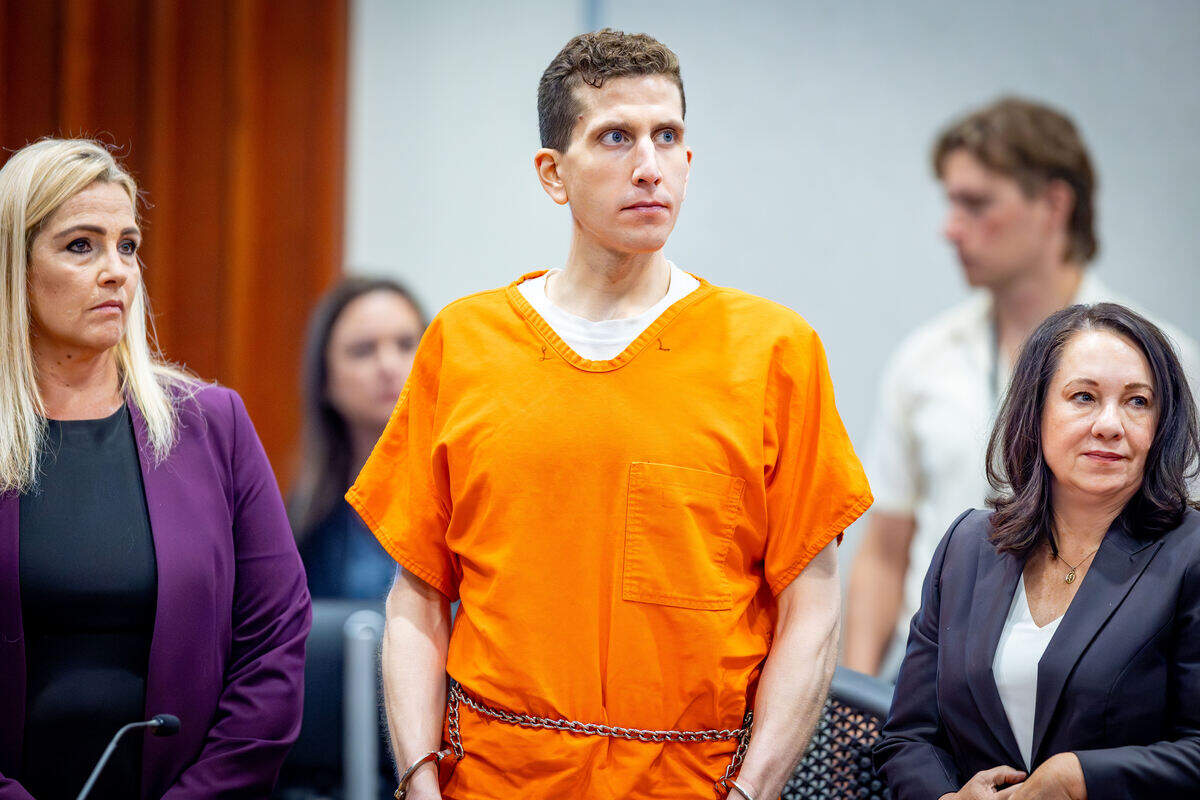
On July 23, 2025, the day of his sentencing hearing, Kohberger — Idaho Prisoner No. 163214 — was transferred to the state’s maximum security prison south of Boise to begin serving four consecutive life sentences with no chance of parole. The cost to taxpayers of his lifelong imprisonment is an average of $100 per day, according to the Idaho Department of Correction, or roughly $36,500 per year — so far totaling about $33,800 from less than a year of Kohberger’s incarceration.
This story was originally published June 26, 2026 at 3:00 AM with the headline "Kohberger murder case cost taxpayers millions. Defense expenses remain unclear."