
$2M settlement will fight river-clogging ‘weeds’ harming salmon in Eastern WA
AI-generated summary reviewed by our newsroom.
- $2 million settlement to be used to reduce Yakima River stargrass
- Sunnyside plant discharges alleged to contribute to water quality issues down to Richland
- Columbia Riverkeeper sued Darigold in July 2025
Darigold has agreed to pay $2 million to the Yakama Nation to help reduce the stargrass that clogs the Yakima River in the stretch south of Sunnyside to Richland in Eastern Washington.
Columbia Riverkeeper sued Darigold in federal court in July 2025 over four years of discharges of the water recovered from the evaporation of whey or milk at its plant in Sunnyside.
Water stargrass turns the lower Yakima River into a pond-like environment during warm weather becoming so thick that it causes problems for spawning salmon, as well as anglers, boaters, hunters, swimmers and others.
The lawsuit said that Darigold had ongoing violations of its national permit for its pollutant discharge elimination system, damaging the Yakima River, which flows into the Columbia River.
Darigold disputes that the discharges from its Sunnyside plant have caused any harm.
Neither a court nor the Washington state Department of Ecology has determined any fault by Darigold, the company said in a statement after Columbia Riverkeeper announced the agreement Monday.
Darigold installed improved membranes to treat the effluent discharged from two outfalls before the agreement was reached between Darigold and the Oregon-based environmental group, according to a court document.
Additional improvements are planned, according to Darigold.
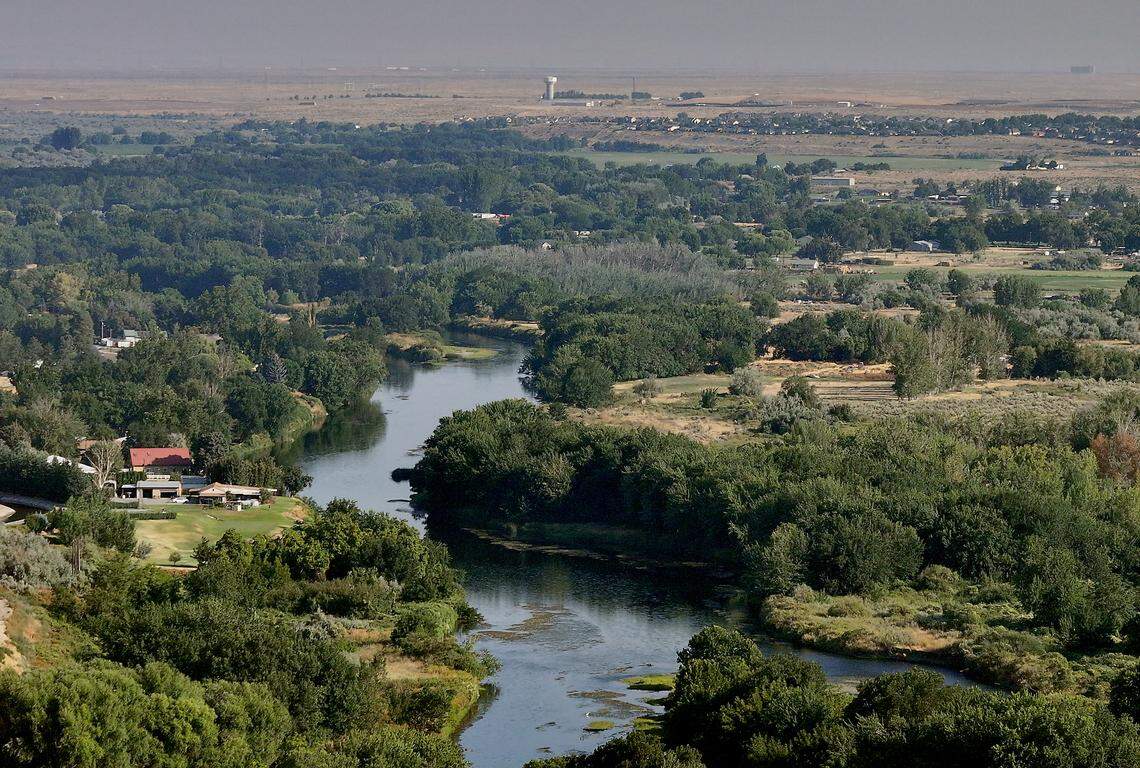
“It is important to understand that the vast majority of discharges from our Sunnyside facility do not go directly into the river,” Darigold said Monday. “Instead, that wastewater goes to the Port of Sunnyside treatment plant where it receives further treatment before it goes out to the river.”
Darigold also has agreed to pay $15,000 to the Yakama Nation every time the daily effluent limit is exceeded at one of the two outfalls and $25,000 for each monthly limit that is exceeded. The payments are in effect for 18 months after the agreement is formalized as a consent decree and may not exceed $150,000.
In addition, Darigold will implement an engineering report that must be approved by the Washington state Department of Ecology to ensure compliance with the Clean Water Act.
“This is an incredible victory for clean water and should lead to lasting improvements to the Yakima River Basin,” said Teryn Yazdani, Columbia Riverkeeper attorney.
Using the penalty money to reduce stargrass in the Yakima River will directly improve water quality and fish habitat, said Tom Elliott, Yakama Nation Fisheries Project manager.
He said the native plant has emerged as a critical water quality issue in the lower 60 miles of the Yakima River.
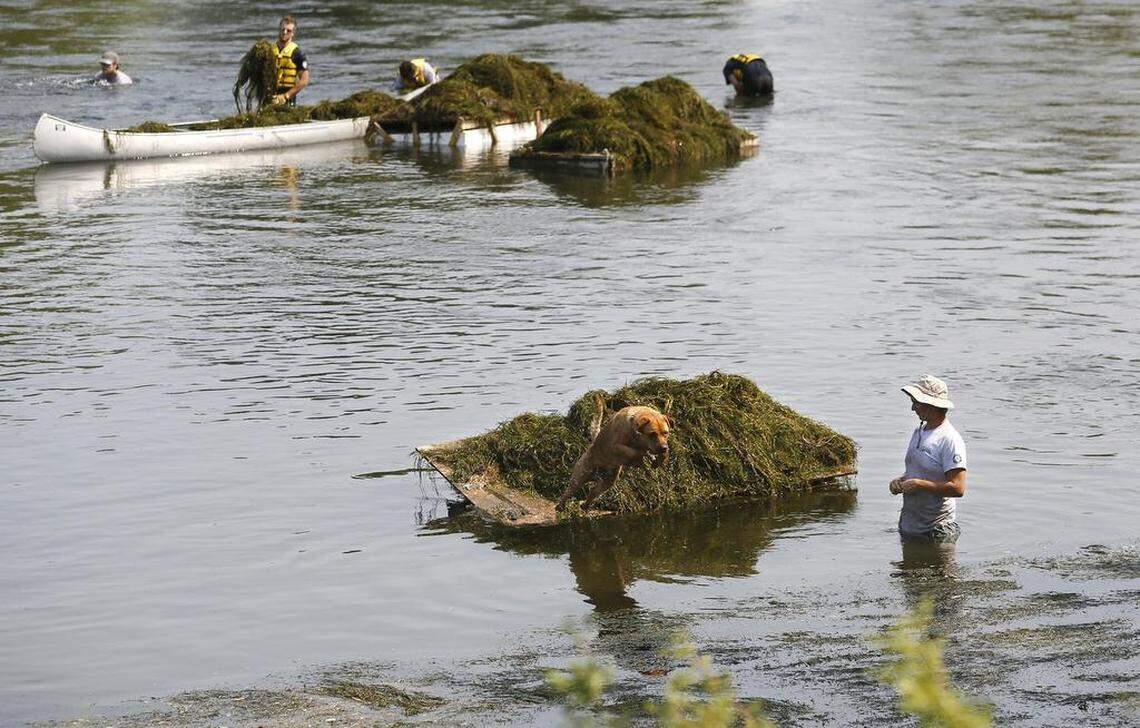
Stargrass and salmon
Water stargrass acts like a weed because of flow regulation and agricultural nutrients and converts the lower Yakima River into a sluggish environment during the warm season, Elliott said.
As stargrass has steadily increased over the past decade in the lower Yakima river, salmon spawning there had decreased, according to the district.
It forms a dense two-inch thick mat of roots, according to district.
When salmon return to the lower Yakima River to spawn, they find their traditional nesting grounds covered by stargrass, and they can’t get down to the gravel at the bottom of the river to sweep it aside and make a depression to lay their eggs. Instead, they are forced to migrate further, the district said.
In addition, during the day, water stargrass produces oxygen. After the sun goes down, water stargrass consumes more oxygen than it produces, and sometimes causes dangerous drops in the amount of oxygen available to fish and other aquatic life, according to the conservation district.
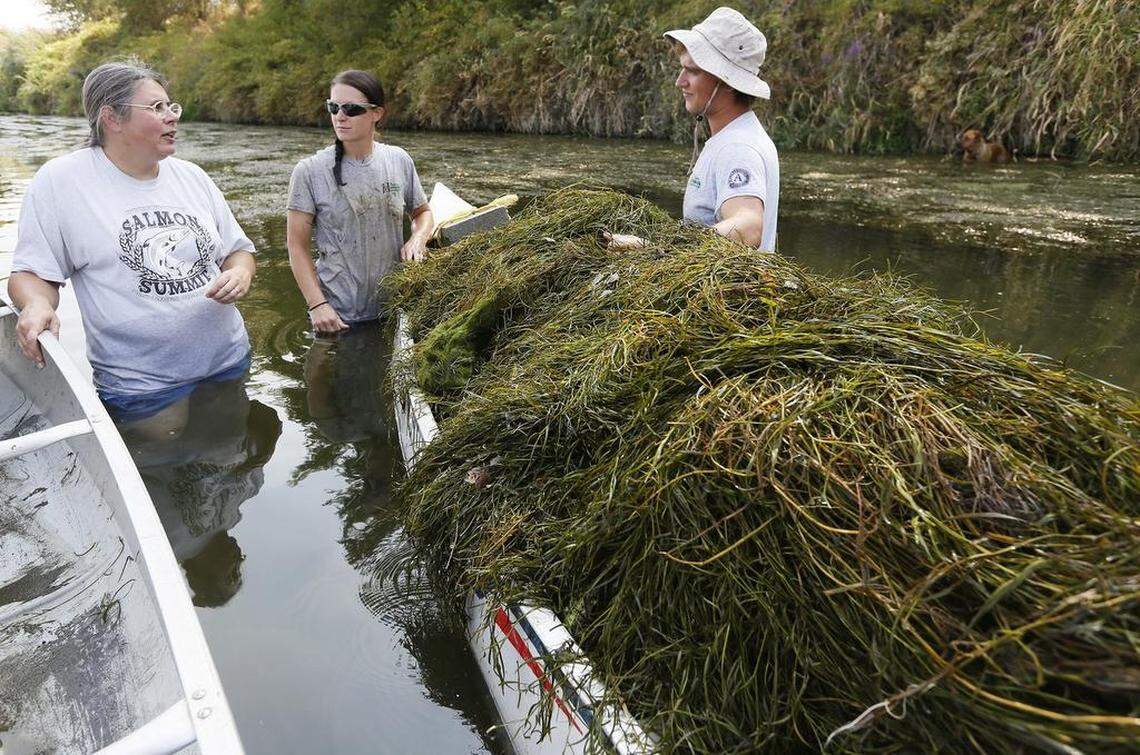
“The Yakima River is a large, important tributary to the Columbia River, and protection of its water quality is vital to the overall health of the Columbia,” said Yazdani. “Yakama Nation, Washington, communities and may stakeholders have worked for decades to restore the Yakima River for fish and many other uses. “Our settlement with Darigold is one of many important steps to protect and restore a shared resource.”
The Darigold plant in Sunnyside processes raw milk into products that include cheese, whey powder and milk powder. The plant processes around 7.7 million pounds of raw milk each day of the week, according to the lawsuit.
“Darigold has a strong commitment to environmental stewardship and prides itself on being a responsible member of the communities in which we operate, including Sunnyside,” it said in a statement. “We have consistently partnered with the Port of Sunnyside and Washington Department of Ecology to responsibly manage wastewater from this facility, which is an inevitable byproduct from the essential dairy products we make and supply to customers around the world.”
Under the Clean Water Act, the Department of Justice has 45 days to weigh-in on a proposed consent decree. The consent decree based on the agreement can then be entered as a federal court order.
This story was originally published April 13, 2026 at 2:43 PM with the headline "$2M settlement will fight river-clogging ‘weeds’ harming salmon in Eastern WA."