
Parasite found in Western WA coyotes puts dogs and humans at risk
Western Washington is home to an abundance of urban wildlife, animals that live and somehow thrive at the intersection of forests and concrete. Coyotes are the poster children of urban wildlife, scrappy scavengers who feed off a city’s critters, refuse and pets.
Most cities across America coexist with coyotes, whether they know it or not, and the Seattle-Tacoma area is no exception. A new study by a team of University of Washington researchers, led by a postdoctoral scholar named Yasmine Hentati, recently has revealed that over one-third of the coyotes studied across Western Washington carry a deadly tapeworm that can be transmitted to pets and, in some cases, to humans.
Deadly worms
The disease-causing tapeworm is called Echinococcus multilocularis, and Hentati and her team weren’t originally looking for it. But they found it.
“I knew it had been spreading across America,” Hentati told The News Tribune. “Including Alberta and British Columbia. But I didn’t expect to find it here.“
Hentati’s Ph.D. project was to look into the gastrointestinal parasites of coyotes around the Seattle area, something that hadn’t been done before.
“I wanted to know what kind of worms they had,” Hentati said. “I also wanted to know how those infections related to what they were eating.”
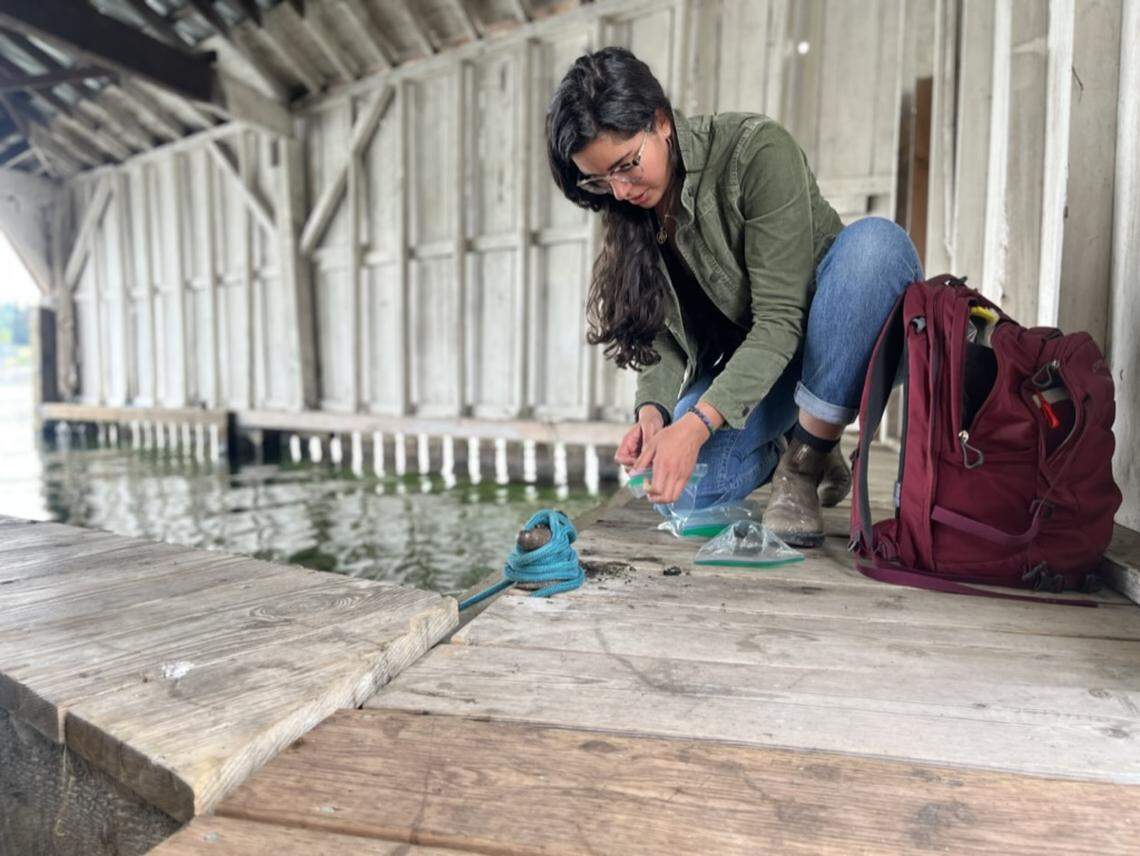
Hentati showed a list of parasites she presumed might be found to her Ph.D. committee. The parasite expert on the committee saw Echinococcus multilocularis on it and frowned.
“She looked at me and said, ‘It would be really bad news if we found that parasite,’” Hentati said.
From 2021 to 2025, Hentati’s team collected 100 coyote carcasses in the Puget Sound region from Whatcom County to Pierce County and performed necropsies on them at the Burke Museum in Seattle. Thirty-seven of the 100 carcasses tested positive for Echinococcus multilocularis.
“We really didn’t think we’d find it,” said Hentati. “Imagine our shock when the genetic results started coming back positive.”
Hentati’s study is the first to detect the disease in a wild animal on the West Coast.
Domestic dogs play an interesting role
Echinococcus multilocularis is a tapeworm carried by canids like coyotes, foxes and dogs.
In the time it took for Hentati’s team to process and analyze its results and prepare the paper, another paper came out. It found Echinococcus multilocularis in a handful of dogs in the Pacific Northwest. Those researchers weren’t sure where the dogs had contracted the parasite.
Hentati’s study helped pinpoint the cause of the disease in the dogs. Now that we know coyotes host a healthy population of the worms in Western Washington, they have become the most likely source.
The lifecycle of a deadly disease
Hentati says that Echinococcus multilocularis has a complex and confusing lifecycle.
The disease involves multiple hosts throughout the life of the parasite. Wild canids host the adult parasites in their intestines and can support thousands of worms without showing any clinical signs of being ill. The worm itself is tiny, only a couple of millimeters long.

Then the worms shed the eggs that are passed in the feces of the canids, contaminating the environment with them.
The next host in the lifecycle is rodents. So, imagine a little vole eating some plants and becoming infected by ingesting food contaminated with canid feces. The parasite then migrates to the liver of that little rodent and forms metastatic cysts that can spread throughout the body like cancer, which often start in the liver.
The lifecycle then starts again when the canid eats the infected rodents that are killed by the cysts.
And unfortunately for humans, if we accidentally consume the eggs of the tapeworm, we can experience the same symptoms as rodents, developing slow-growing tumor-like cysts in our liver that can take over a decade to make you sick.
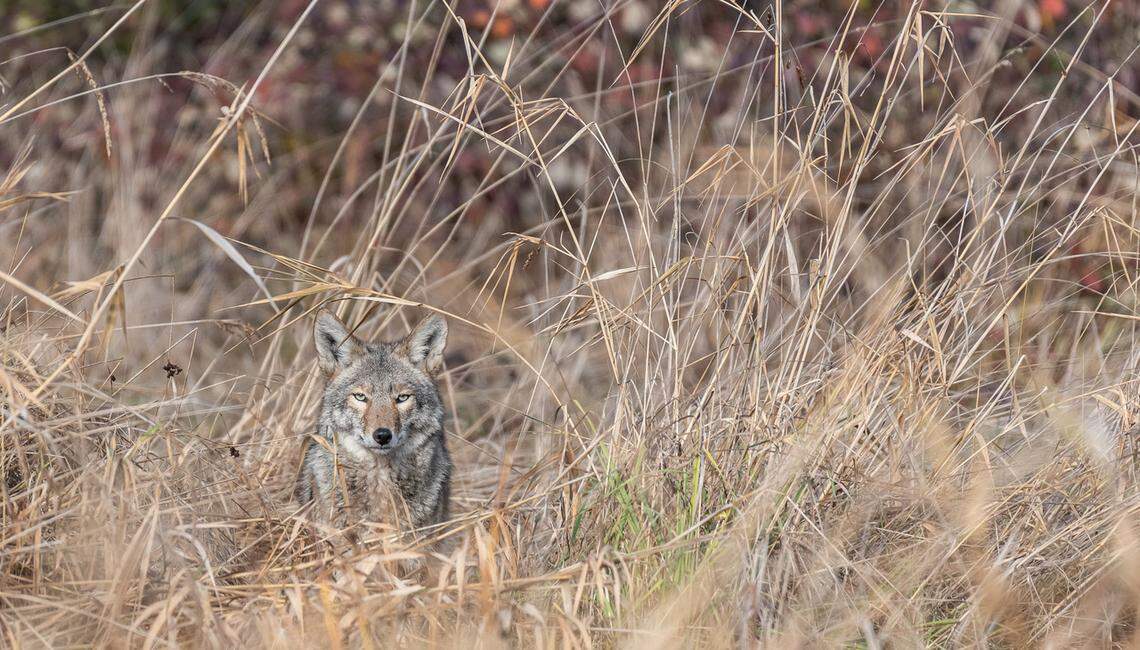
When transmitted to humans, the disease is called alveolar echinococcosis and is considered one of the most important foodborne illnesses globally. It’s very rare in North America, but because it’s so rare, and because symptoms can take over a decade to show up, people tend to not get diagnosed until they are in very advanced stages of the disease.
There have been no human cases in the Pacific Northwest, but a few human cases have been reported in Vermont, Alaska and Alberta, Canada, where the coyote population has a very high prevalence of the tapeworm.
Hentati says that dogs are such an interesting part of the lifecycle because they can actually be in both situations. They can consume infected rodents and become hosts to adult tapeworms. And, if they’re exposed to eggs in the environment, they can accidentally be the middle host and develop cysts on their livers and other organs.
“Here in North America, I definitely say this disease is more of a risk for dogs,” says Hentati. “Because, as I’m sure many dog owners have experienced, dogs are much more likely to eat poop than humans.”
What can we do?
Hentati says the parasite, which is very much a part of the local ecosystem, poses a very low risk to people, but it’s not zero.
“The biggest concern locally is for dogs, because they’re more likely to pick it up from rodents or contaminated environments than people,” she said.
Some of the things she recommends is monitoring your dogs when they’re outside. Don’t let them eat rodents or feces. And always wash your hands after handling dog waste. If your dog is prone to those behaviors, talk to your vet about medication that targets tapeworms.
If you’re someone who is exposed to canids as a profession – vet, fur trapper or hunter — make sure to wear PPE.
Whether it’s attempting to pronounce the name of the disease or stopping your dog from eating infected feces, Hentati says, “It’s always a mouthful with this parasite.”
This story was originally published April 20, 2026 at 5:30 AM with the headline "Parasite found in Western WA coyotes puts dogs and humans at risk."
.jpg)