
Baby seals are popping up on WA beaches. What to do (and not do) if you see one
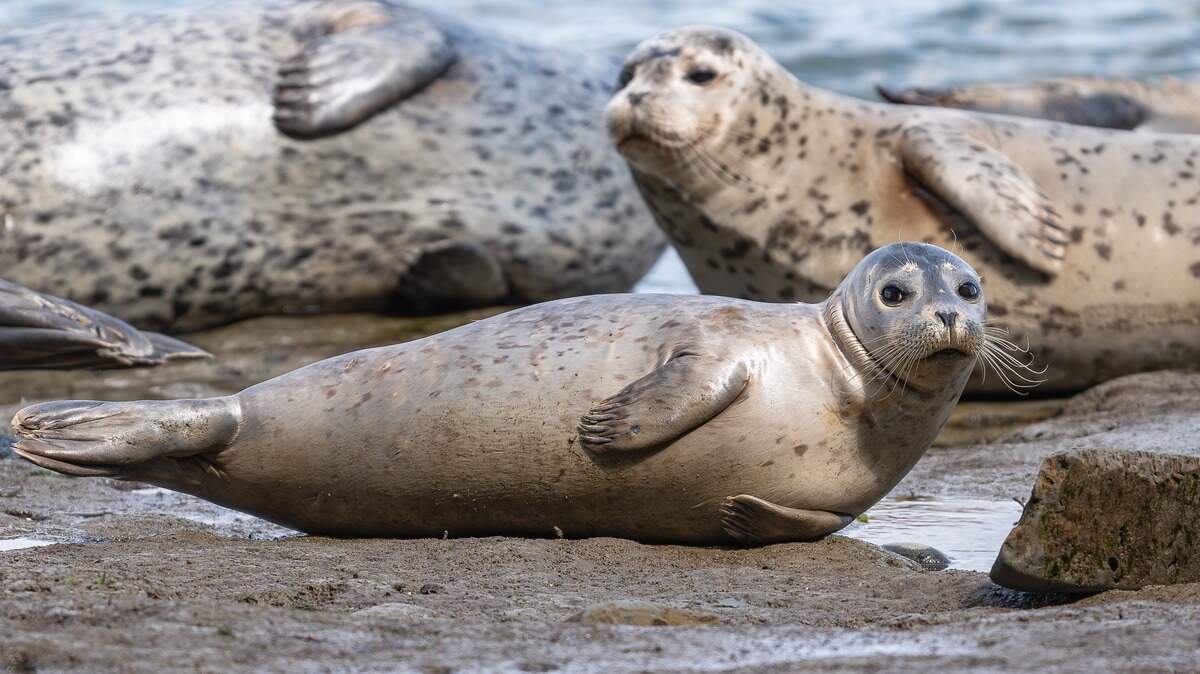
Summer is harbor seal pup season in much of Washington state.
The young marine mammals are often seen lounging on docks, beaches, log booms and rocky shorelines.
What happens when you’re walking on the sand and find a seal pup? Should you try to move the critter or call for help?
Here’s what to know:
Are harbor seals common in Washington state?
Harbor seals are a common sight on beaches across Washington state. The sleek pinnepeds have dark gray bodies with light gray bellies dotted with black spots.
Harbor seals are the “most common marine mammals” in the Puget Sound region, according to Seal Sitters Marine Mammal Stranding Network.
The all-volunteer group, which is dedicated to protecting marine mammals in West Seattle, is part of the National Atmospheric and Oceanic Administration’s West Coast Marine Mammal Stranding Network.
Adult harbor seals and their babies spend about half of their time out of the water.
“Pups rest on beaches to conserve energy and warm up out of the cold Pacific Northwest waters,” Seal Sitters said. “They can be found sleeping on beaches and craggy shorelines, often alone for long periods.”
When can I see seal pups on Washington beaches?
The peak season for harbor seal pups varies depending on where you are along the Washington coast, according to NOAA.
You’re most likely to see young harbor seals in Whatcom, Skagit, Snohomish, Island and San Juan counties in June through August, according to NOAA.
For Mason and Kitsap counties, the peak season is August through October.
In Clallam, Jefferson and northern Grays Harbor counties, May, June and July offer the best opportunities to spot pups.
Peak pup season in southern Grays Harbor and Pacific counties is mid-April to July.
In Thurston, Pierce, King and Kitsap counties you’re most likely to see a seal pup on the waters or on the shore is in late June to September.
Do wild animals need my help?
“A desire to help is natural,” the Washington Department of Fish & Wildlife said.
However, the state agency said, “most wild animals do not need to be ‘rescued.’ ”
According to state wildlife officials, there is "almost never a time when you should remove a baby animal from its natural environment,” even if it appears to be abandoned.
“More often than not, the parent is nearby and leaving a young animal alone usually affords it the best chance for survival,” the state Fish & Wildlife Department said.
Interfering with young wild animals such as baby seals can be “harmful or fatal” for the critters, state wildlife officials said, and pull resources away from wildlife rehabilitators who need to concentrate on “truly orphaned or injured wildlife.”
“The only time you should consider intervening in a wild animal’s life is if it is clearly sick or injured, or if you are certain the parent is dead,” the state Fish & Wildlife Department said.
How can I tell if an animal is stranded?
A marine mammal is considered stranded if it’s “on the shore and unable to return the water under its own power” or in the water and unable to return its natural habitat without help, according to the West Coast Marine Mammal Stranding Network.
Ocean animals on the shore that are “in need of apparent medical attention” also qualify as stranded, according to the network.
Another example of a stranding is a dead marine mammal on the beach or in the water.
Causes for stranding including “disease, parasite infestation, harmful algal blooms, injuries from ship strikes or fishery entanglements, pollution exposure, trauma and starvation,” the West Coast Marine Mammal Stranding Network said.
What should I do if I see a baby seal on the beach?
If you come across a baby harbor seal on the beach without a parent in sight, keep your distance.
“During this time, it’s common to see pups alone on the beach while mom is out looking for food,” the Pacific Whale Watching Association said on its website. “This is no cause for alarm, and humans should be sure to leave the pups alone so mom can find them easily when she returns.”
Pups are weaned early, so it’s not always clear whether the babies are still with their moms, according to Seal Sitters.
“If it is still nursing, mom may not return if there is too much disturbance” from noise, dogs and people, the volunteer group said. “The pup cannot survive on its own.”
If the pup is weaned, it needs space to forage for food, rest and regulate its body temperature.
“Human interference unfortunately can cause undue stress for weaned pups, and even lead to abandonment of newborns,” Seal Sitters said.
If you are certain a seal pup has been stranded, it’s best to report it.
How to report a dead, injured or stranded animal
If you spot a dead, injured or stranded marine mammal in Washington state, you can report it to the West Coast Region Stranding Hotline at 866-767-6114.
You can report entangle animals by reaching out to the U.S. Coast Guard or calling the Entanglement Reporting Hotline at 877-767-9425.
Report harassments and other violations by calling the NOAA Enforcement Hotline at 800-853-1964.
In particular, the West Coast Marine Mammal Stranding Network encourages people to report the following:
- Live cetacean on the beach or entangled cetacean in the water
- Live pinniped on the beach for more than 24 hours
- Obviously sick or injured animal that’s been hauled out for less than 24 hours
- Any dead marine mammals
This story was originally published June 20, 2026 at 5:00 AM with the headline "Baby seals are popping up on WA beaches. What to do (and not do) if you see one."