
Has summiting Rainier gotten too pricey? We asked the park’s chief climbing ranger
There it is, “The Mountain.” Mount Rainier, originally named “Tahoma” by our region’s first people, full screen out your windshield. We all take pride in it, love when it’s out and marvel at the behemoth in comparison to any other surrounding rocks.
There are people on that mountain, all the time. Even in the winter, but especially in the spring and summer climbing seasons, a steady stream of guided and independent mountaineering groups all sharing the same goal: up, up, up to the top.
The most popular routes are the Ingraham Direct and Disappointment Cleaver routes on the southeast side of Mount Rainier, which are maintained and take up about 75% of the foot traffic.
If you’re social media savvy and follow the proper channels surrounding Mount Rainier and its people, you might have noticed a lot of online chatter about it lately. That is normal. It’s a popular mountain, and people discuss it.
For instance, on Facebook, you might have read a discussion about whether climbing fees have gotten too high; on Instagram, you might have seen reels from a fairly popular “influencer” attempting to summit unprepared and ill-equipped; and on Reddit, you might have read about guides with potentially bad attitudes.
To get to the bottom of things, I caught up with a couple of guys who might be in the running for those who know the mountain best: RMI guide Mike King, who just completed his 100th summit of the mountain, and Mount Rainier chief climbing ranger Stefan Lofgren.
Lofgren and King pulled back the curtain and taught me about what, exactly, guides and rangers do on Mount Rainier, and who makes the decisions about the 14,410-foot volcano in our backyard.
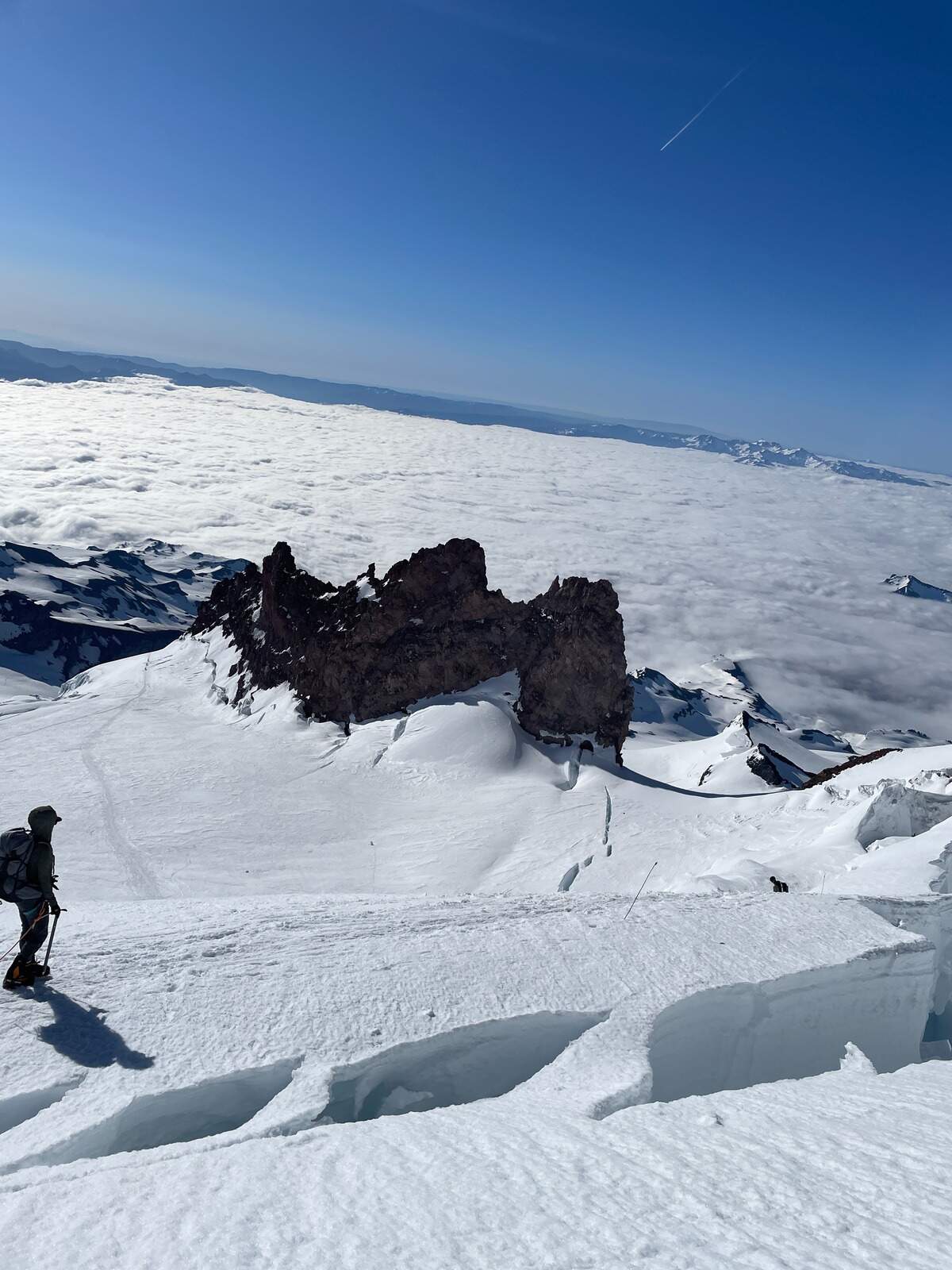
Ingraham Direct or Disappointment Cleaver?
“Climbing rangers and the National Park Service don’t have any interest in establishing any route or trail to the top,” Lofgren told me over a video call on Wednesday. “We’re not involved with that at all. When we’re talking about Disappointment Cleaver or Ingraham Direct and why people go up those routes, that is not a decision that a climbing ranger makes.”
Those decisions, it turns out, come from the guides.
There are three guide services authorized to lead clients to the summit of Mount Rainier, and they all use three-letter acronyms: RMI (Rainier Mountaineering, Inc.), AAI (Alpine Ascents International) and IMG (International Mountain Guides). RMI has 50% of the pie chart, while AAI and IMG each have 25%.
Roughly 10,000 to 11,000 climbers and mountaineers attempt Mount Rainier every year. The NPS does not cap daily climbers, but it does cap the number of climbers that guide services can lead to prevent overcrowding at Camp Muir and at the many bottlenecks on the routes.
Lofgren says they get about 6,000 people up Disappointment Cleaver every year and 1,500 on the Emmons-Winthrop route, for example.
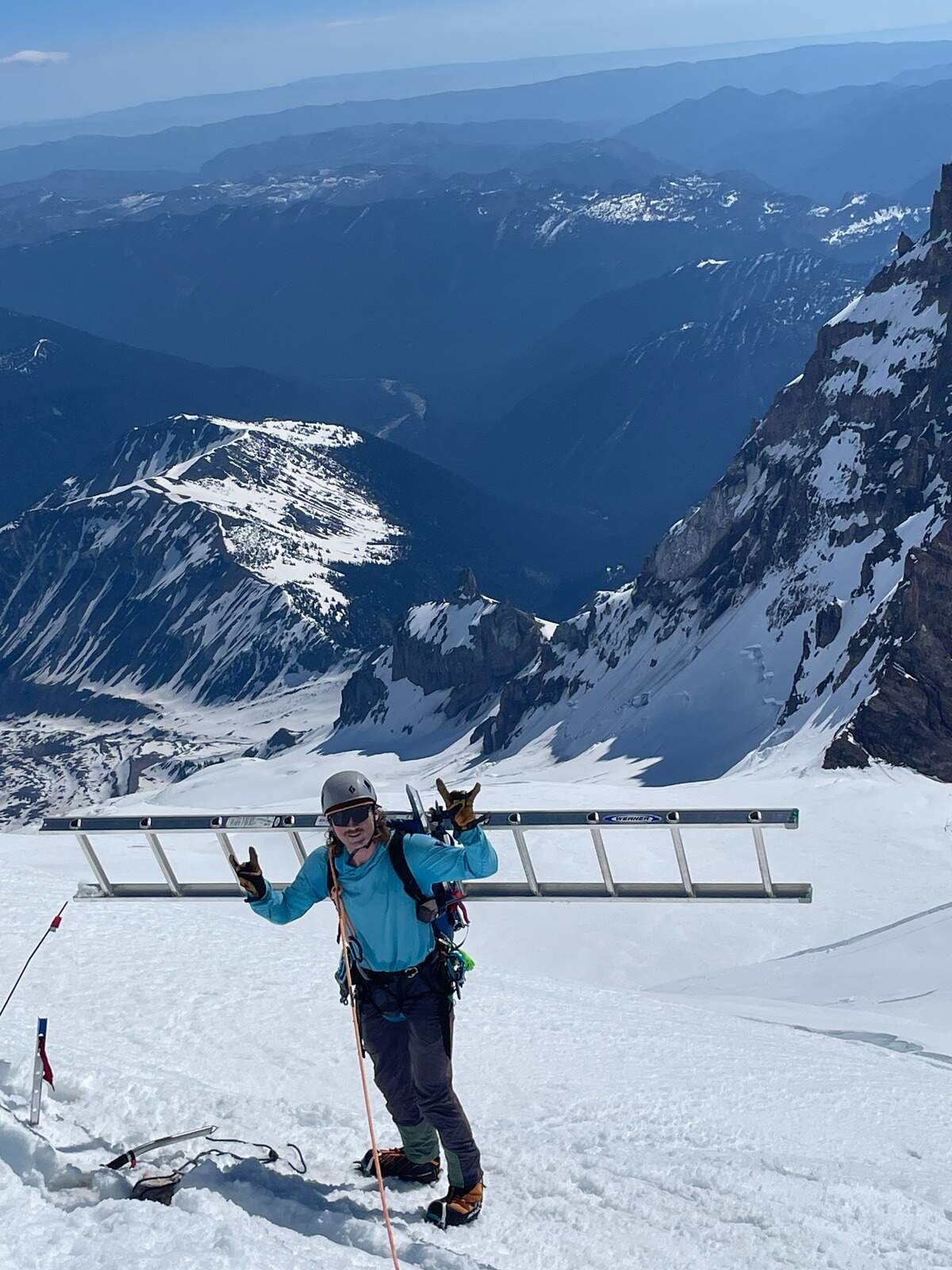
Disappointment Cleaver is zoned in Mount Rainier’s Wilderness Plan as a high-use climbing zone. So the NPS allows certain qualities of the wilderness there to be affected by “adjuncts” like ladders, wooden boards and wands (bamboo sticks driven into the snow to mark the trail).
The Emmons Route is a moderate climbing-use zone, so the park doesn’t allow adjuncts, nor does it allow guiding on the weekends.
“On the Emmons side you might need to do some route-finding to find your way up,” Lofgren says. “On Disappointment Cleaver, you’ll know the way to the top.”
Ingraham Direct is the straightest shot to the top and widely preferred by guides and the park service early in the season if it’s safe.
“We prefer to guide the Ingraham Direct as long as we can,” King told The News Tribune over the phone on Wednesday. “Mainly because it’s more direct with shorter days. So people aren’t as exhausted.”
“We prefer the Ingraham Direct because it cuts off some terrain, it’s faster, it’s shorter, and it’s all on the snow,” says Lofgren. “It doesn’t have rocks like Disappointment Cleaver. Rocks are portable and tend to tumble down the hill and hit people on the head.
“We just had a kid come into Camp Muir a couple of days ago who had been hit in the head with a rock. He’s lucky he wasn’t killed. We prefer to stay on the snow.”
Early in the season, guide services assess the Ingraham Direct and Disappointment Cleaver routes and decide which route they’ll maintain with adjuncts. They have a vested interest in getting their clients to the top as safely as possible, and cutting corners or picking the wrong route is not an option.
But Ingraham Direct is fickle. Many seasons, like 2024 and 2025, it isn’t maintained at all. Those years, the guide services looked at the conditions of Ingraham Direct and went straight to Disappointment Cleaver.
One of the reasons, King says, is the major icefall potential up higher on Ingraham.
“We have to assess if the seracs that are pulling away from the mountain are going to topple over,” he said. “And we also have to assess how much we’re willing to walk under or near that overhead hazard.”
In addition to the overhead hazards of the Ingraham Direct, there is the crevasse danger.
“The glacier pours over a rocky feature under the ice and causes a bunch of crevasses to open up,” King continues. “Once we can manage those with ladders, we do. This year we had three to four ladders very early on. At some point those ladders need to be doubled and tripled up. They require a lot of maintenance, daily. Especially when it’s warm out because we have to reset anchors. And the glacier is always pulling apart. So we have to chop the platforms down to keep the ladders climbable and safe for the customers and public.”
At some point, all the maintenance becomes too much for the guide services, and they pull their adjuncts and head to Disappointment Cleaver.
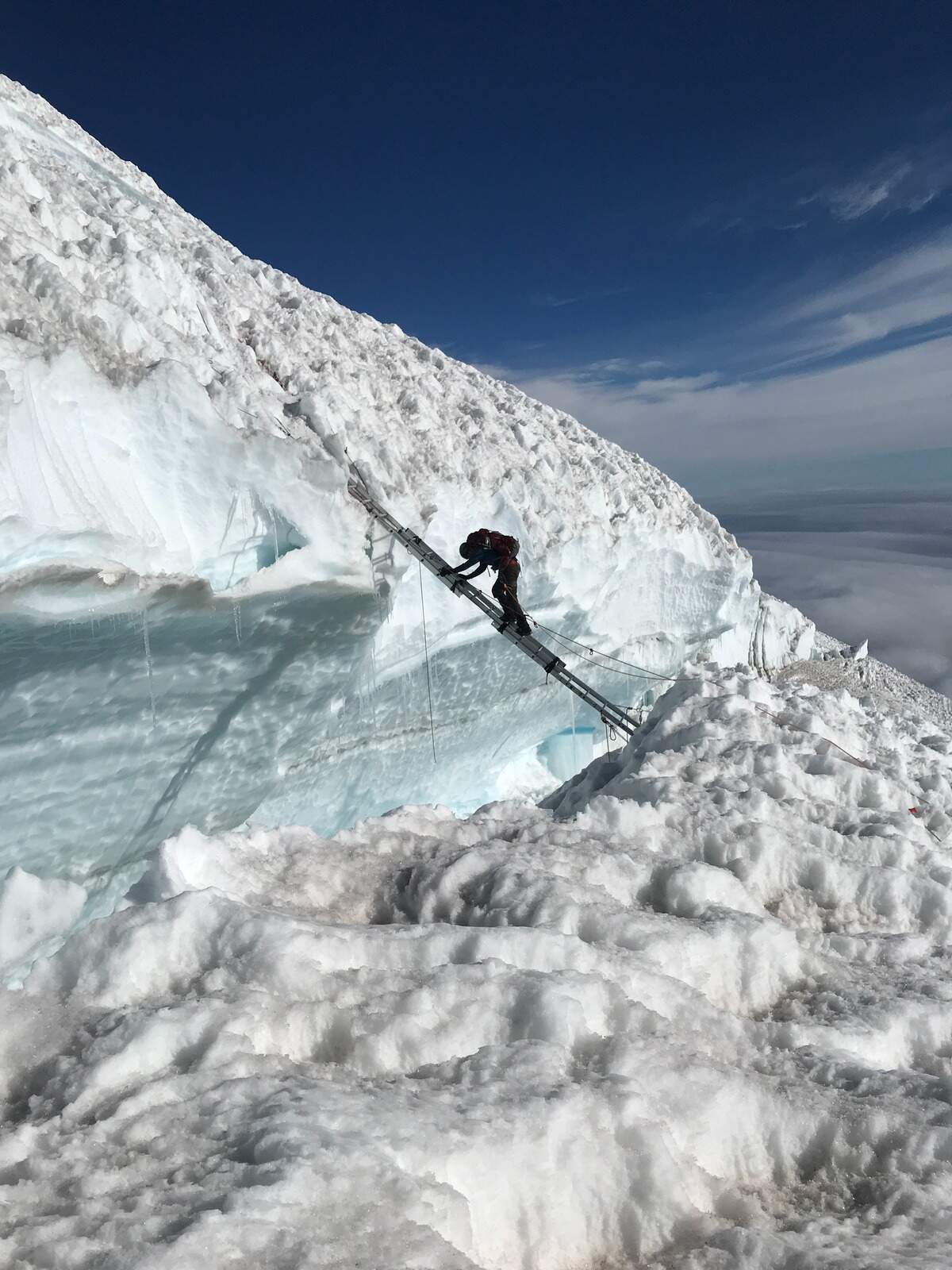
The changeover happened around the weekend of June 20-21 this year, and the call was made by the guide services.
“The guide services are doing this,” Lofgren emphasized. “The NPS has nothing to do with all of that. The climbing public needs to give props to the guides who are doing all of this work. If it wasn’t for people doing all of this route-finding and putting all of these adjuncts in, very few people would be able to get to the top of Mount Rainier.”
Lofgren went on to call it “passive guiding.” That’s his phrase for when independent climbers climb Ingraham Direct or Disappointment Cleaver, taking advantage of adjuncts placed there by guide services.
“They’re climbing on the backs of all the climbing guides who did the work before they got there. People are getting to the top of Mount Rainier on a well-maintained route with ladders and adjuncts and hand lines because of the guide services, not because of the National Park Service,” Lofgren says.
So what do the climbing rangers do?
Lofgren is at Camp Muir (a ranger station and climber refuge 10,188 feet up the mountain) at least once a week. There, he has a desk set up where he can budget and schedule his staff. He also runs Incident Command for rescues, which are a fairly frequent occurrence on the mountain.
.jpeg "IMG_2019 (2).jpeg")
Lofgren says that the mission statement for a climbing ranger at Mount Rainier can be described in three parts:
1. Prepare for and conduct a broad range of emergency services on alpine terrain.
Climbing rangers have died during rescues on Mount Rainier. As a result, Lofgren says, they pay particular attention to executing multiple skills in rough environments.
“We might be doing EMS heli operations and rope rescue and some sort of mountaineering all at the same time. So, integrating all of those skills is really difficult.”
2. Taking care of human waste.
Rangers manage all human waste generated by climbers on Mount Rainier. They have a “blue bag system,” toilets at Camp Muir and Camp Sherman, and are responsible for all that … stuff.
“We follow it through all the way down the hill via helicopter to local sewage treatment plants or incinerators.”
3. Visitor service and resource protection efforts.
“Solitude is a big part of wilderness,” Lofgren says. “People get on Mount Rainier and bunch into long trains of climbers, conga lines. That affects people’s solitude. So we do things to help separate people out and help them move through those areas more effectively. And we monitor for litter and anything else that might affect wilderness as well.”
They also monitor how many adjuncts the guide services are using.
“When there are too many handrails up Mount Rainier, we’ll start to call foul on that.”
Lofgren staffs rangers at Camp Muir every night. He only pays them for 10 hours but says they essentially work 24-hour shifts.
“Activity up there is 24/7. Climbers wake you up wanting information at all hours. People are coming and going all night long,” he says.
The rangers also patrol the summit when possible.
“You know how to schedule a rescue?” Lofgren jokes. “Schedule a summit patrol. There will be a rescue that gets in the way of that almost every time. Those take precedence, of course.”
Once a rescue is over, Lofgren says, it’s time to clean the toilets again.
“It’s a pretty intense job, but we love it.”
.jpeg "IMG_2018 (2).jpeg")
How much does it cost to climb Mount Rainier?
The climbing fee for Mount Rainier is $82.
That $82 pays for a team of rangers to be trained in EMS and equipped with the resources to come get you if you fall into a crevasse, get hurt, can’t make it, get too tired, develop pulmonary edema or have any other issue.
Lofgren says he could easily make a program that’s twice as expensive as what he’s made, but he hates fees.
“I’m trying to make it as affordable and safe as possible to climb Mount Rainier. But I’ve also had three rangers, three friends, die, so I’m not going to cut corners when it comes to ranger training or equipment.”
The other option, if you happen to hate the idea of paying the mandatory $82 climbing fee, is to pay for yourself. Which, Lofgren says, can be $30,000- $50,000 if you’re short-hauled off the mountain by helicopter.
A hiker could hang out at the Paradise Visitor Center and watch the climbers making their way up and down the mountain through a telescope, and that can be fun, but those individual dots don’t tell the story of who is there to help, protect, build, maintain and rescue the other dots trudging up the snowfield.
For that, you need to get a little closer.
This story was originally published July 12, 2026 at 5:00 AM with the headline "Has summiting Rainier gotten too pricey? We asked the park’s chief climbing ranger."
.jpg)