PNW temps rising, but meteorologists warn of hypothermia, drowning in cold bodies of water
The National Weather Service urges residents to use caution if they plan to swim during this weekend’s rapid temperature warm-up.
Despite temperatures expected to range about 15-20 degrees higher than typical for this time of year, water temperatures will still be frigid, making hypothermia and drowning a real risk. Hypothermia becomes a risk when the water is 70 degrees or cooler.
“Even though temperatures are warming, rivers, lakes, and streams are still cold and running fast, especially with mountain runoff,” the Weather Service in Seattle tweeted in a graphic.
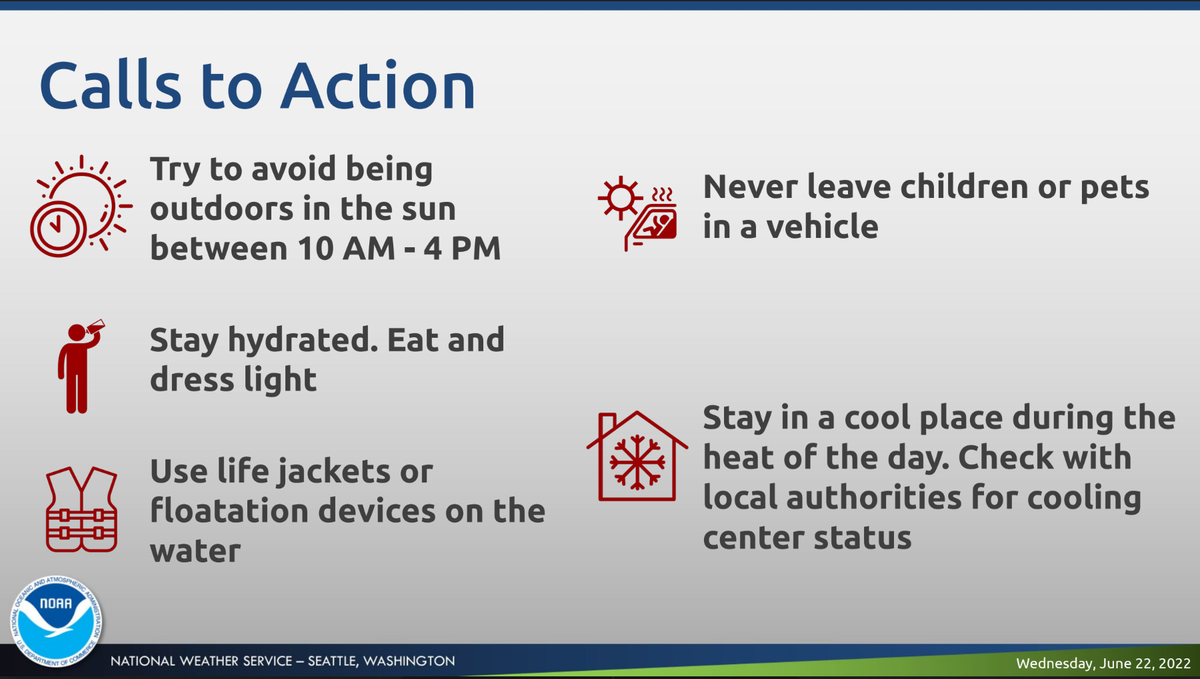
The advisory also recommended wearing a life jacket during all water activities and warned that alcohol enhances the effects of hypothermia.
Swimming in the Pacific Ocean will also be a cold and risky endeavor. In Pacific County, in particular, home of the longest contiguous peninsula beach in the world and popular tourist destination Long Beach, water temperatures are around the 47-degree mark.
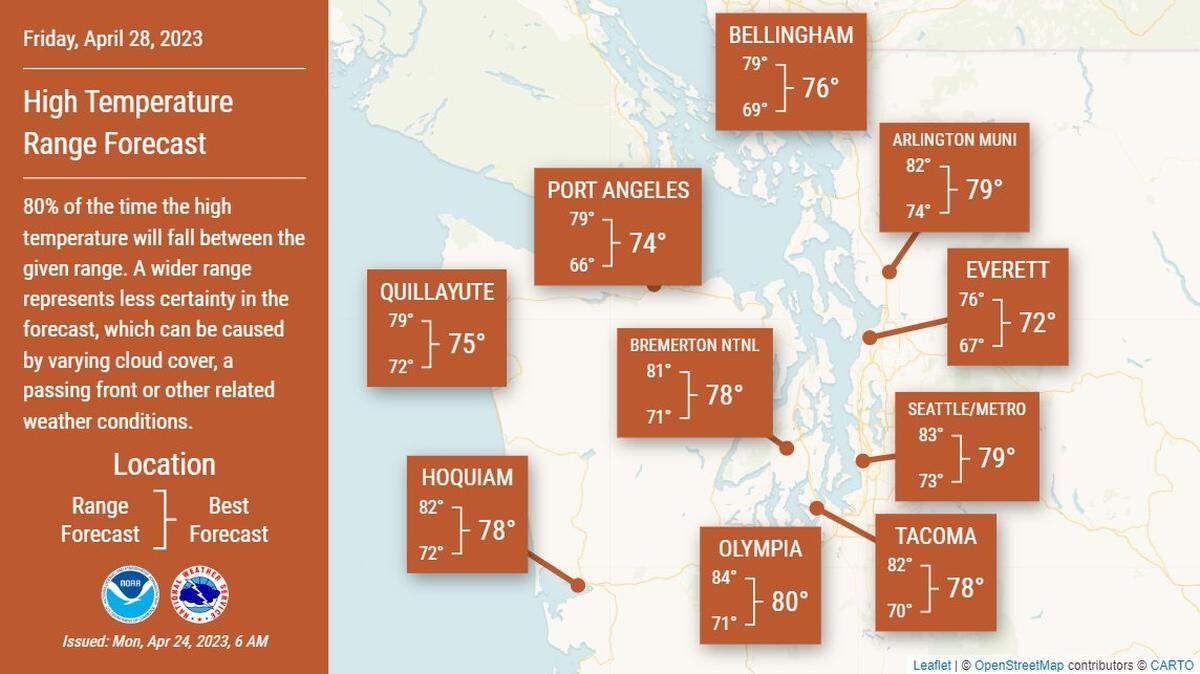
Temperatures will peak on Friday around the Olympia-Tacoma region, rising to 78 degrees on Friday and 76 degrees on Saturday. During this period, cold-water incidents can be most prevalent as people escape the day’s heat into the cold waters around Puget Sound.
Risk of hypothermia in WA state
No matter where you are, there is also the risk of hypothermia this weekend. Hypothermia is when your body loses heat faster than it can produce it, leading to unconsciousness, hospitalization and death if not treated quickly enough.
Swimming in too-cold water isn’t safer if you are near the shore, a boat or a dock. Regarding hypothermia from swimming in water too cold for the human body, experts say there is a 1-10-1 rule: a swimmer has one minute to control their breathing after they go into cold water shock, which happens within three to five minutes. There are then about 10 minutes for self-rescue and one hour before becoming unconscious due to hypothermia.
There are multiple ways to protect yourself, including always wearing a life jacket. One of the stages of hypothermia, known as “swim failure,” happens three to 30 minutes after exposure, but before hypothermia begins to set in.
Beach closures and toxic algae blooms
For those planning on a more inland destination or spending time near the water in the future, the Washington State Department of Ecology maintains a map of beaches with real-time information about closures by county or a larger map with a search function for a specific location.
The Ecology department also maintains a toxic algae bloom update site with a searchable feature. If you want to find a beach in your county, the state’s beach list can help.
More information about cold water exposure is available at the National Center for Cold Water Safety.
This story was originally published April 26, 2023 at 11:58 AM with the headline "PNW temps rising, but meteorologists warn of hypothermia, drowning in cold bodies of water."