
TCD is acronym for very dysfunctional agency
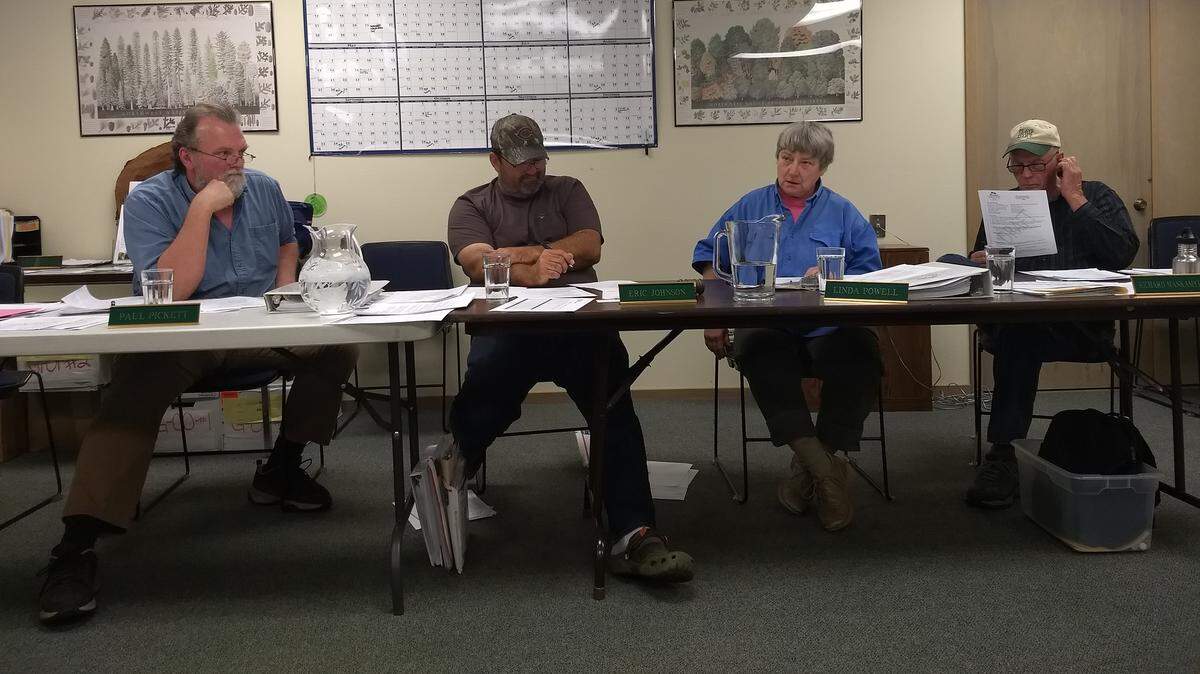
The Thurston Conservation District is a government agency in transition. It is also badly messed up.
It needs outside intervention. A recent investigation and intervention by the State Conservation Commission was a welcome step in that direction.
The state report is damning. It says the Thurston Conservation District “has seen significant deterioration in fiscal health, accountability and its standing in the community. This deterioration is the result of the actions of (supervisors Eric) Johnson and (Richard) Mankamyer in their attempts to ‘take back control of the (d)istrict.’ ”
One urgent recommendation by investigators is that board supervisors and district staff undergo training in public-employee ethics and in state rules for open meetings and public records.
An ongoing complaint is that the existing board met illegally in a closed-door session.
An outside audit of district finances is also needed. In addition, the investigative report recommends removal of two board supervisors who have come under fire from current or former district staffers over handling of records and budgets.
The two targeted district board supervisors are Johnson and Mankamyer. Their removal is allowed by law if the state commission finds they neglected their duties or acted with malfeasance – in other words, in ways harmful to the district.
As summarized by Abby Spegman in her report in The Olympian, investigators found that “Johnson and Mankamyer failed to respond to a public records request, delayed or refused to sign district checks, and prevented the release of board meeting minutes to the public, taking as long as 14 months to approve minutes for release.”
All of that is inexcusable. But forcibly removing a supervisor is a step the state commission’s director, Mark Clark, did not recall in his 15 years at the agency.
One accusation leveled in the report is that Johnson as board chairman may have used the his position to help secure $42,296 of public funding for a manure transfer system on his dairy farm. It is technically legal for supervisors to receive benefits.
There are counter-allegations against district staff and — in the case of a grant given to an organization run by a coordinator’s spouse — raise red flags.
In cases of appearances of conflicts of interest, staffers should disclose them publicly to the board.
The report also described the Thurston district as a small agency that’s transitioning from a strong-staff operation to a strong-board operation. It said Mankamyer and Johnson are trying to assert more control.
But agency staff appear to be resisting. The tension, which is starting to look like a middle-school food fight, includes credible allegations that Johnson has intimidated staff but also that staff was resistant to sharing public records.
At this point the state commission has limited authority to intervene and force the staff to act differently. But the state can, and should, withhold funds if local ethics and records training is not carried out.
When the Legislature returns in January, it should consider giving the state commission more emergency power to intervene when districts run amok.
The state’s 45 conservation districts are important. They provide millions of dollars in grants to rural landowners who voluntarily change their practices to improve water quality.
These districts are often overseen by boards that include farmers or others with a vested interest in conservation projects. But few people ever vote in board elections.
An alternative election structure needs to be offered by the Legislature. Though districts may object to the cost, board elections should coincide with other regularly scheduled county elections.
Mail-in ballots should go to every eligible voter, not just those who request them.
An argument can be made that the Thurston district should be turned into an office under the control of county government.
The district’s drama is far from over. Johnson, the board chairman, and Mankamyer, the board auditor, have a right to respond to the state allegations in writing. Attorney Shawn Newman says Johnson intends to answer.
In a sign of TCD’s deeper troubles, Johnson won a lawsuit recently that involved the tardy disclosure of more than 6,800 district records, which he was unable to obtain directly from the district, according to Newman.
The court order signed by Judge Christine Schaller in Thurston County Superior Court last week imposed costs of more than $24,000 on the district’s manager of archived records. Johnson’s legal fees accounted for $23,000 of it.
TCD’s records archive is managed by the Washington State University Energy Office. But, the district’s agreement with WSU to manage records apparently lapsed in 2014.
This is folly. It is an echo of the self-dealing and dysfunction at the district in the early 1990s. Though such turbulence is unusual, each time it’s been rooted in bad governance.
This mess needs cleaning up — on a larger scale than state officials have in mind.
This story was originally published July 26, 2018 at 11:45 AM.