
You know her name. Now meet the woman who set the standard for Olympia environmentalism
March is Women’s History Month. The national theme this year is “Valiant Women of the Vote,” because this year – Aug. 26, 2020, to be exact – is the centennial of women’s suffrage.
We will wait until August to celebrate that milestone.
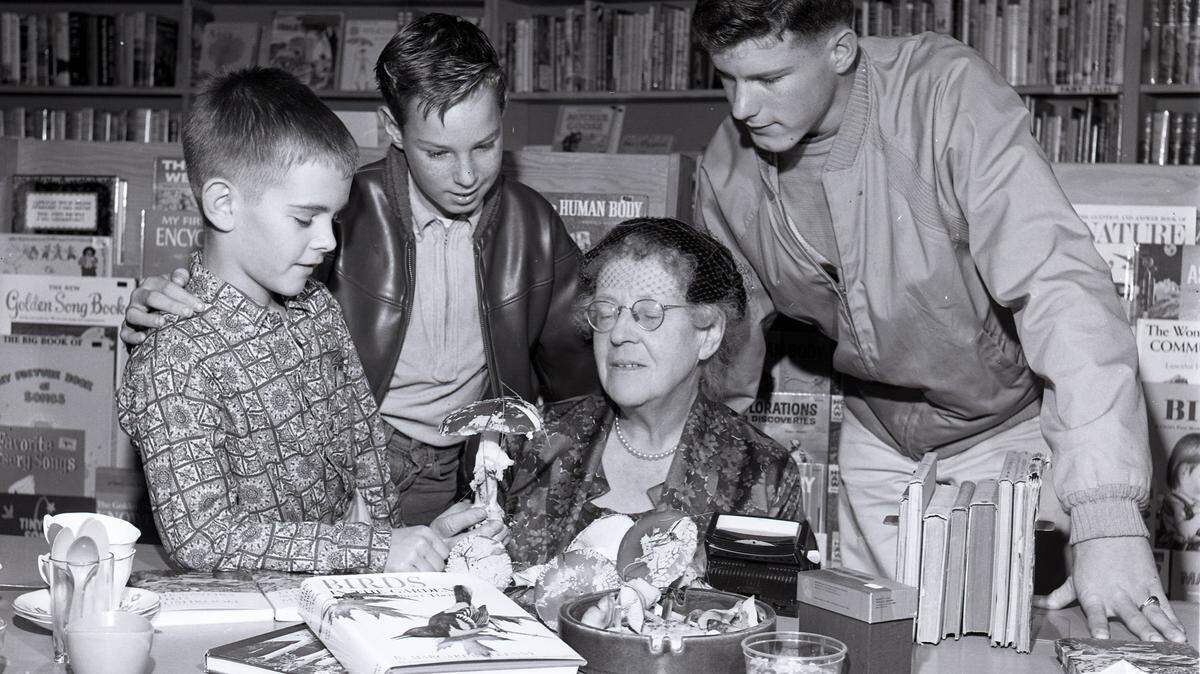
Today we honor the history made by Margaret McKenny (1885-1969), a nature-loving Olympia native. Her name may be familiar to many, but the full extent of her legacy is not widely known.
In 1964, she led the successful opposition to a proposal to make the Nisqually Delta a site for a Seattle garbage dump. And in 1965, she served as the initial leader of the long struggle to save the Nisqually Delta from becoming a deep-water port.
She did not live to see the fruits of those labors, but she inspired and mentored her neighbor, Flo Brodie, to take the baton and wage the next phase of that struggle. The year after McKenny’s death, Brodie founded the Nisqually Delta Association, which helped win the creation of the Billy Frank Jr. Nisqually Wildlife Refuge, and a series of later protections of the delta and the Nisqually watershed.
Even earlier, in 1955, McKenny rallied the public to save what is now Watershed Park from being logged by the city water department. She also galvanized successful opposition to city plans to dig up Sylvester Park and put a parking garage under it. And in 1963 she persuaded the city to forgo logging 40 acres of Priest Point Park to make room for ball parks.
It was mainly for those well-known good works that a school, a park and a campground and trail are named after her.
Those successful citizen campaigns comprise most of what is commonly known about McKenny. But a deeper appreciation of McKenny’s continuing influence on Northwest culture is revealed by two living historians.
Sally Turnbull has written a tribute to McKenny in the December issue of the Thurston County Historical Journal that encompasses a fuller view of her accomplishments:
“Olympia native Margaret McKenny was an author, photographer, mycologist, poet, educator, conservationist, environmental activist, preservationist, landscape architect and ornithologist. Margaret earned many of these titles while the professions were still in their infancy or were dominated by men.”
When she was a young woman, Turnbull writes, McKenny and her family lived in the South Capitol neighborhood, which was then mostly forest. One floor of the house was a Montessori-inspired school where, McKenny told parents, “the names of wildflowers and birds are taught, and general love and observation of nature encouraged.”
In the 1920s, McKenny traveled to Massachusetts to attend Lowthorpe School of Landscape Architecture. For the next 20 years or so, she remained on the East Coast, where she earned a reputation as a vigorous writer, naturalist and natural leader. She served as Executive Secretary of the Garden Clubs of New York City, published nine books and many articles, and spent time with prominent botanists, conservationists, and leading lights of the National Audubon Society.
When she returned to Olympia in 1943, at the age of about 58, she was a cosmopolitan, highly educated woman with a lot of leadership experience and an abiding commitment to inspiring others to share her love of the natural beauty of the Pacific Northwest.
She started a radio program, worked as a photographer for the Washington State Parks Committee, founded the local Audubon Society, and presented slide shows of her photographs of wildflowers, mushrooms and national parks to children and adults. She promoted planting trees along Capitol Way, and identified mushrooms for people who showed up at her front door. Her house was a center of social life for local civic leaders, academics, poets, and journalists, who, according to Turnbull, gathered there to “discuss art, eat oysters, and drink wine.”
In addition to Sally Turnbull’s wonderful essay, Anne Kilgannon, a longtime local historian and McKenny admirer, is working on a full biography. Kilgannon also maintains a delightful blog in which she writes about how McKenny’s life and writing have inspired her to explore the natural world more deeply.
What a pleasure it must have been to know Margaret McKenny. And what good fortune it is that two local historians help us imagine that pleasure.
Even now, in this moment of pandemic-driven fear and darkness, McKenny has a timely lesson to light our way. Turnbull writes: “Besides teaching kindergarten in her early years, she also taught creative writing. She began her classes by having the children describe: ‘What are the 10 most beautiful things you have seen or heard this morning?’”
It would do us all good to answer that question every day.