
A rent strike against landlords? Let’s take viable steps to close the income gap instead
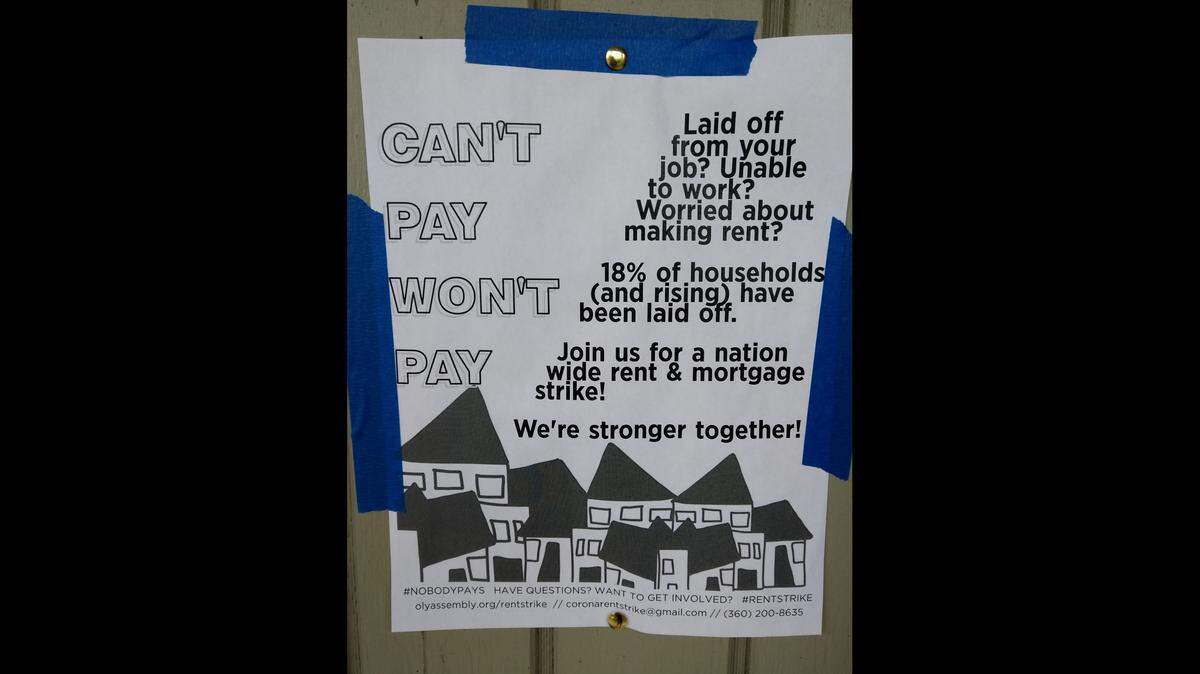
Olympia City Council member Renata Rollins recently posted a manifesto of sorts on the website Medium, announcing that she will not pay rent this month, even though she has the money to do so.
She writes that “our housing payments are one of the few direct bargaining chips the majority of regular people have” to remedy the “all too familiar pattern of massive wealth transfer from regular people to the very upper echelons.”
She tells her landlord that “I hope and trust you will be able to remain whole by advocating for additional relief for all in this community.”
She advocates passage of the Emergency Rent and Mortgage Cancellation Act, HR 6515, sponsored by Rep. Ilhan Omar, D-Minnesota.
Rollins also hopes to “lay a foundation for a just COVID recovery, and set our course toward a holistic sustainable economy for people and planet. If we organize, transformative policies like a national safe homes guarantee, worker protections, Medicare for All and a Green New Deal start to become real. Rent and mortgage cancellation are the next step on the path to get us there.”
Her landlord, Zach Kosturas, owner of Prime Locations, responded with an open letter to Rollins posted on LinkedIn. The actions of “a true leader,” Kosturas wrote, “would have been to tell us that she was paying her rent so that we would have the ability to help more people who really couldn’t pay theirs.”
He says his company, which manages 1,500 housing units, has been more than willing to work with tenants who’ve lost their jobs or had their pay cut. He views her action as “a distraction from the work that really needs to be done.”
Kosturas serves on the City of Olympia’s Home Fund Advisory Committee, which awards city funding to build housing for people who are homeless or at risk of homelessness. He also has advocated for local policy changes to help private sector developers build more affordable housing, such as inclusive zoning, regulatory reform and faster permitting. And he strongly supports expanding state and federal rent subsidy programs for people with low incomes.
So Rollins’ target is not the stereotypical mustachioed villain landlord. Nor is he the only landlord to cry foul over Rollins’ stand. The chorus has included Mom-and-Pop folks who own just a few housing units, owners of other property management firms, and renters who appreciate their landlords. All acknowledge that there are bad apple landlords, but feel that the implication that landlords are part of a “massive wealth transfer” to the rich is unfair and inaccurate.
We agree with Kosturas that Rollins’ rent strike is a distraction, but we also share Rollins’ hope for a “sustainable economy for people and the planet.”
However, Ilhan Omar’s bill is not going to pass, and Rollins’ nonpayment of rent will not produce any of the results she seeks.
Fortunately, there are more practical steps we can take to make progress towards the goals we share:
Our congressman, Denny Heck, succeeded in getting $100 billion for rent relief included in the House of Representatives’ latest round of federal stimulus legislation, called the Health and Economic Recovery Omnibus Emergency Solutions Act, or HEROES Act. It has a fighting chance of passage when the Senate deigns to take up the bill. We can all urge Senators Patty Murray and Maria Cantwell to advocate for it.
We also can continue to contribute to local nonprofits that are providing emergency housing and rental assistance and support local city governments’ work to promote zoning and other changes that encourage construction of more affordable housing.
We can urge Gov. Inslee to extend the statewide moratorium on evictions, currently scheduled to end June 4.
We can ask candidates for all offices what they will do to reform our housing market so that it provides affordable housing for the 40 percent of American households that live on $40,000 per year or less.
We also can quiz candidates about how strongly they will support full funding of the federal low-income rent subsidy program, which now serves only 1 out of 4 eligible and extremely needy households.
Our nation and our local community can best tackle all our challenges in a spirit of solidarity and practical problem-solving. Flights of ideological fantasy, drama and division don’t help.