
There are signs of hope along our road toward social justice
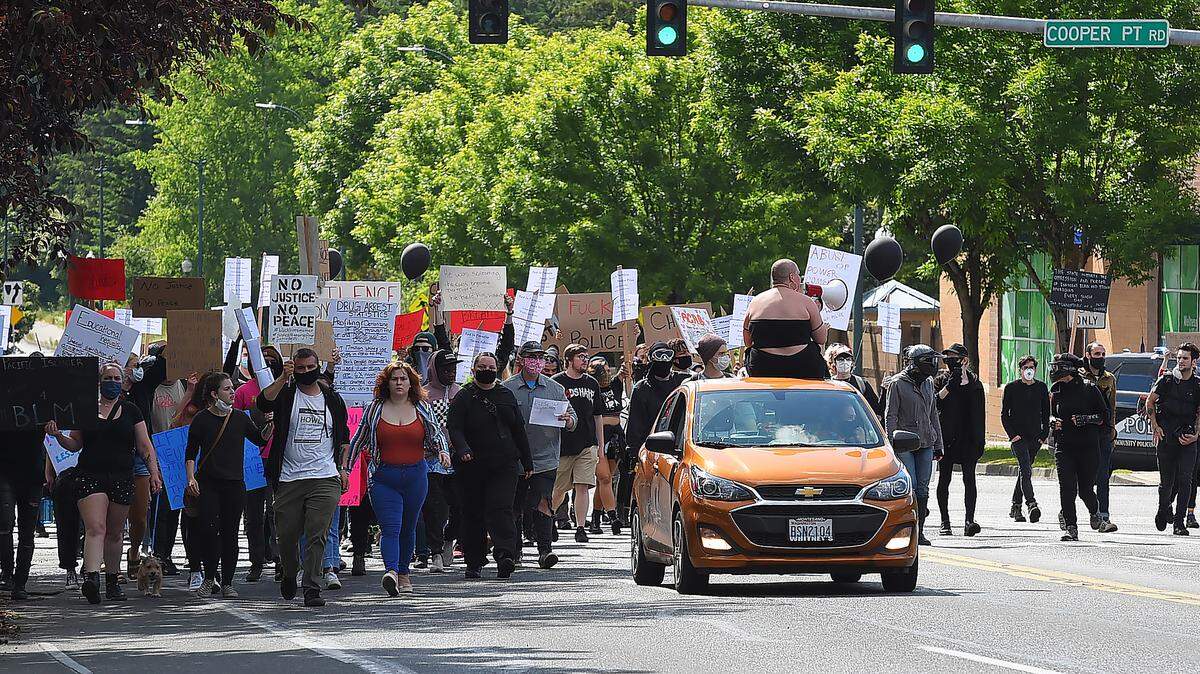
These days there are times when reasons for hope are hard to find. But we are happy to report that this week we found three. Each expands the opportunity for progress in our quest to achieve the equality promised in our Declaration of Independence.
The first reason for hope is that today’s social justice movement fully recognizes the elephant in the nation: white privilege, the accumulated advantage of not being enslaved or discriminated against, legally or otherwise, since your ancestors set foot in America. The advantages of being white include not only a history of greater opportunity for prosperity, but also the absence of generations of race-based trauma and insults to personal dignity. Being Black in America involves exhausting effort to maintain mental health in a world more stressful and dangerous for you than your white fellow citizens.
The civil rights movement of the 1960s addressed Black disadvantage, but not white advantage. Racism was regarded as a problem of obvious legal barriers: denial of voting rights and overt, legal, and often government-sponsored discrimination in housing, jobs and education. Historic laws to dismantle those barriers were passed. For a few years, there was even affirmative action to expand the Black middle class, and busing to integrate schools.
Then white liberals mostly moved on. White conservatives and racial reactionaries tried to turn back the clock by electing Richard Nixon, and then Ronald Reagan.
Over time, some of the gains won in the 1960s were worn away by lax or missing enforcement, retreat from remedies like affirmative action and school busing, and a Supreme Court decision that gutted the Voting Rights Act.
Now, the culture has shifted again. White leaders of corporations, sports teams, cultural institutions, city councils, and nonprofits are acknowledging responsibility for past complicity and indifference to the suffering caused by racism. CEOs and ordinary citizens are reading White Fragility, How To Be an Anti-Racist, and Begin Again.
A growing number of white people are no longer in thrall to the idea that since none of us has ever owned a slave, we are innocent of racism or free of responsibility.
The second reason for hope is that our country is confronting American history in a new way. It is as if America’s biggest blind spot has finally been removed, and we can now see just how horrific those Confederate flags and monuments are to our Black neighbors, for whom the history of slavery is intimate family history. We are seeing that after emancipation there were just 12 years of progress, followed by the abandonment of Reconstruction and a century of white supremacy that was supported by both law and a decades-long domestic terror campaign of lynchings.
Learning the whole truth of American history changes our vantage point about where we are now on the road to equality, and helps us see the cumulative effects of generations of harm to Black families.
The third reason for hope is that this time, there are far more women leaders, such as the three founders of Black Lives Matter and local women such as Jasmyn Pereira.
This is an enormous change from 1964, when Stokely Carmichael famously said, “The only position for women in SNCC (The Student Nonviolent Coordinating Committee) is prone.” There were Black women leaders then, but they had to fight both racism and the entrenched sexism of their male colleagues who wanted them to do their typing and bring their coffee. Sexism has not been erased, but it sure has been diminished since the 1960s.
There are still plenty of Black men leaders today too; the point is that this time, the movement is finally firing on all cylinders. The emergence of more women leaders has made it bigger, stronger and wiser.
These three reasons for hope are buttressed by cultural changes that have been gaining momentum over the last decade or more. Persistent activism has made movies, television, music, literature and art more diverse and more upfront about confronting race issues than ever before.
But hopeful trends are no guarantee of victory. Here in Thurston County, there are still plenty of people who don’t yet understand that all lives won’t matter until Black lives matter. We all have more to learn, and more to do.
The City of Olympia’s Strategic Communications Director, Kellie Purce Braseth, has organized four Zoom town hall meetings featuring Black speakers on criminal justice, health care, economic opportunity and education. The first is at 4 p.m. Thursday. This could be an important step on the road we need to travel. We hope to see you (virtually) there.