
3 steps to reforming local police departments -- and defunding them isn’t one of them
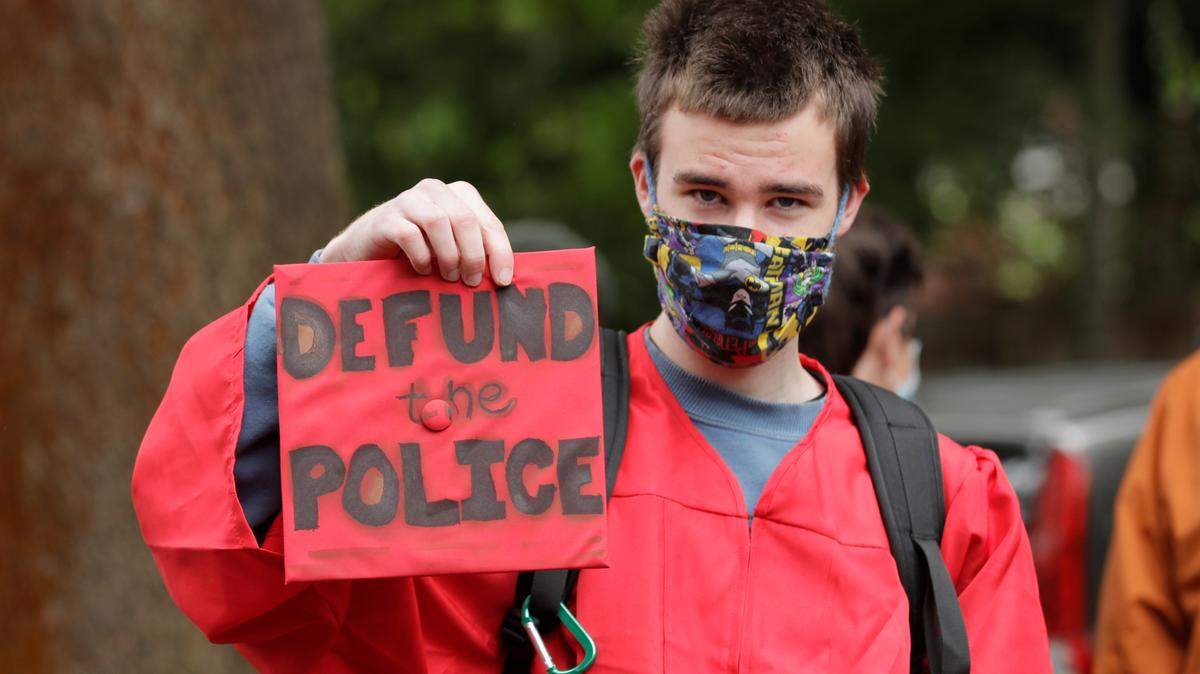
The Seattle City Council and Mayor Jenny Durkan have tied themselves in knots trying to defund the police (the City Council’s approach) or reimagine the police (the Mayor’s approach). Both have raised expectations for changes that are unfocused and probably impossible to achieve.
Others in the community – the small businesses that were damaged and disrupted for weeks in the area on Capitol Hill abandoned by the police – are suing the city for damages. Their harrowing experiences make it clear that we need police.
Cutting police budgets to move some of their current functions to departments that provide social and health services such as mental health crisis intervention is a good idea in some instances, but it is not likely to result in law enforcement that Black and brown people can trust rather than fear.
In Olympia, a successful Crisis Response Unit run by the Police Department already employs people with expertise in mental health and crisis intervention services, and it’s not clear whether taking that unit out of the department would make any difference other than serving the rhetorical goal of cutting police funding.
Another argument for cutting money from police budgets is the need to invest in communities in ways that promote equity and prevent crime. That too sounds good, but the rhetoric does match the reality.
To achieve that goal, we’d need housing, early childhood education, child care, sick leave and health insurance for underpaid workers, and effective school equity programs. The money we would need for that would dwarf what we spend on police.
Today, eliminating racism should be the first priority of reform. That requires three very specific actions.
The first is sustained attention to how police are recruited and trained, and initiatives to create an actively anti-racist police department culture led by actively anti-racist leadership. Brief anti-bias and de-escalation trainings are not enough.
The second is a careful examination of police union contracts, which contain provisions unlike those in any other profession. For instance, following a use of force incident such as a police shooting, Olympia police officers cannot be interviewed for an investigation for 48 hours. This gives officers time to consult with one another, their union representatives and attorneys, and to construct an agreed-upon story. Other contract provisions require deleting all unproven allegations of misconduct from personnel records after three years.
Scholars who’ve studied police union contracts suggest several possible reforms, including the elimination of all contract provisions relating to disciplinary measures. They note that several studies have found that the advent of police union contracts with provisions such as these correlate with rises in police killings of unarmed civilians.
The next Olympia Police Department contract is being negotiated now. Negotiations began in January, but have been slowed by the pandemic. At the beginning of the negotiation, both sides put their issues on the table. According to Linnaea Jablonski, the Human Resources Director and lead negotiator for the City of Olympia, once that is done, it becomes a violation of labor law to add new issues, such as those that arose following the murder of George Floyd.
Nonetheless, after the two-year contract is signed, the City Council could ask city staff to bargain to amend it.
The third issue is public oversight of police policy and operations. The city is now poised to re-create a contracted police auditor position that was cut during the Great Recession. The auditor provides an independent review of police department disciplinary actions. But broader community oversight also is under discussion. As the city considers creating a new, as yet officially unnamed Human Rights/Equity citizens commission, there is talk of assigning that new body to come up with a proposal for a system of citizen oversight of police.
But Olympia is just one city in a cluster of four. Olympia works with the Lacey and Tumwater police departments as well as the Thurston County Sheriff’s Office, and officers from multiple departments almost always respond to any big incidents. We can’t see inside those relationships, or accurately assess how police culture varies from one jurisdiction to another. We hope all of them are grappling with these challenges together.
For a Black person being pulled over for a broken tail light, the distinction among cities or departments is not likely to even register. But the world we need to create is one in which that person does not shudder with fear no matter which jurisdiction they are in.
Creating an actively anti-racist culture that is more reliant on de-escalation than use of force is the marquee issue that is urgent, complicated, and essential in every police department.