
Lack of bipartisan will keeps U.S. from adopting the welcoming voting system we have here
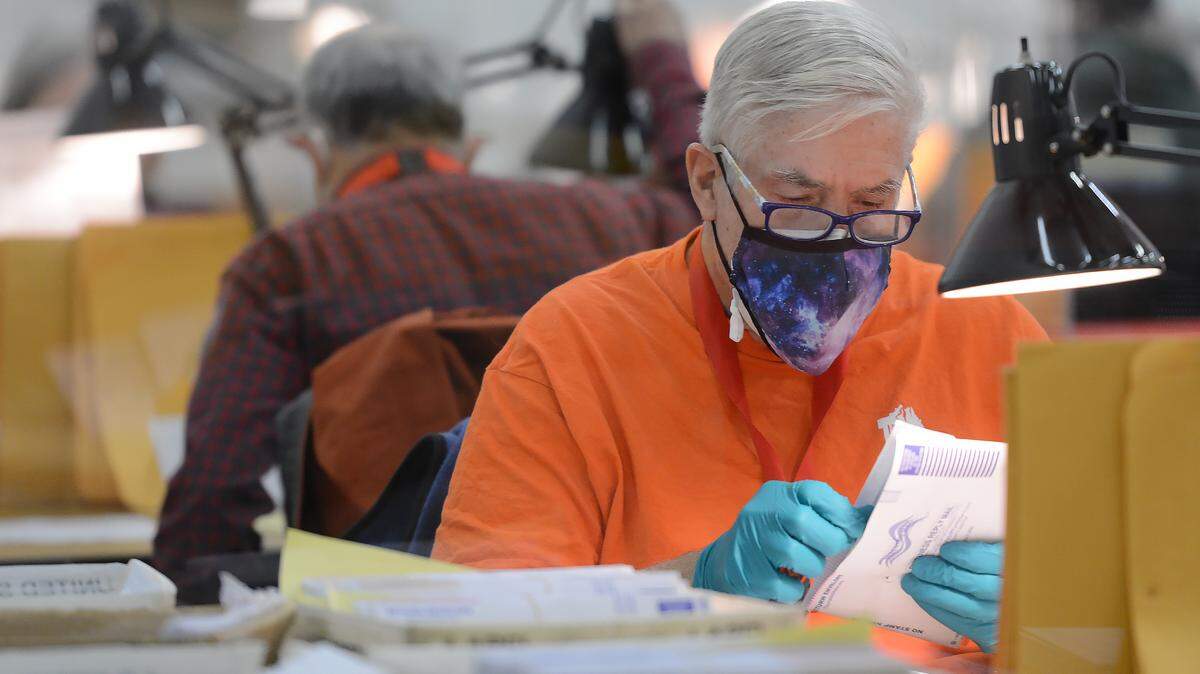
Citizens of Washington state live in a voters’ paradise. We have convenient and secure ways to register and to vote, and a safe and accurate system that counts our votes. It’s no wonder we have one of the highest voter turnout rates in the nation.
But it was not always so. Back in the day, if you wanted to register to vote in Washington, you had to show up at a county or city office — or find a trained voter registrar — to do the paperwork. You had to be 21 or older. And you had to register at least 30 days before the election.
One by one, each of these restrictions has been swept away. Now you can register to vote when you get a driver’s license. You can register by mail or online, or in person on the day of an election. You can pre-register when you’re 16, and register when you are 17 if your 18th birthday will fall on or before election day.
In the 1980s, if you wanted to vote by mail, you had to apply for a ballot before each election. Sam Reed’s daughter, who was away from home in college, complained about that while Reed was the Thurston County Auditor. In 1991, her complaint and her father’s work led to a measure that allowed voters to apply just once to become ongoing absentee voters.
According to Reed, when that change happened, voting by mail took off, going from 10 or 15 percent to about half of all ballots. “Then we were actually conducting two elections — one by mail, and one at in-person polling places,” he says.
In 2001, after 20 years as County Auditor, Reed became Secretary of State. In 2005, mailed ballots became a statewide standard, and by 2011, polling places became a thing of the past, except for people with disabilities.
Many people were sad to lose the communal civic sacrament of going to the polls to vote — but not for long. The convenience of the kitchen table, where voters could spread out the ballot, the voters’ pamphlet (also expanded and improved over time) and other information won out over standing in line at a polling place.
Here’s something else we can be proud of: Washington legislative districts are redrawn every 10 years following the census by a five-member nonpartisan commission. This is the result a 1983 state constitutional amendment that took redistricting power away from the party holding the majority in the state legislature.
Our state continues to rebuff the occasional proposal to restrict voting rights or all-mail elections, and continues instead to look for more ways to enfranchise every potential voter.
Native Americans who live on tribal land, where their houses may not have conventional addresses, now benefit from a 2019 law sponsored by our own Sen. Sam Hunt. It allows them to use the address of a tribal office or another nontraditional address.
Former felons, who used to have to apply to have their voting rights restored, are now eligible to vote after they have served both their prison sentences and their post-prison period of Department of Corrections supervision. This year, there’s even a bill in the legislature, introduced by a former felon who is now a state legislator, to lighten up on former felons a little more by removing requirements for payment of fines or restitution before voting.
Our state’s election security is also rock solid. Current Secretary of State Kim Wyman has made our statewide voter database — the only part of our election system that is online — “like Fort Knox,” says Thurston County Auditor Mary Hall. That database makes it possible to do instant updates when people move, so that they can cast only one ballot from their current address.
None of the equipment that processes and counts our votes is ever connected to the internet, so it is simply not available to be hacked.
All Americans should have election systems as good as ours. HR1, a massive federal bill already passed by the House of Representatives, is needed to achieve that, and to end the assault on voting rights that is underway in many states. HR1 would also end partisan gerrymandering, and bring daylight to big “dark money” campaign donations and online ads.
Sam Reed says HR1 “looks like they modeled it on Washington state.” He and Mary Hall both caution against making it too prescriptive about details like the kinds of voting equipment states use, but agree that it is urgently needed.
Currently, HR1’s passage is impossible without the key to the success of our state’s electoral reforms: a genuinely bipartisan commitment to the full enfranchisement of all citizens. Lacking that, U. S. Senate rules requiring a super-majority to enable its passage must be changed.