
Giving the gift of time to our community can bring holiday promise of hope, new beginnings
It’s been a tough couple of years. The pandemic has sapped our patience and energy. Our national political life has devolved into stark division between reality and conspiracy. Climate change has become terrifyingly real. And measures of social decline and despair — teen suicides, drug overdose deaths, and homelessness — rise like a poisonous fog.
We have never needed the good cheer of a holiday season more. The solstice, with its promise of light; Christmas, with its promise of redemption; and a coming New Year, with its encouragement of new beginnings — we need them all. But good cheer isn’t served up by dates on the calendar; in every household, it’s up to us to create it for ourselves and others.
Ideally, the light, redemption and new beginnings of the holidays carry us into a new year with a renewed sense of hope and purpose. We aim to be better and do better, at home and in the world around us.
We have some ideas about how to succeed.
Giving more money to causes you care about is wonderful. But we’d argue that if you really want hope — and if you really want to be better and do better — it’s your time that matters.
The loneliness, addiction and despair that lead to social decline and conflict cry out for an increase in positive human contact among people of all ages, all beliefs and all differences of race, income and identity. Isolation has been exacerbated by the pandemic, but we’ve been digging foxholes rather than building bridges for a long time. We’ve neglected lonely neighbors, shortchanged children, and left many of our elders alone in the world. Many of us lived in social bubbles even before we retreated into COVID bubbles, and we need to get out of them.
We also need to invest more time in our suffering planet. The growing peril of climate change was created in part by our choices of convenience and speed over sustainability — by driving rather than walking, buying rather than making, replacing rather than repairing, consuming rather than creating. We need to turn fear of climate change into agency and urgency.
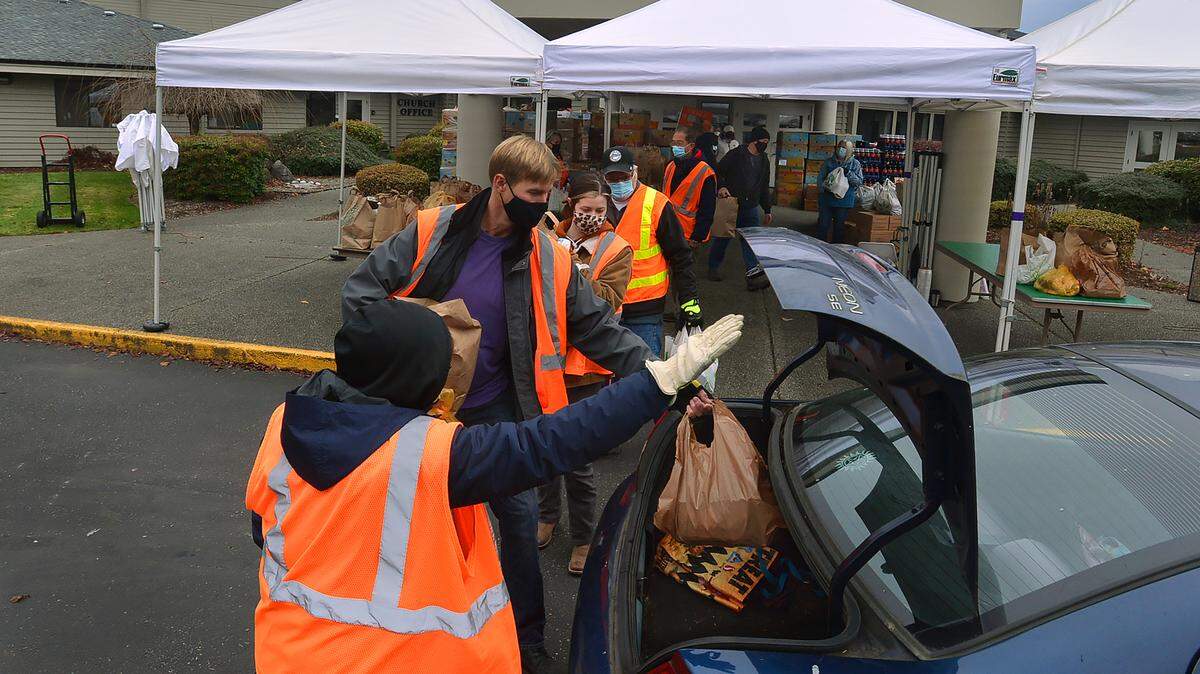
To do lasting good for the world, we need to work together, and volunteering is one way to do that. Studies galore have found that people who have satisfying volunteer work are happier. A good volunteer job is one you enjoy and can sustain, not one that feels like a grim duty. Like any job search, it can take time and effort to find the right fit.
Some nonprofit volunteer efforts have been curtailed by the pandemic, but many remain. Together! needs volunteers for kids’ programs, including its after-school clubhouse, community schools program, and event planning. For those willing to make a big commitment, they also need host homes for homeless teens.
Senior Services has plenty for volunteers to do. They need Meals on Wheels drivers, kitchen assistants, sales clerks for their bargain shop, safety ambassadors to check the vaccination status of visitors to their centers, and help with their pet fund.
If you’d rather be outdoors planting trees, the Nisqually Land Trust has a place for you, even in the winter. Capital Land Trust has an active volunteer program too.
These are a tiny fraction of volunteer jobs with nonprofits. And nonprofits aren’t the only game in town. Whether your passion is racial justice, gardening, working to end homelessness, fair trade, art, neighborhood improvement, sewing, or bowling, the most important goal is to share it. The world outside your door needs you more than Netflix does.
We can all do better — and have deeper happiness every day of the year — if we use our time to give the people in our communities more to be grateful for next Thanksgiving.