
It may be the little things that determine whether whales and salmon survive
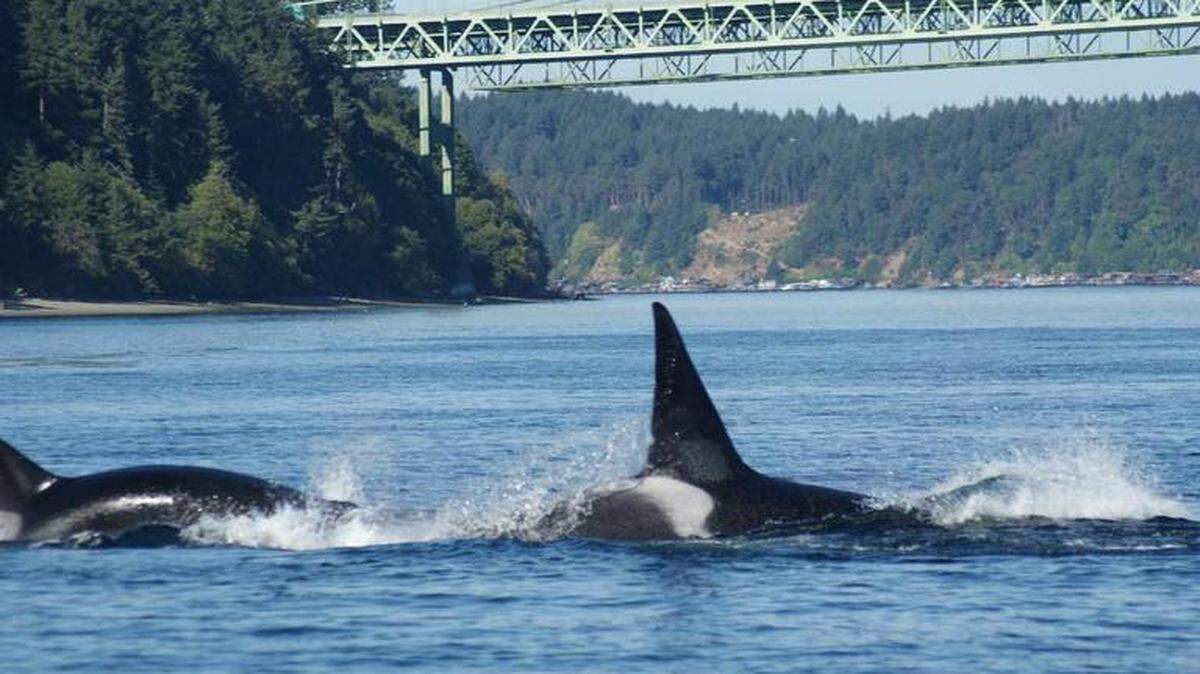
To understand the plight of Puget Sound whales and salmon, we need to know more about the tiniest creatures in the water — the zooplankton and phytoplankton that comprise the base of the marine food web.
“Anything that comes out of the ocean is eating something that eats zooplankton, or eating zooplankton directly,” says Phillip Dionne, senior research scientist at the Washington Department of Fish and Wildlife. And the zooplankton (tiny animals) mostly eat phytoplankton (tiny plants).
Juvenile salmon swimming into Puget Sound from their natal rivers depend on zooplankton. These small, hungry fish need little bites that fit in their little mouths.
When juvenile salmon get big enough to fit a herring in their mouth, it’s not always certain there will be herring around for them to eat. Herring populations, says Julie Keister, a University of Washington oceanographer, have been “a roller coaster.” A couple of years with higher-than-usual ocean temperatures seems to have boosted herring numbers, but before that there was acute worry over their decline.
Herring eat zooplankton. But at this point, it’s not known whether there’s a relationship between the health and abundance of any of the many species of zooplankton and herring populations.
There are other risks to juvenile salmon too: a fast-growing population of seals lies in wait as juvenile salmon enter Puget Sound, and at pinch points like the Hood Canal bridge, where seals are estimated to eat half of the steelhead that must run that gauntlet.
Seals also eat herring. Researchers wonder whether more herring would create what Dionne calls a “prey buffer” for salmon. That’s another reason it would be good to know more about herring’s reliance on zooplankton, and whether zooplankton abundance or lack of it affects herring populations.
In fact, it’s remarkable that people have been working to save threatened and endangered salmon and whales for decades without understanding the base of the food web they depend on.
It wasn’t until seven years ago that researchers began systematic data collection to assess zooplankton populations and study how climate change and other factors affect them.
Phytoplankton are still research orphans except for a current study in King County.
And even now, Keister, who is in charge of analyzing the data, says it’s still too soon to identify trends.
Keister and Dionne say the study of the marine ecosystem as a whole rather than focusing solely on “charismatic megafauna” (salmon and whales) didn’t even begin until the advent of the 2014 U. S.-Canadian ecosystem-wide collaboration called the Salish Sea Marine Survival Project.
But even now, the Salish Sea Marine Survival Project recommendations for further study and action don’t include prioritizing research on the tiniest members of the food web.
The current zooplankton research depends on tribal, nonprofit, county, state, Canadian and federal partners who spend time out on the water collecting samples. One of them is Jed Moore, a salmon recovery biologist who works for the Nisqually Tribe. He notes that “Good policy needs to start with good science.” And good science surely requires a better understanding of the entire marine food web.
Why has this foundational element of the ecosystem been ignored for so long? Dionne says, “We were always looking for the shortest connection.” That meant “trying to figure out what was killing salmon, not what’s feeding salmon.”
That is an astonishing blind spot.
Right now zooplankton research is funded by a grant from the federal Environmental Protection Agency National Estuary Program and state dollars. But the federal grant will run out in the middle of next year. Planning should take place right now to ensure this research is not interrupted or discontinued.
When baby salmon emerge from their rivers, they need to eat.