
A tale of two Washingtons. Let’s hope the sanity continues this legislative session
On Thursday morning, California Republican Kevin McCarthy, determined to be Speaker of the U. S. House of Representatives, was losing his eighth vote for that position, and the body that is supposed to make laws was lawless.
Without a Speaker, it could not even make rules for itself. A memo had gone out announcing that since no rules had been passed, there was no authority to issue paychecks. Newly elected members’ families — including kids missing school — were waiting for days for the thrilling moment of seeing them sworn in. And of course the spectacle was a gift to late- night comedy shows and pundits.
Democratic House members were sad to see Congress brought so low, but they also struggled to conceal their glee at the long-running televised demonstration of Republican paralysis.
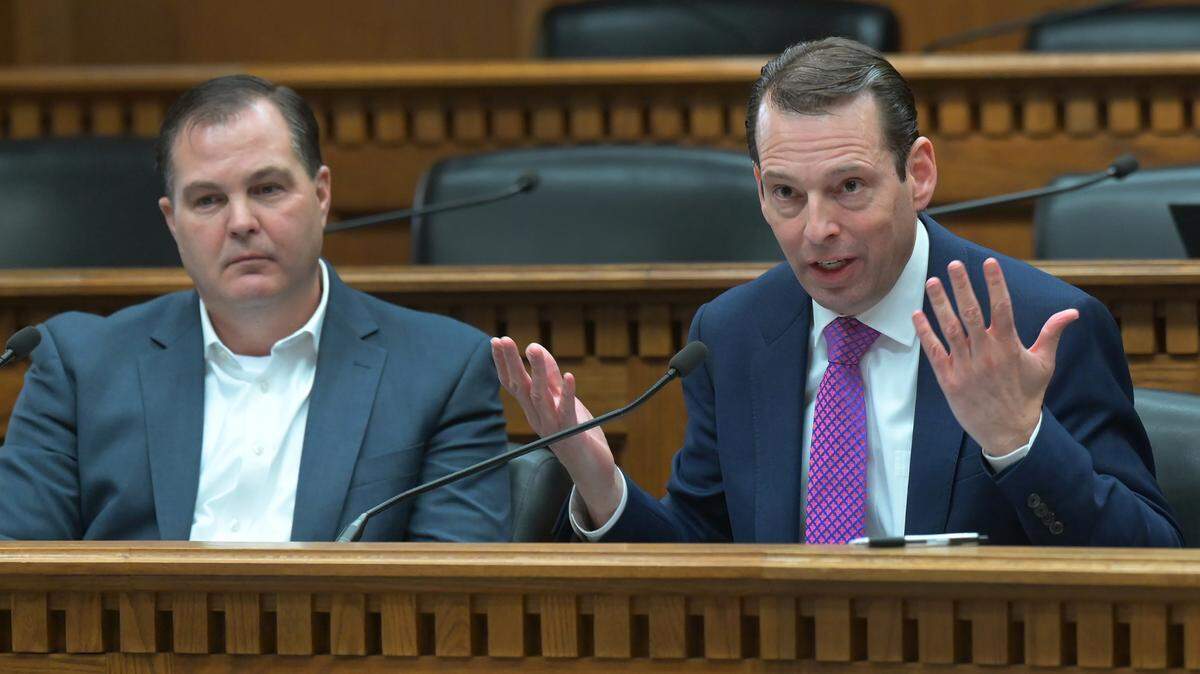
At the same time Thursday, Republican and Democratic leaders of our own state legislature were briefing the assembled press at their annual legislative session preview. The speakers included the leaders of the Senate and House majority (D) and minority (R), the leaders of both House and Senate Budget committees, and Gov. Jay Inslee.
To a person, they were civil, collegial, and focused on solving hard problems. They face quite a list of them: homelessness and housing, implementing a new cap-and-trade climate law, dealing with an expiring drug possession law, revisiting police reform measures and reducing crime, addressing pandemic learning loss in public schools, and airport siting, to name a few.
The good news for us all: There was a notable amount of overlap between Democratic and Republican positions on many of these issues.
There is an emerging consensus that the current acute shortage of housing can’t be overcome without changes that reduce barriers and create incentives for private sector housing developers, such as reforms in zoning, faster permitting, and reduced fees — and that government investment is needed to build the low-income housing and shelter that are simply not profitable.
Republicans acknowledge that putting people in jail for drug possession is not a solution. They are looking for a way to use milder criminal penalties like drug courts to compel people with addictions to get treatment and recovery support.
Senator Minority Leader John Braun, R-Centralia, has said, “Our policy on hard drugs, we got it wrong and people die when we get it wrong, it’s the simple truth.” His position is still markedly different than total decriminalization, which some but not all Democrats support. Still, it marks miles of movement over the last few years, and many Democrats will probably find common cause with Braun. The hard part may be creating enough high-quality treatment, drug courts and recovery supports — including housing — to make his ideas work.
Addressing workforce shortages, workforce education and training are priorities for leaders of both parties too. Child care centers, hospitals, mental health clinics, police departments, schools, the ferry system and businesses are all desperate for well-prepared workers. Proposed solutions — none of which drew disagreement — included more apprenticeship programs, review of licensing requirements for some mental health positions, accelerated training programs, and finding more ways to reduce the financial barriers and length of time job preparation programs take.
And one other note: With bipartisan support, the state’s working families tax credit legislation will start taking applications from low-income families next month, and at the briefing, a Republican leader suggested expanding it.
This is not nirvana; there are still plenty of partisan differences, and plenty of the ordinary human frailties that make collaborative decision-making a challenge. But this legislative session comes at a more hopeful, calmer time than the past two years — maybe even the past six years.
We have a state budget in good shape. We are not in a state of acute rage and fear over the pandemic, a former president, the murder of George Floyd — or the meltdown in the other Washington.
We are in the sane, responsible Washington. Legislators and voters alike should take note of this distinction, and work to maintain it during this legislative session and beyond.