
Why we should fight to keep farming an essential way of life in Thurston County
Farming, most of us know, is an important occupation, though we might not know exactly why.
Certainly getting enough food to eat is necessary. Yet beyond this, farming (like hunting and gathering before it) has been so central to the fabric of communities, cultures, economies, political systems, and even human beings themselves, that in neglecting it to the point of losing it, we may actually risk losing ourselves.
Consider generally that farming can help us address issues as varied as teenage stress, widespread declines in happiness, auto-immune disorders, physical degeneration, sense of community, and our general place in nature.
In a direct manner, farming over many generations has provided millions of Americans with satisfying, hands-on, outdoor, dignified, and valued livelihoods. In an indirect and abstract manner, farming has been looked to since the founding of our country as a critical cultural and political ingredient in a stable body politic: an independent, free-thinking population of individuals rooted in the land in control of the means of production; a bulwark against the concentration of wealth and power.
With fewer than 1 percent of the 280,588 people living in Thurston County participating in farming, we have plenty of reason to rebuild our farming numbers, some obscure (though important), and others more clear.
Take dirt, for example. According to the journal Nature, rollicking in the stuff as a kid may help avoid asthma and inflammatory bowel disease. As fewer kids pull carrots with grandma, milk cows in the barn, and buck hay, less exposure to an array of microbes unavoidably leads to greater risk in adulthood of auto-immune dysfunction.
What’s more, farming also supports approaches to diet and daily life that have been espoused by farmers for millennia, and that we are losing, literally, out our rear ends.
For instance, studies comparing the gut microbiomes of traditional agriculturalists and westerners eating highly processed foods indicate critical differences, with impacts that predispose the latter to ailments ranging from diabetes to cardiovascular disease and obesity. Approaches our forebears employed to fortify themselves were as basic as time outdoors, limited exposure to anti-microbial products, eating whole and high-fiber foods, and even consuming a bit of good clean dirt in the crevices of their carrots.
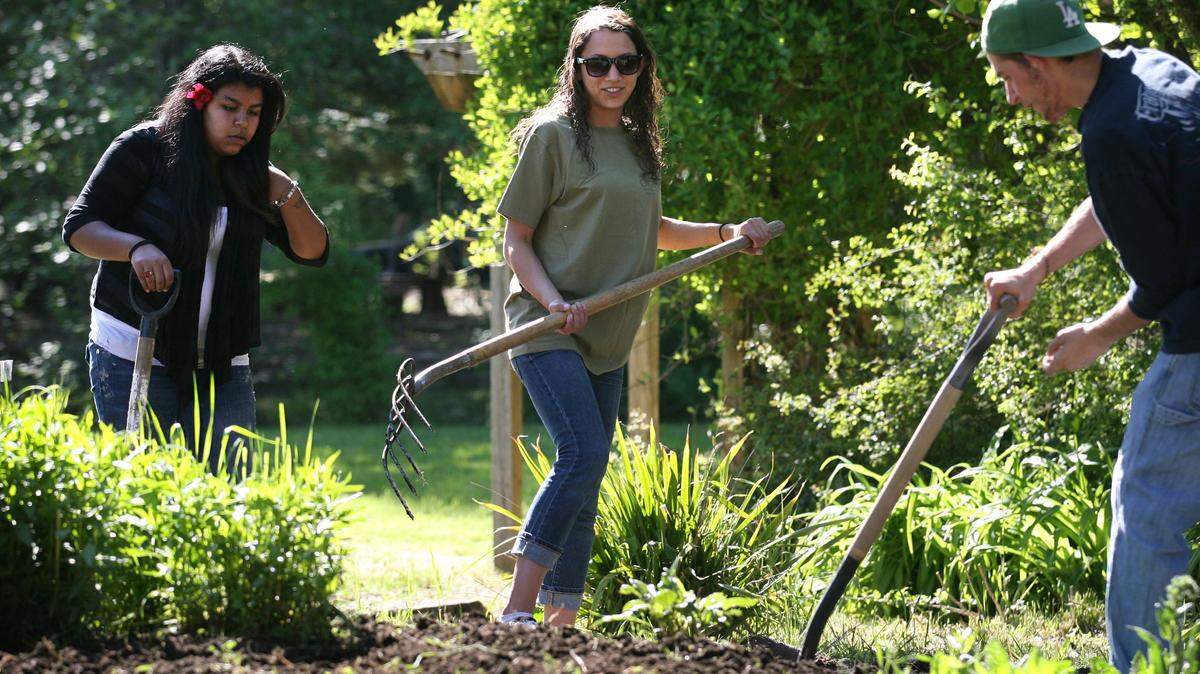
In some ways, our distance from farming has been a measure of our distance from health. And in our modern era, this is most distressing to observe in mental health. One of the worst examples is that teens today experience higher rates of stress and anxiety than any other age group. More encouraging is that studies around the globe have documented positive impacts of school garden programs on student well-being, connectedness to peers and the school environment, academic performance, and general mental well-being.
Take an example close to home. The Olympia-based GRuB (Garden Raised Bounty) program (founded by two graduates of The Evergreen State College) focuses on teen leadership through agriculture-based education and service. It has increased graduation rates among youth at risk of dropping out from 30 percent to 95 percent over an approximately 10-year period.
That’s jaw-dropping.
In another study in Fort Worth, Texas, youth participation in a gardening program significantly improved life skills, including “working in groups” and “self-understanding” compared to students not in a gardening program.
At the extreme level of obscurity, getting the smell of clean earth in our lungs can dose us with serotonin-like anti-depressants. One study found that a soil bacteria (Mycobacterium vaccae) injected into lungs of cancer patients reduced stress and anxiety as these patients navigated their illnesses.
More practically, farming arguably suits a large percentage of the population with very little stomach for fighting off emails in an office building 40 hours a week. Recent statewide attention to apprenticeships, and high school career technical education programs, is very encouraging in this regard.
Yet in the case of farming, as compared to, say, carpentry, we are yet to build a widely accessible occupational track alternative to the conventional, highly consolidated food system that is presently forcing farmers off the land, as it has been doing since the 1930s.
This alternative is possible, and while I can’t offer a formula, I’ve attempted over the course of this year to outline some components of the work, including market transitions to value-added production, compensation and not penalization for farmers managing on-farm habitat, and ambitious investment in aggregation and distribution, value-added processing capacity, and farmer training programs.
The work goes beyond this, but to start we have to recognize those parts of us that farming and farming culture fills up. In looking, I believe we’ll find these go beyond mere calories, and are the more important part.