
Create a garden or support one. Either way it builds community and connection
Last summer, my neighbor Judy and I collaborated on a garden. We took a ho-hum flower bed, 5-feet-by-30-feet, salvaged and “rehomed” most of the perennials and small shrubs, and built a fence around the perimeter. If you plan to grow lettuce for your own consumption and not for the deer or bunnies, a fence is a must in our neighborhood.
I took a sample of soil to the Thurston Conservation District, and for a nominal sum, they produced a soil analysis and recommended amendments, which I acquired at Eastside Urban Farm and Garden. They directed me to apply half the amendments now and the remainder later. In the moment, that advice slipped my mind, and it all went in at once. Add in an irrigation system that watered at regular intervals, and we had an attractively fenced jungle.
Eager to help, my 4-year-old granddaughter Beatrice poked a package of nasturtium seeds in among the rows of vegetables. Nasturtiums are the radishes of the flower family: Put the seeds in the soil one morning, and by the following afternoon, they are breaking ground. The blossoms and leaves are edible, which makes them a colorful and practical addition to vegetable gardens.
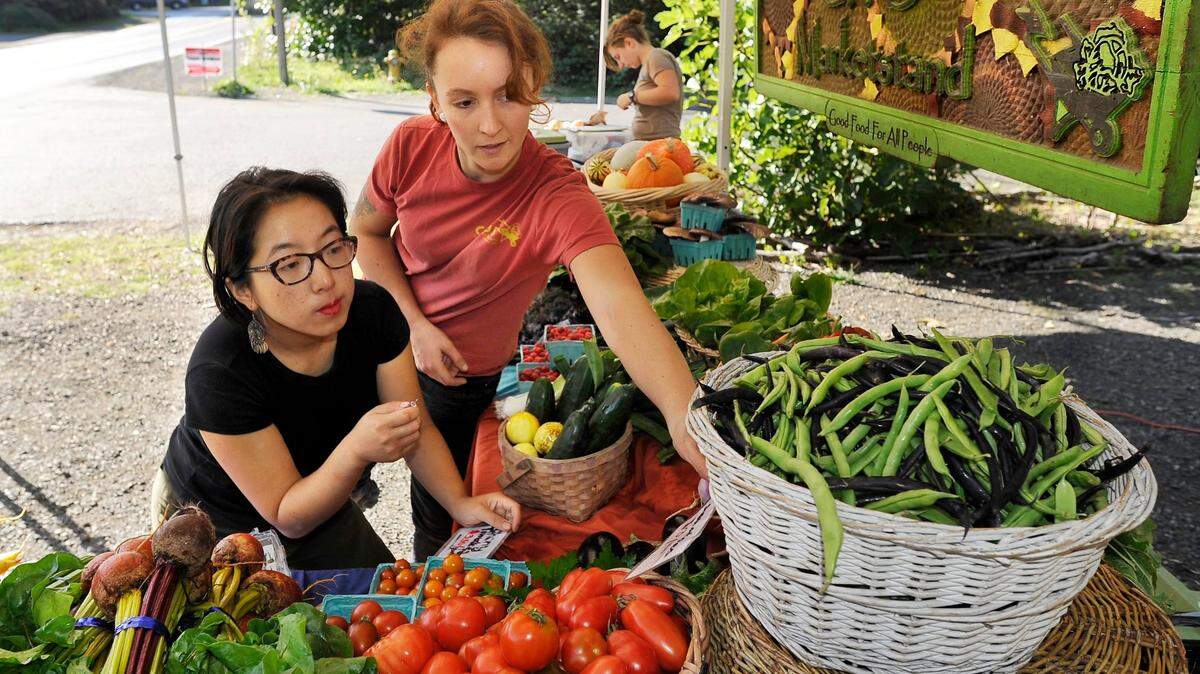
If that wasn’t enough “vegetating,” Judy and I decided to share a CSA. “CSA” stands for Community Supported Agriculture. CSA members pay up-front for a share of farm produce for an entire season and receive weekly boxes of fresh, seasonal, sustainably grown food. It’s a direct farm-to-table relationship between consumer and grower.
I had thought about signing up for a CSA membership for years. I knew it was a great idea. Once, I even bought a CSA share at an auction. Still, inertia won out.
I wasn’t sure I’d be around every week to pick it up. Wasn’t sure I’d be able to munch my way through a box of produce every week. Wasn’t sure. ... And then I met Evan Berry of Ladyberry Produce, and I WAS sure. If you met Evan, you’d be sure, too.
She believes people are starving for real food and real connections. Like an evangelist, she feels called to feed her community. There is fire in her belly and light in her eyes.
Evan – tan, sinewy and lithe as a willow – puts in 70-plus hours a week cultivating and harvesting her gardens. Ninety percent of her CSA shareholders live within a 10-mile radius of the 2.75 acres she has under cultivation.
The nonprofit Community Farm Land Trust provides a comprehensive list and map of CSA farms in Thurston and adjacent counties. Nineteen CSAs serve Thurston County residents. Most operate from June to October. Many offer flowers and fruit along with vegetables. Several maintain public farm stands and welcome donations to provide fresh produce to seniors and low-income families.
Another local nonprofit, GRuB (Garden Raised Bounty) offers several programs to engage the community in the production, consumption and sharing of wholesome vegetables. GRuB’s Food Investment Gardens (FIG) program builds free gardens for low-income residents and also custom-builds gardens for folks of greater means. Their Victory Garden Project engages veterans in the construction and maintenance of gardens. A significant portion of GRuB’s produce goes to the Thurston County Food Bank.
Supporting local farmers and organizations that address food insecurity is a unique opportunity to meaningfully enhance the health of our community as well as ourselves.
“It’s not what we give but what we share, for the gift without the giver is bare.
“Who gives himself with his alms feeds three. Himself, his hungering neighbor, and me.”
— James Russell Lowell
Mary Gentry, who moved to Olympia in 1966, has worked in education and law, served on many non-profit boards and is a director for Olympia Federal Savings. She has published two collections of essays, “Quite Contrary” and “Too Far from the Tree.” She is a member of The Olympian’s 2020 Board of Contributors. Reach her at mgentrystoryteller@gmail.com