
Washington’s State Forests should benefit all the people, not just school construction
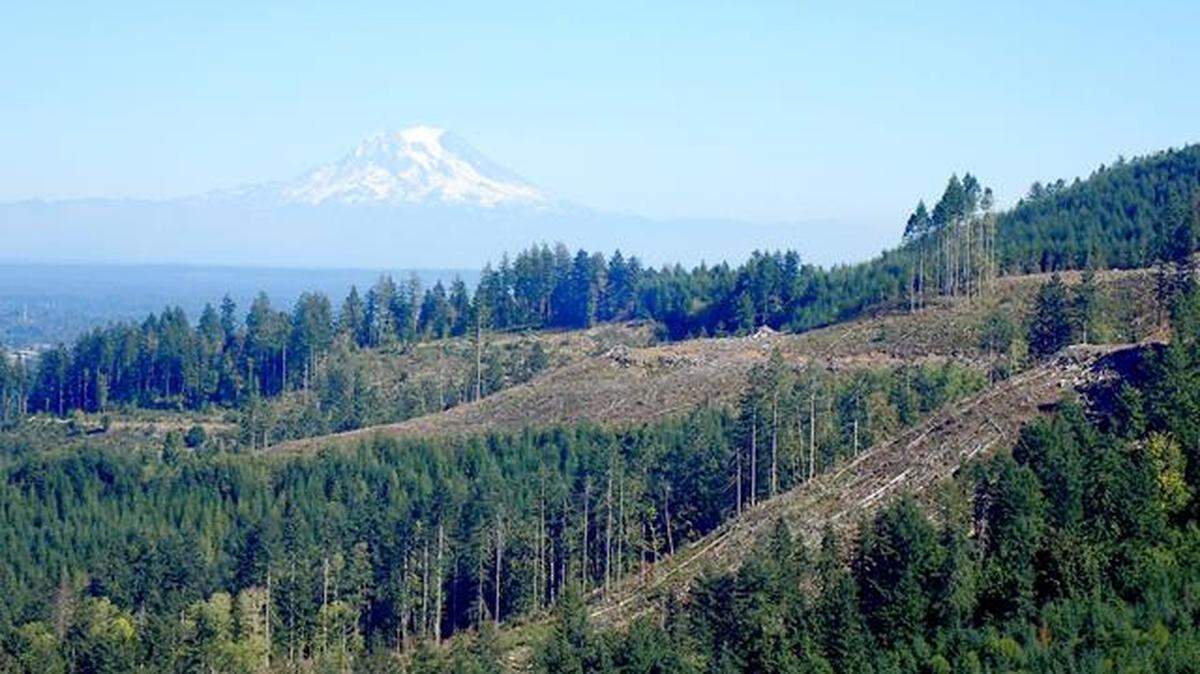
Washington state should manage its forest lands for the benefit of all the citizens of the state — in accordance with our state Constitution — rather than logging as many trees as possible, without considering the public benefits that standing forests provide, merely to generate a tiny fraction of the public school construction budget.
Between us, we have decades of experiences in public school administration and funding, including serving as Washington Superintendent of Public Instruction, a member of the Washington State Board of Natural Resources, a school board president, and a director of the Washington State School Directors’ Association. We fully understand and appreciate both the contribution that revenues from forestry on state public lands make to school construction funding, and the value to students and their families of those same forested lands.
But the tradeoffs between those public values need to be managed better.
Forests provide a wide range of public benefits. Washington’s forests provide abundant outdoor opportunities that support our state’s high quality of life, from scenic drives, picnics, and camping, to hiking, mountain biking, and climbing. What Washington resident has not enjoyed at least some of these activities? How many tourists support the Evergreen State’s economy by traveling here to enjoy them?
These forests also provide vital ecosystems supporting wildlife, salmon, and other fish populations that are so important to our state. Forests are crucial for sequestering carbon from our atmosphere and helping to minimize or reduce climate change, which, regardless of its cause, will impose an enormous financial burden on our state.
Yet on 1.8 million acres of public land that the state Department of Natural Resources manages, it gives absolute priority to generating revenue, giving no weight to these other public benefits, in deciding when, where, and how much timber to harvest. The only exceptions it makes are for legal requirements, but absent that, when the state makes timber harvest decisions, it believes that the ecological or recreational value of a forest, no matter how great, can never outweigh the value of timber revenues, no matter how small.
You may be thinking that forestry on these state lands must be a vital source of revenue for school construction. If so, you would be mistaken. The revenues from these timber sales make up a tiny fraction of the school construction budget state-wide. Local sources account for the vast majority of public-school construction funding. Less than one-third comes from state matching funds, and of the state match, a tiny portion comes from timber revenue — ranging from only 1 to 6 percent of the total public-school construction budget between 2019 and 2023.
What’s more, merely considering the public benefits of standing forests need not eliminate that 1-6 percent of the school construction budget. Where the revenue from logging is greater than the public benefit from a forest, the state would still harvest the timber. It makes sense to log a forest when the revenue outweighs the benefits from leaving the forest standing.
But if you valued a standing forest on your land more highly than the revenue you’d get from logging it, you wouldn’t cut it down, and neither should the state. Where the state match is critical for funding an important school construction project, it makes more sense for the funds to come from sources other than logging a state forest that provides even more benefits to the public if left standing.
We agree with current Superintendent of Public Instruction Chris Reykdal’s blunt and accurate assessment that logging revenue from these state lands “just isn’t the answer” to Washington public-school construction funding. The revenue from logging these public lands simply is not important enough to give it absolute priority without even considering the other public benefits that forests provide.
The state should fully consider all the public benefits from these lands in making timber harvest decisions that truly benefit all Washingtonians.
Judith Billings of Puyallup served two terms as Washington’s elected Superintendent of Public Instruction, from 1989 through 1996. Barbara Schaad-Lamphere was elected two times to the Seattle School Board, serving from 1995 to 2003.