
The Deschutes Watershed Council is an idea whose time has come | Opinion
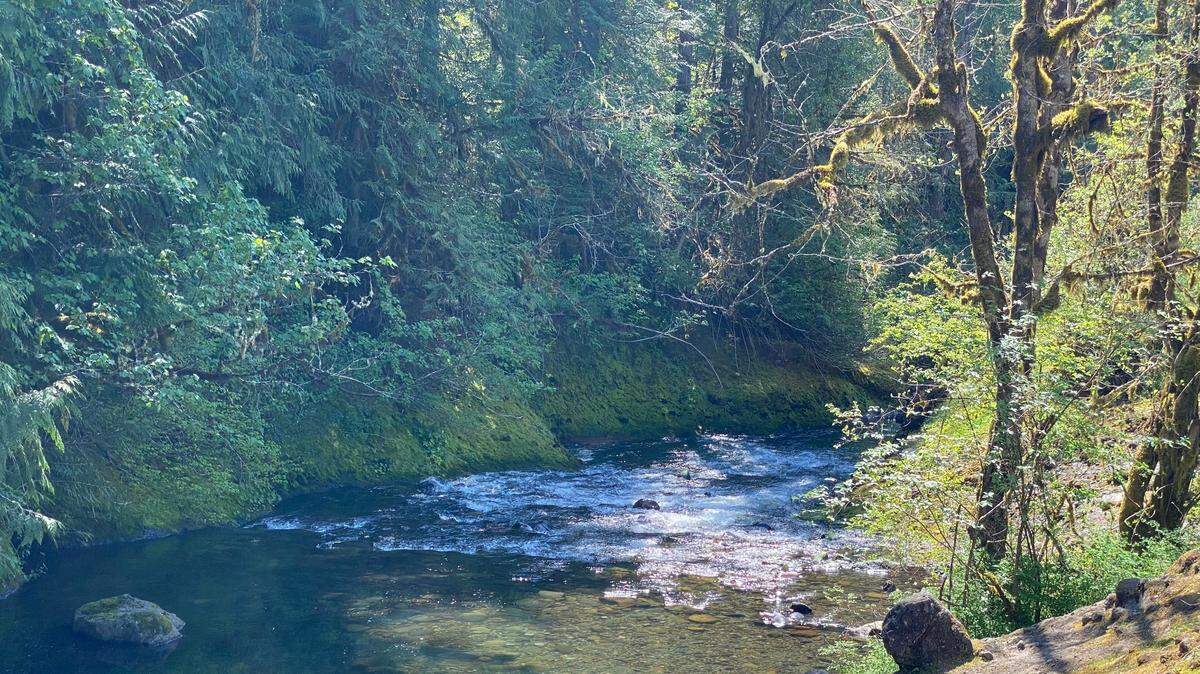
With the formal start of work on the Deschutes River Estuary Restoration Plan, it’s time to begin thinking about how those of us living in the Deschutes River watershed can begin to enjoy the benefits of a healthy and sustainable river.
While the river was cut off from its estuary, it was difficult to see how “upstream” and “downstream” were related. With the impending removal of the Fifth Avenue dam, that will no longer be the case. The 170 square miles of the Deschutes watershed will be connected — geographically at least — in ways that were impossible to imagine while the dam was obstructing the mouth of the river.
More than one observer has suggested that organizing ourselves around our watershed makes more sense than the arbitrary lines of current political jurisdictions. The state of Washington has anticipated this practical approach by designating 62 Watershed Resource Inventory Areas (called WRIAs) for planning purposes, especially for restoring endangered salmon populations. The Deschutes watershed comprises WRIA 13.
Our neighboring watersheds have been at this for a while. The Nisqually River Council was formed in 1987 as a non-regulatory coordination, advocacy, and education organization. It provides a forum to connect citizens, agencies, businesses, and non-profit organizations in the basin, and encourages collaboration and strong partnerships.
The Chehalis Basin Strategy has its origins in the catastrophic floods of 1996, 2007, and 2009. In 2016, the state Legislature created the Office of the Chehalis Basin and the Chehalis Basin Board to promote a strategy that, like Nisqually, has the goal of a healthier and more sustainable watershed.
In both watersheds, the Nisqually and Chehalis tribes have been key partners in helping to bring these efforts to fruition. In the Deschutes basin, the Squaxin Island Tribe has been and will continue to be a valuable partner. Collaboration based on mutual trust is vitally important to the success of these efforts. People from throughout the watershed from a variety of backgrounds and political persuasions need to be willing to talk and listen to each other. Water always flows downhill, and it doesn’t care what our politics, religion, or race are when it’s flooding our homes or carrying toxic waste.
Our relatively late start could be an advantage that allows us to learn from our neighbors about how best to proceed. Farmer and poet Wendell Berry may have said it best when he encouraged us to consider the Golden Rule (Matthew 7:12) as it applies to watersheds: “Pondering on the facts of gravity and the fluidity of water shows us that the golden rule speaks to a condition of absolute interdependency and obligation. People who live on rivers — or, in fact, anywhere in a watershed — might rephrase the rule this way: “Do unto those downstream as you would have those upstream do unto you.”
Whether we recognize it or not, all of us who live in the Deschutes River watershed are governed by an ethic of reciprocity. In the era of climate change, we all live downstream when it comes to clean water, clean air and thriving communities. We are dependent upon each other not only for our own health but also for the health of our watershed and all its living inhabitants.
It’s time for us to join our neighbors in forming the Deschutes River Watershed Council. Our children and grandchildren will thank us.
John P. Rosenberg is a retired Lutheran pastor who lives in Tumwater. He has served on several local and statewide boards that focus on salmon recovery and land conservation.