
I’m in prison because I committed a crime. In WA, people like me deserve to vote | Opinion
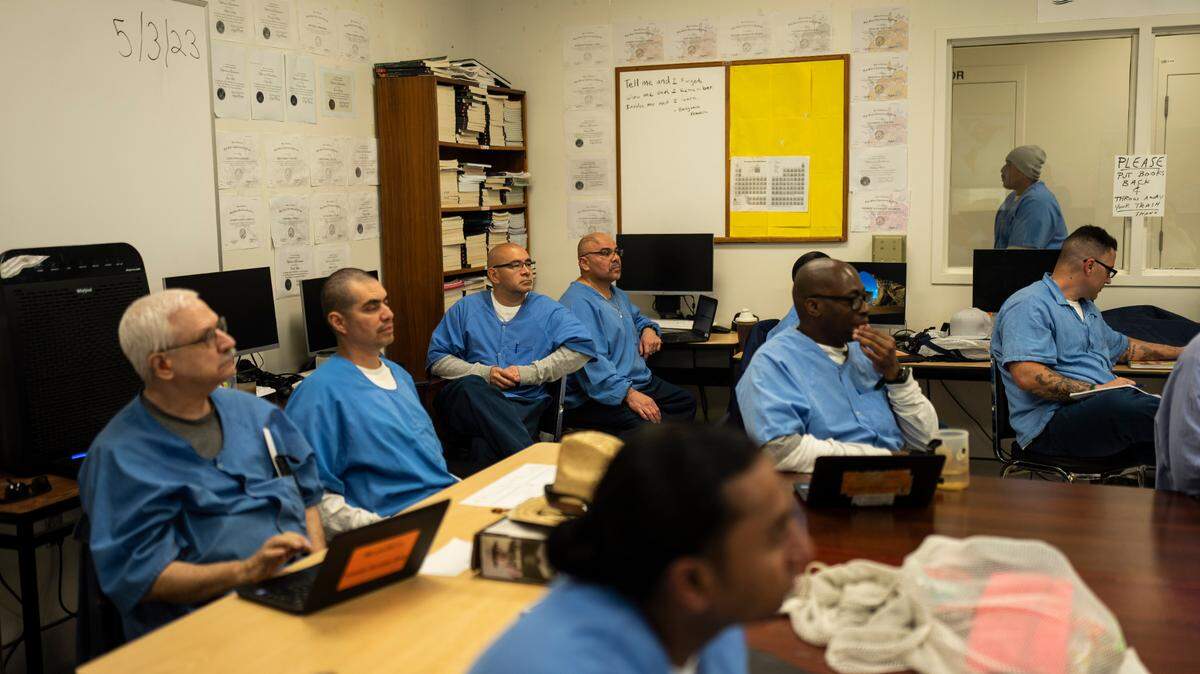
I have never had the right to vote. I entered the carceral system at the age of 12 and have been connected to it ever since.
Yes, I caused harm to my community and need to be accountable for that. However, I was raised in extreme poverty in one of the most violent neighborhoods in America in the 1990s — the Hilltop area of Tacoma. To say I was living in survival mode, even as a child, and that that environment made an impact on the choices I made, would be an understatement.
Now, at 43 years old — having worked hard to change my life while spending 20 consecutive years in the adult prison system — I want to be able to give back to my community, and voting is one way I could do that. But incarcerated people like me in Washington state are currently blocked from voting.
Recently, Washington state Rep. Tarra Simmons, D-Bremerton, introduced HB 2030. This bill would change how incarcerated people can engage with our communities by allowing us to vote.
On Jan. 16, in front of the State Government and Tribal Relations committee, incarcerated individuals, concerned citizens and community betterment organizations spoke on the importance of the bill. They urged legislators to ensure that all citizens have a right to participate in our state’s democratic process.
“The right to vote affirms our humanity and our identity as Americans,” said Anthony Blankenship at Civil Survival. A formerly incarcerated citizen who now serves his community.
Washington’s prison system strips thousands of citizens of our most fundamental right as citizens: The right to vote. This has been used to disenfranchise people with felony convictions, like me, from participating in our democratic process. Our current law allows our state to take voting rights away for anyone convicted of an “infamous” crime, which lawmakers have used to silence people with felony convictions.
If we instead define infamous crimes as crimes punishable by the death penalty — now outlawed in Washington except in cases of treason — we can join the two other US states and the District of Colombia that allow everyone to make their voice heard, even while incarcerated.
Because of the racial and economic biases in our criminal legal system, low-income Washingtonians as well as Black and Indigenous citizens are the most likely to lose their voting rights. By allowing our incarcerated community members the ability to vote, Washington can make strides to empower the underrepresented voices that disproportionately fill our prisons. This will help address the racial inequalities caused by Washington’s current voting system. Just as we rejected poll taxes, literacy tests and many other racially discriminatory restrictions on voting in the past, we should stand united against modern-day restrictions that were designed to block Black and Indigenous citizens from playing a role in our democracy as well.
With the support of the legislature, we are beginning to see an unprecedented number of people being civically engaged from jails and prisons. This is progress, and this is how we begin to rebuild society. Our vote affirms our humanity and that is critical, not only to democracy, but also to our rehabilitation.
Showing the incarcerated population that we are a part of society — not just cast-off, second-rate citizens – heals us and the injustices of the current voting system.
Having a vote also gives us a stake in who is in office and incentivizes us to pay attention to our community’s needs. That helps us to be accountable citizens and asks elected officials to be accountable to us, as their constituents.
Currently, lawmakers set policies that affect incarcerated people even more intimately than people in the free world — they determined when and how we were administered the COVID-19 vaccines; they determine what education and betterment programs are supported; they even determine what our reentry to our communities will look like.
Our issues would become more than just a talking point or a false promise. It would be something that had to be taken seriously if they wanted our vote.
Hundreds of people are already participating in the process of voting from jails and youth prisons around the state — due to HB 1078, which was passed in 2021 and went into effect in 2022 — proving that there is an appetite for voting in incarceration facilities and a mechanism for processing our ballots. HB 2030 would build on that.
“How can we lecture the world on democracy when we struggle to fairly apply it ourselves?” said Raymond Williams, one of the incarcerated individuals who testified in support of the bill.
Legislators in Washington have a rare opportunity to strengthen our democracy. Supporting voting rights for all citizens is best for our society because it stops us from ostracizing huge swaths of people, many of them low-income and people of color.
History has taught us that doing this only leads to harm, abuse and racism. Our great state can be a leader in moving away from this practice.
We can show the rest of the world that we don’t only talk about democracy, but we fully practice it.
Christopher Blackwell is an incarcerated journalist and the executive director of Look2justice.org, an organization centered on empowering incarcerated voices through civic engagement. You can follow him on X @chriswblackwell and read more of his work at christopher-blackwell.com.
This story was originally published January 31, 2024 at 5:00 AM with the headline "I’m in prison because I committed a crime. In WA, people like me deserve to vote | Opinion."