
Forests can generate revenue while serving ecosystems, salmon and people | Opinion
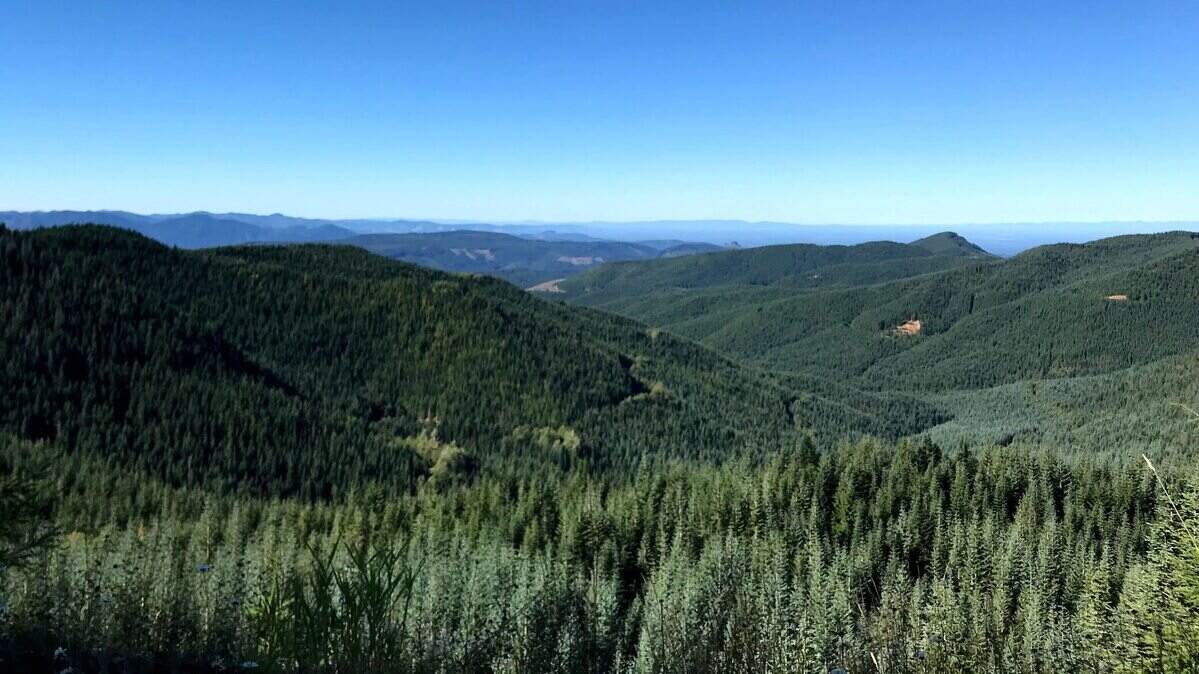
Nisqually Community Forest is a community-based, sustainable forestry pioneer. Recently, as we moved from acquiring land to managing stands and watersheds, we show that it’s possible to sustain local economies and local ecosystems.
Founded in 2011, Nisqually Community Forest was the first community forest in the Puget Sound region and second in the state. We were motivated by data showing that by raising the average age of forests, we could provide more water to salmon streams.
With the help of our parent organization, Nisqually Land Trust, and the Nisqually River Foundation, Northwest Natural Resource Group, Washington Conservation Action and Conservation Northwest, we expanded to 2,600 acres along the Mashel River and Busy Wild Creek, sheltering some of Washington’s best salmon and steelhead habitat.
As partners with the Nisqually Tribe, which has forestland adjacent to ours, together we manage approximately 5,500 acres in the Nisqually Watershed, which has headwaters in Mount Rainier National Park and extends to southern Puget Sound. Eventually, we’d like 30,000 acres under management.
“Sustainable forestry” means different things to different people. What do we mean by it?
First, we’re thinning overly dense stands resulting from management decisions made prior to our ownership. Most of our forest was replanted at the standard working forest density of 350 trees per acre. Now many stands have doubled or tripled that density due to infill. A dense forest doesn’t really work for nature or people.
Our forest management plan has us selectively take smaller trees, leaving larger ones to become structure for a more complex ecosystem. We began thinning in 2018 using local contractors. We create local jobs, sell wood to local mills, send what wouldn’t work for lumber to Washington paper mills, and sell boughs to the local holiday-wreath market. We also sell “fish logs” that are used in salmon-stream restoration and usually bring in three times the price of mill logs.
We manage stands along riparian areas and very steep slopes to let them develop into old-growth successional areas. In the other stands, we thin a portion of trees every 15-25 years, resulting in complex stands with benefits for fish and wildlife. Over time, our longer harvest cycle results in far more valuable logs than those from trees grown on shorter cycles. In the interim, the trees provide habitat for wildlife and store carbon that might otherwise be released into the atmosphere.
Our forest also provides a landscape for skiers, snowshoers and others who enjoy the outdoors. Mount Tahoma Trails Association has ski trails on our land and a ski hut on the adjacent Nisqually Land Trust property. We hope to have a system for hunting reservations this year.
We hope to create a forest that has stands of varying species and ages. Research shows that this kind of forest creates more diversity for birds and wildlife. Healthy forests like this also shade streams and preserve snowpack that feeds streams during the summer months. That’s good for people and for fish.
We’ve analyzed how the forest affects the water table and stream flows. This is important because our streams feed salmon habitat and affect water quality in Puget Sound.
Some results are intuitive: A stream bounded by 100-year-old trees has nearly three times more water in August than one shaded by 20-year-old trees. Older trees retain and release water more evenly.
Some results are surprising. We and our partners received a grant to study how forest gaps affect snowmelt. One might think snow melts faster in an open gap than in dense drifts shaded by young trees. We found the opposite: The drip lines of those young trees make snow melt faster. Snow lingers much longer in gaps. Because of these findings, we’re thinning aggressively to create more gaps.
This sustainable forest management can generate revenue while preserving complex ecosystems, feeding salmon streams, and supporting our local communities. That’s a win for nature and people.
Justin Hall is executive director of the Nisqually River Foundation. He serves on the boards of the Nisqually Community Forest, the Northwest Community Forest Coalition, the Friends of the Nisqually National Wildlife Refuge Complex, and AgForestry Leadership.