Kids’ hospital visits for mental health have surged during past decade, study finds
Data show that children have been seeking treatment for mental health disorders in hospital emergency departments at an alarming rate, with hospitalizations for suicidal thoughts and attempts more than doubling over a decade, according to a newly published study.
And experts worry that the coronavirus pandemic will only add to existing stressors like bullying and social media pressures that could have lasting impacts into adulthood.
The study was conducted by the Nationwide Children’s Hospital in Columbus, Ohio, and published Monday in the Journal Pediatrics.
“We would like children to go to their primary care provider or a psychiatrist, but [emergency departments] are the safety net for children with mental health disorders, and we need to be able to take care of them,” Dr. Rachel Stanley, study senior author and division chief of emergency medicine at Nationwide Children’s, said in a press release.
“Children don’t wear their mental health on their sleeves, so there is an unprecedented need for evidence-informed resources and support for children,” the release said.
Between 2007 and 2016, pediatric emergency department visits (EDs) for mental health disorders increased by 60%, while regular visits by children to the ED remained stable, according to the researchers who analyzed nationwide emergency department sample databases.
What increased?
The researchers studied the reasons for mental-health ED visits and the location they occurred, “representative of all U.S. [EDs,]” the study said.
The highest jump in visits was in 15 to 17-year-olds with a 68% increase; girls visited the hospital more often than boys, seeing a 74% increase, although the rate grew for both genders, the study said.
Visits linked to anxiety disorders and impulse control disorders “significantly” jumped by 117%, while visits for substance-use disorders rose by 75%, according to the study.
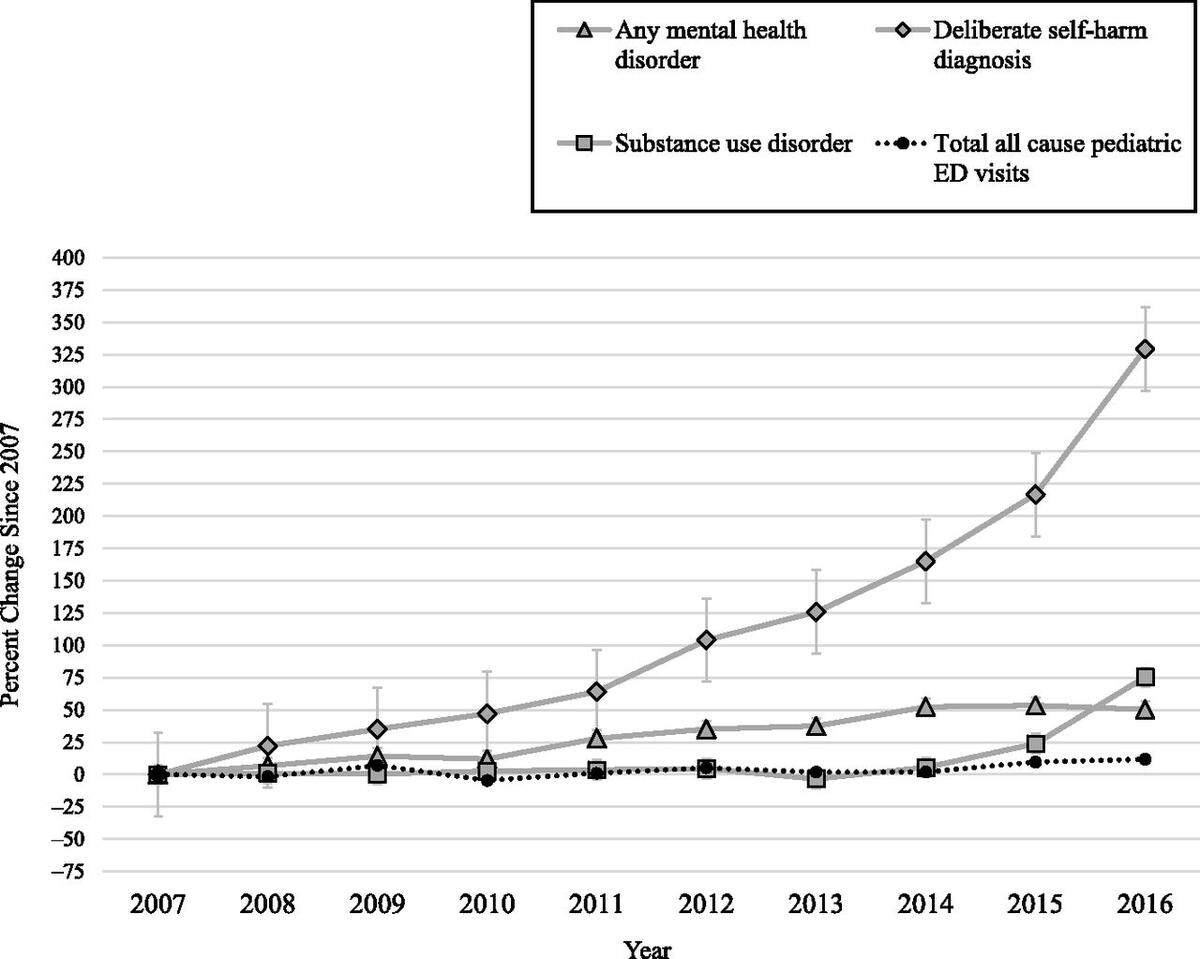
What’s more, children seeking hospital care for “deliberate self-harm” increased by 329%, meaning visits quadrupled since 2007.
The study comes during unprecedented stressful times due to the new coronavirus.
“Although this study was conducted prior to the onset of the COVID-19 pandemic, the academic expectations, changing bodies due to puberty and at-home stressors caused by the pandemic are likely to further worsen children’s mental health,” Dr. Jennifer Hoffmann, a member of the emergency medicine division at the Lurie Children’s Hospital of Chicago, told U.S. News.
Why the decline in mental health?
Other reasons behind the dramatic declines in mental health among youth include bullying related to racism, body image or social status, social media that can entice children to compare themselves to others, and poor sleep from excessive screen time which can limit face-to-face social interaction, experts say.
Even more are the academic expectations, changing bodies due to puberty and at-home stressors like abusive caretakers, according to the Mayo Clinic.
At the ripe age of 14, children already acquire half of all “lifetime mental health concerns,” which would explain why children with mental health disorders make up 2% to 5% of all pediatric ED visits nationally, according to the study.
The researchers also claim children are visiting hospitals that are not equipped to properly treat them, both in rural and urban settings.
Shortage of qualified providers
One reason behind the issue is the ”nationwide shortage of mental health care providers,” the researchers said.
“This shortage will have a direct impact on the accessibility and quality of mental health care of children, particularly those who live in rural areas, are younger and are uninsured,” the study said.
Universal screening for suicidal thoughts, extra training for emergency doctors and nurses and telehealth services can all help provide children with the appropriate and necessary care they need, the researchers said.
Mental health experts say to keep a watchful eye out for emotional changes like unexplained crying spells, feelings of hopelessness and loss of interest in usually pleasurable activities to ensure your child has a healthy mentality, according to Mayo Clinic.
As well, changes in appetite, unusual sleep patterns such as insomnia or excessive slumber, and use of alcohol or drugs should all raise flags about your child’s mental health.
Experts suggest encouraging children to reach out to family and friends for social support, seek ways to boost their self-esteem and maintain any ongoing treatment even after symptoms disappear to prevent a relapse, Mayo Clinic said.
This story was originally published May 12, 2020 at 3:37 PM with the headline "Kids’ hospital visits for mental health have surged during past decade, study finds."