Seattle Mariners midseason report: what went wrong in first half, playoffs still possible?
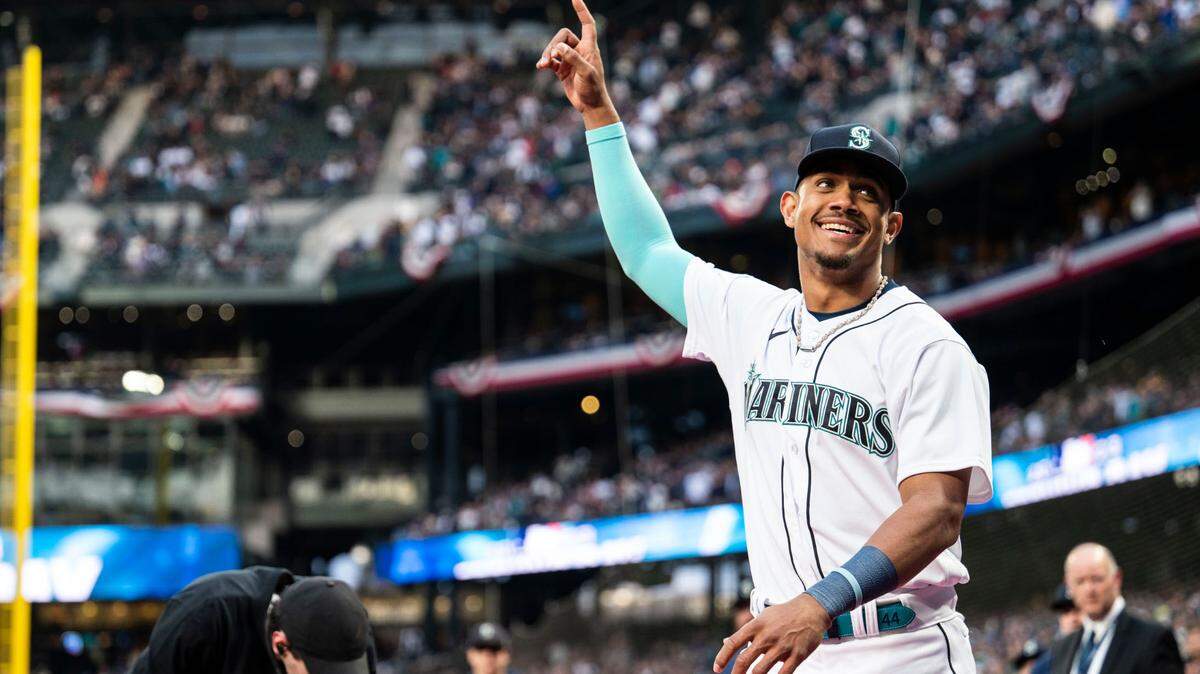
The first half of the MLB season is in the books, the fun times of the Home Run Derby and All-Star Game now in the rearview mirror. The Seattle Mariners enter the second half of the season a game above .500, with a 45-44 record and sitting in third place in the AL West, behind a resurgent first-place Texas Rangers squad and the reigning division champion Houston Astros.
Seattle has won seven out of its last 10, going into the All-Star break on a much-needed high note after a mostly underwhelming first half. The News Tribune’s sports staff — Gregg Bell, Jon Manley, Lauren Smith and Tyler Wicke — discuss what went right and what went wrong in the first half, the lingering effects of the club’s lack of activity in free agency, reasons for optimism and possible trade deadline moves.
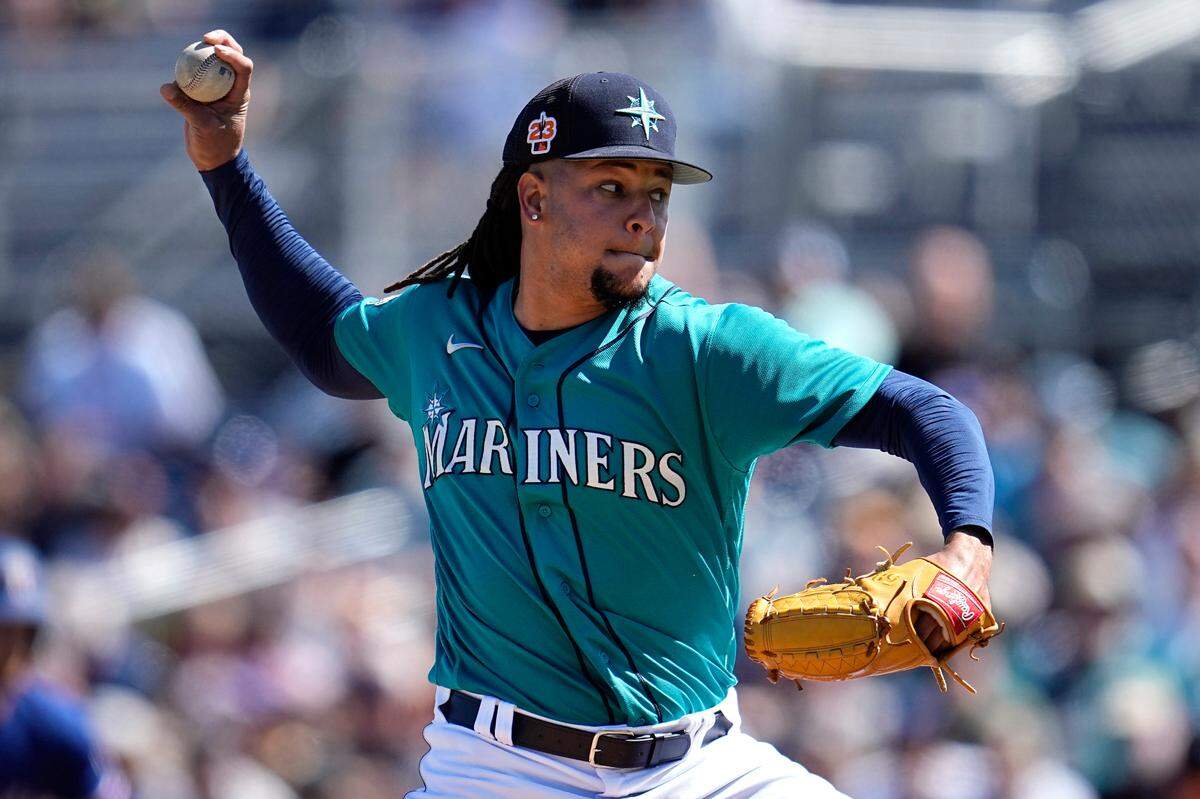
Were expectations too high for 2023?
Manley: No, I don’t think so. Sometimes in baseball — or in sports in general — you’ll see the stars align and everything fall into place for an aging team on its last legs. That description doesn’t fit for the 2022 Mariners squad that broke the franchise’s two-decade playoff drought. The Mariners featured one of baseball’s younger rosters last year, led by American League Rookie of the Year Julio Rodriguez and a talented young rotation. Expecting that young nucleus to take a step forward in 2023 and compete for the AL West title wasn’t (and still isn’t) unreasonable. I’ve watched some truly awful, unlikeable Mariners teams over the years. I don’t think this is one of them, which makes the underwhelming first half frustrating. It feels like most of the pieces are there.
Bell: The Mariners created these expectations themselves.
“The goal is to win the division,” M’s president for baseball operations Jerry Dipoto said Feb. 1 at the team’s annual pre-spring training luncheon. “We feel like that is a realistic goal.”
And it was: Seattle was coming off its first playoff appearance in 21 years, and the next step was going from wild-card entry to division title.
The reality of those expectations is the margin of error was so slim from last year’s team that won all those one-run and extra-inning games that Dipoto and the Mariners not upgrading the offense more meant they are still living with that too-slim margin between winning and losing. They didn’t improve enough to match those higher expectations. So this season remains a high-wire act so dependent on stellar pitching and getting the breaks in close games.
Smith: Seattle brought back nearly everyone that played a key role in ending the club’s two-decade postseason drought last fall, and though this is still a young group, the expectations to make a return trip to the playoffs in 2023 and contend for the top spot in the division were — and still are — reasonable. They’re also still realistic. Even with injuries shaking up the rotation and bullpen during the first half, the Mariners’ pitching staff has been solid, and consistently kept Seattle in games the first three months of the season. If the offense can carry some of that positive momentum from the last three series before the All-Star break into the second half, every expectation is still well within reach.
Wicke: Seattle’s magical postseason ride last October brought the expectation to return, and the anticipated evolution of superstar Julio Rodriguez and a full season with ace pitcher Luis Castillo perhaps suggested, realistically, a step forward. But hitting woes have pumped the brakes on hopes for a pennant, with two of MLB’s top-three strikeout leaders on Seattle’s roster (Teoscar Hernandez, Jarred Kelenic) and two more in the top-14 (Eugenio Suarez, Rodriguez). They may have the pitching staff built for a deep playoff run — but a berth in 2023 relies on an uptick in hitting production. They’ve already flashed magical upside, but will the offense revive itself in time?
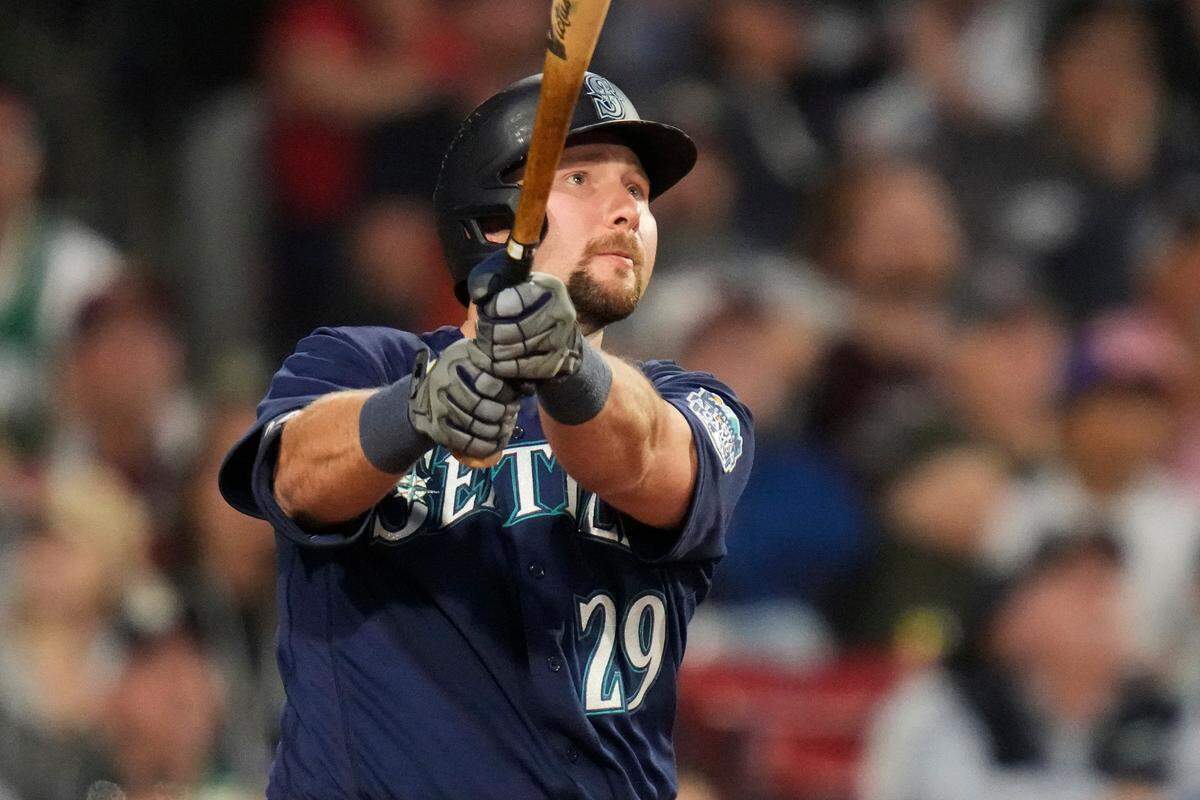
Where has this season gone wrong the worst?
Manley: The conversation starts and ends with the lineup. While some of the pitching has been up and down at times, it’s been mostly up, and the rotation has held its own. The Mariners rank 24th in MLB in batting average and on-base percentage, 23rd in slugging percentage, 15th in RBI, 16th in home runs and are second in the league in total strikeouts, behind only Minnesota. The pitching staff, meanwhile, ranks fifth in MLB in ERA (3.74) and 12th in strikeouts. They’re going to need some help from Seattle’s sleepy bats in the second half of the season if the Mariners expect to make a playoff push.
Bell: The lineup not only doesn’t produce enough runs, their outs when they do get runners on base are often futile and unproductive. The Mariners being next to last in the majors with 869 strikeouts coupled with an on-base percentage of just .312 that is 24th in MLB is a dismal combination. If they don’t hit home runs, they often don’t score and win. That’s no way to make the playoffs.
It’s now obvious their designated hitters are the biggest liability in the batting order. Seattle’s DHs are batting .187 (second-worst in baseball) with a .263 on-base percentage that is the worst in the majors and a meager OPS of .647 that is third-worst, per Fangraphs.
Smith: The inconsistency on offense. The pitching has been there — the club’s collective 3.74 ERA ranks fifth in the majors midway through the season — throughout the first half, but stringing together productive at-bats too often hasn’t. The Mariners rank in the bottom third in the majors in team batting average (.233) and on-base percentage (.312). They have scored four or fewer runs in more than half of their games this season — and have an 11-37 record in those contests — and two or fewer in 20 games, winning only three of those contests. Both Seattle’s 869 strikeouts and 25.7 strikeout percentage ranks the second-worst in baseball heading into the second half. The numbers were more encouraging in the days leading up to the All-Star break, but whether or not that consistency carries over is the question in the weeks ahead.
Wicke: Seattle puts runners aboard considerably below league average (.312 OBP, 24th in MLB) and often strand those who reach. The Mariners rank 21st in runners stranded in scoring position at 3.60 per game. They’re league-average in homers (16th in MLB) which cushions their season run total (also 16th), but clutch hitting typically turns the 50-50 games in your favor. Seattle’s had little of it.
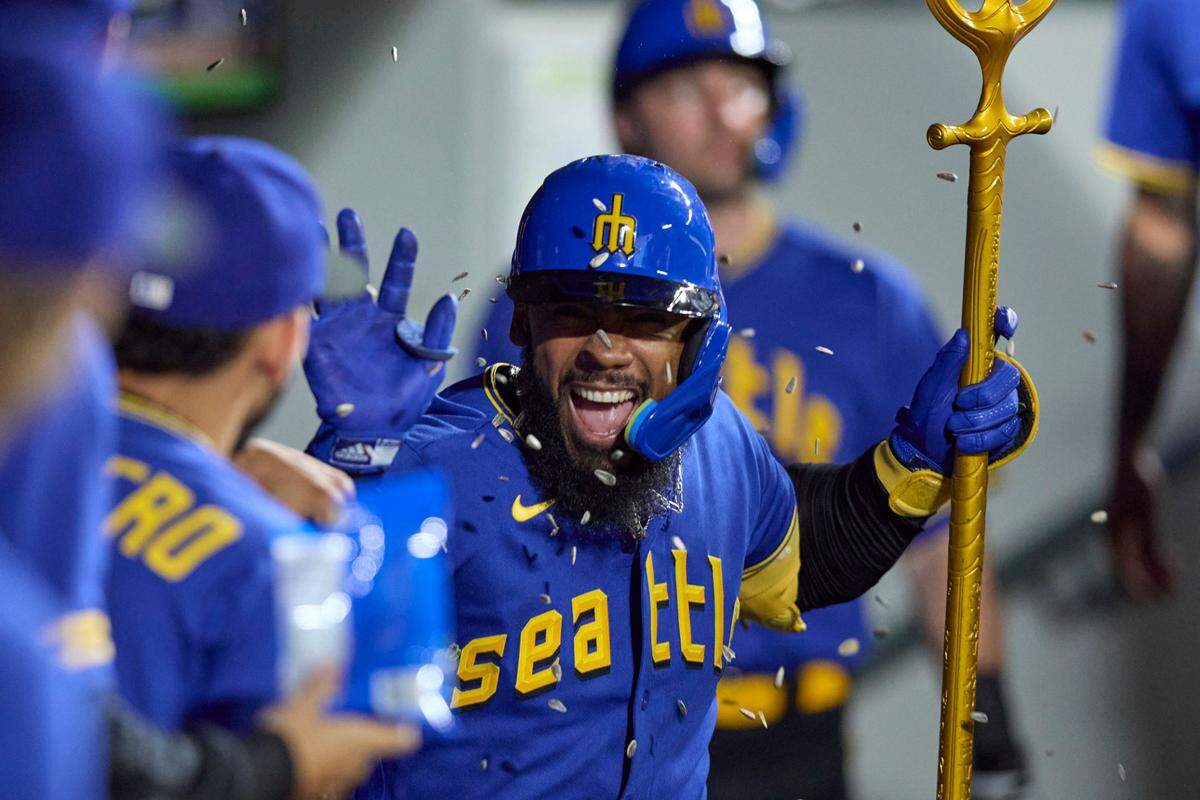
Did the team do enough in free agency in the offseason?
Manley: Obviously, emphatically: No. On paper, the trade for Teoscar Hernandez made sense as a replacement for oft-injured Mitch Haniger, even if losing bullpen arm Erik Swanson was tough to swallow. The glaring miss, though, was trading for 2B Kolten Wong, who has been nothing short of awful, hitting .162 with just five doubles and a home run. M’s fans were skeptical of the move at the time, and guess what — they were right. I’m not sure there was a great designated hitter solution available in free agency, but the AJ Pollock/Tommy La Stella plan has been a giant swing and miss. Coming off the first postseason appearance in decades, Seattle’s ownership had a chance to signal to fans they were all-in this offseason. Instead? A big dud.
Bell: La Stella and Pollock – A.J. Pollock! – being the biggest offseason signings for the lineup tells you all you need to know about what the Mariners did and did not do last winter. La Stella didn’t even make it past the first week of May before he got cut. The 35-year-old Pollock has been so bad (.162 average, .535 OPS, just 15 RBIs) Rainiers Triple-A call-up Mike Ford recently became the latest to take his job.
Dipoto and the Mariners did so little spending and upgrading of the offense, it makes me think they’ve been saving their pennies, nickels and $100 million bills for…yes, Shohei Ohtani in free agency this coming winter.
Smith: Echoing Jon and Gregg — they needed more to boost the offense. A look at the designated hitter numbers in particular — which has rotated more than any other offensive position on the roster with 14 players appearing in at least one game as the DH — through 89 games: Last in the majors in batting average (.182), last in on-base percentage (.255), 27th in slugging percentage (.350).
Wicke: Seattle netted OF Teoscar Hernandez and INF Kolten Wong in the early offseason trade market, but its subsequent free-agent signings left much to be desired, particularly considering expectations. Plenty called their offseason shot — that Seattle, fresh off back-to-back 90-win seasons, failed to supplement the roster and turn it into a contender. FanGraphs agreed. In March, it gave the Mariners a 40.5 percent chance to return to the postseason, projecting Seattle for 82 wins. And 89 games in, the Mariners are right on pace. Regression from 2022 hitting production has the team floating near .500 — where they’ve been for months.
What are reasons for optimism, for this season and longer term? Can they dig out of the hole?
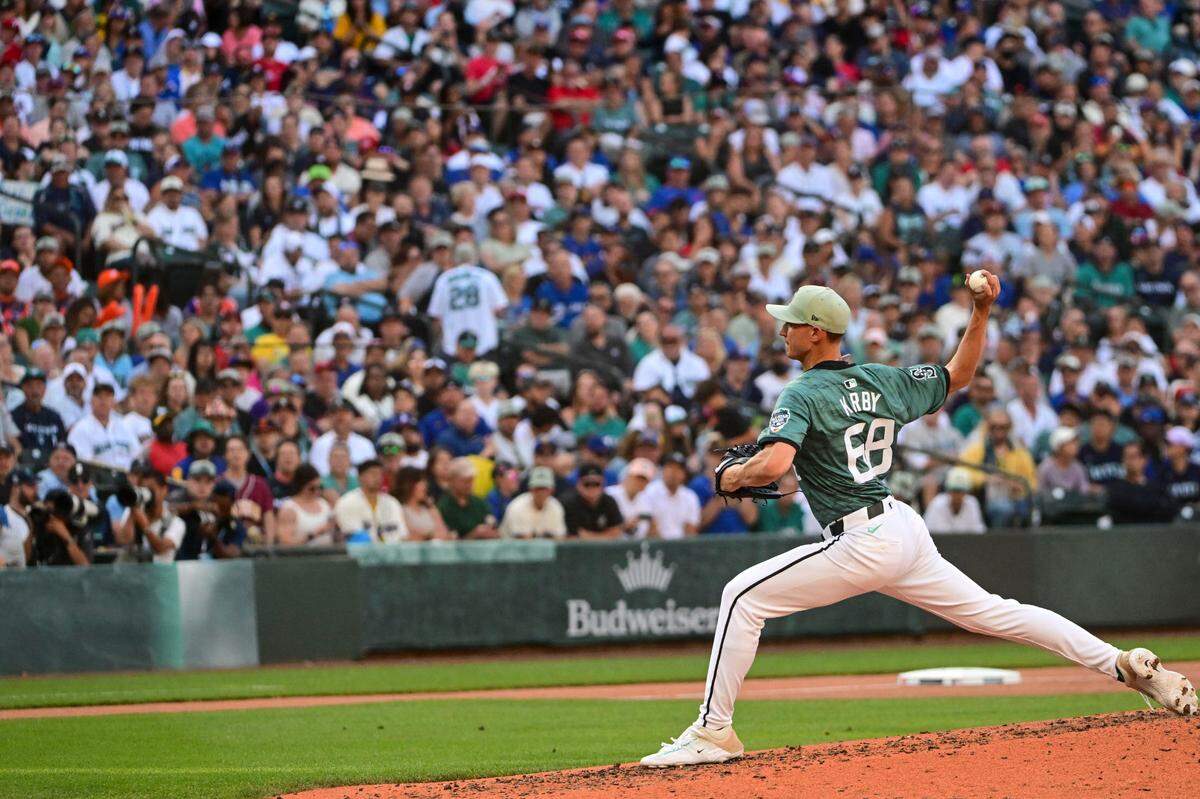
Manley: Despite losing Robbie Ray for the season, Seattle still boasts one of MLB’s best rotations. Luis Castillo, George Kirby and Logan Gilbert are going to keep the Mariners in most of their games. It’s up to the lineup to start producing at the plate. And look, I’ll say it: the Mariners need more from Julio Rodriguez. I like Julio. He’s got charisma, the million-dollar smile, he connects with the fans. But he also chased too many pitches in the first half of the season and pressed at the plate too often. If Seattle is going to make a run in the second half, it starts with J-Rod. I think long-term, there’s plenty of reasons for optimism. While not all of Jerry Dipoto’s moves have worked out — and to be fair, no GM has a perfect track record — Dipoto and the front office have done a good job identifying pitching talent in the draft. To me, having a quality rotation is the best recipe for long-term, sustainable success. Hopefully they’ll complement those arms with a more complete lineup in the future.
Bell: For me, it’s as simple as two guys producing as they have before. The reason for optimism is: Rodriguez and Raleigh can’t stay this consistently substandard for six whole months, can they? Those two alone producing more would change the entire season.
The Mariners are just four games out of a playoff spot and six games back in the AL West with half the season yet to play. Three wild-card entries into each league’s playoffs make it hard – I mean, Oakland A’s-bad difficult – to truly be out of postseason contention before September. If Rodriguez plays back up to his talent and Raleigh finds some consistency, Seattle has the pitching to get back to the postseason.
Smith: Opening the month of July by winning seven of nine before the All-Star break and picking up consecutive series wins over the AL East-leading Rays, then the Giants and division rival Astros on the road was a step back in the right direction. As deflating as the end of June was — dropping series to the Yankees, Orioles and Nationals, and then that 15-4 loss to Tampa Bay to slide to four games below .500 — that last week-and-a-half stretch before the break has the Mariners back in third in the AL West standings and a more manageable six games behind, and four games out in the wild card race. If the offense can find the same consistency it showed during that nine-game stretch before the break — the Mariners scored five or more runs in six of those seven wins, and is 34-7 this season when scoring five-plus in a game — as the second half gets rolling, it’s certainly reasonable to believe the Mariners could still be playing past the first day of October.
Wicke: Seattle wouldn’t have entered the All-Star break a game over .500 without the consistent dominance of its starting pitching, which has more-than-kept its aging season afloat. Despite the loss of number-two starter Robbie Ray in the opening days of the campaign, Seattle called up Double-A prospects Bryce Miller and Bryan Woo within weeks of each other, and got the best-case scenario in what have been fantastic rookie seasons. Tack on Logan Gilbert, new All-Star George Kirby and, of course, ace Luis Castillo. Come postseason time, teams with elite, top-of-the-line rotations seem to advance. Remember Castillo in Toronto last October? And more arms wait in the wings of Seattle’s farm system, including reigning Texas League Pitcher of the Month Emerson Hancock and electric reliever Prelander Berroa. Assuming they stay in blue and teal for years to come, this team is a top-tier offense away from contention.

What type of moves would you like to see at the trade deadline?
Manley: If you can get Shohei Ohtani and ink him to a long-term deal, start there. More realistically? Seattle needs an upgrade at second base. One name I’d consider is Chicago White Sox shortstop Tim Anderson, a recent (2021, 2022) two-time All-Star. He’s having a down year and playing for a dreadful Chicago (38-54) team, which probably means Seattle could buy low. Maybe a change of scenery is what Anderson needs. And even if the move doesn’t work out, A) It likely wouldn’t cost Seattle much and B) He still couldn’t be much worse than Wong has been. A J.P Crawford and Tim Anderson middle infield combination could be fun.
Bell: When I asked Mariners owner John Stanton last week if his team can make the playoffs again this season with the offense it has – that is, with no adds by the trade deadline Aug. 1 – Stanton said “I believe we can.” I took that as the top man not publicly backing Dipoto into a corner of having to make a trade of valuable prospects just to make a trade.
The Mariners don’t have much leverage in acquiring a top hitter right now, unless they decide to gut their collection of top prospects. And you don’t do that unless the Angels decide they want to trade Ohtani. Don’t see that happening.
So I’m with Jon. A veteran such as Anderson who wouldn’t cost a massive loss of elite prospects is the more likely and prudent route for now.
Now, about signing Ohtani for, oh, $800 million or so…
Smith: Depends on how the next two weeks play out — for the Mariners and everyone else. If the market is there to add an impact bat, look to give an offense that seemed to be trending in the right direction before the All-Star break an additional boost.
Wicke: The insertion of an above-average hitter — even a premier one — into the lineup won’t move the needle without production from eight other hitters. And if Seattle believes it will, the front office will be forced to trade from its strength: a deep pool of young, controllable pitching. Shipping away pitching talent to supply the major league roster could draw further criticism; those who implored the team for supplemental offseason additions could (and likely would) point to the winter as the time to add premier bats. Free agents require no draft capital. What prospects would an established player like Anderson command, a .300-plus hitter in each of the last four seasons and with a year and a half of control remaining on his deal? And does it push this roster above New York, Baltimore, and Houston?
This story was originally published July 13, 2023 at 9:42 AM with the headline "Seattle Mariners midseason report: what went wrong in first half, playoffs still possible?."