
Jason Moline’s body was found in an area already fraught with tension. Now, rumors abound
The body of Jason Moline, a 45-year-old man who was homeless and had been living in Olympia for at least five years, was found about 9:20 p.m. Nov. 2 near Capitol Lake.
Thurston County Coroner Gary Warnock has said Moline died as a result of “homicidal violence.”
Moline’s body was found next to Capitol Lake, a place bustling with joggers and walkers, and an area where tensions around homelessness were already running high.
Now, a vacuum of unanswered questions around Moline’s death has left room for speculation and rumor as the investigation progresses.
Anyone with information about the incident is asked to contact the State Patrol at sistips@wsp.wa.gov.
Remembering Jay Moline
Colin DeForrest, Olympia’s homeless response coordinator, said he saw Jason “Jay” Moline the day before he was killed. Moline was picking up garbage along railroad tracks with the city’s Rapid Response Team, which cleans up small camps and monitors sites that were previously cleared.
“He was a super, super nice guy,” DeForrest told The Olympian in a phone interview Friday.
It’s a common assessment of Moline. Tye Gundel, co-founder of local advocacy group Just Housing, told The Olympian Moline had been homeless for most of the five years she knew him.
While she wasn’t close to Moline, she knows he used to do manual labor jobs but had been dealing with “a lot of different disabilities for a long time” that kept him from working and finding housing. She said sometimes “he could be the most normal person in the world and other times he was in a different world.”
Moline’s 24-year-old daughter, Lucie Luxilyn, said her dad had “mental struggles,” but that “he did the best he could.”
In a phone interview, Luxilyn said she hadn’t seen him in about five years, but that Moline “was an amazing man and an amazing dad when he could be.”
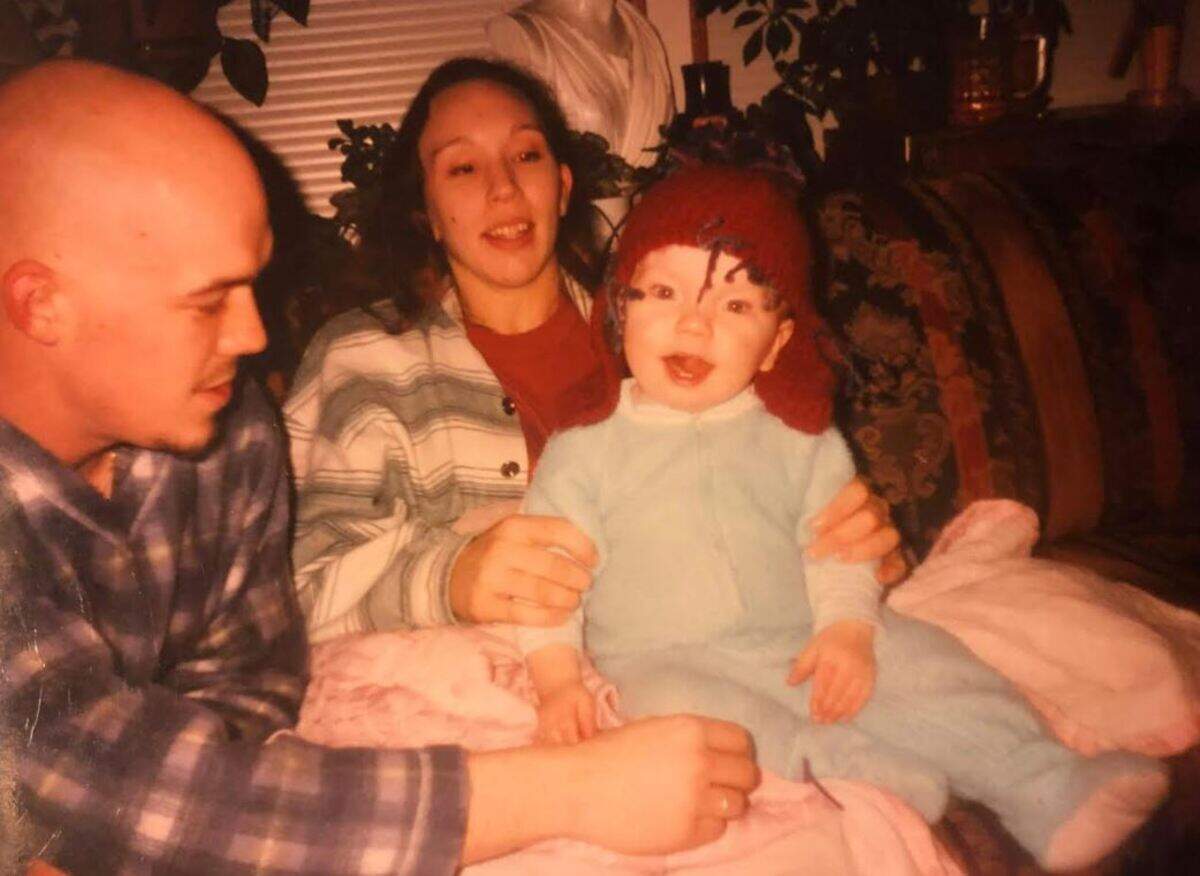
She shared a story from about 12 years ago: She and her dad caught what seemed like “a billion ladybugs” in a cup. He had an apartment at the time, she said, and the ladybugs escaped there. The result: frenzied ladybug wrangling to get the situation under control.
“He was the most free, free-spirited man I ever knew,” Luxilyn said, and he wanted to make the world a better place.
Michael and Carol Garcia of Kent, who were Moline’s foster parents in the 1980s, called Moline “an old soul” who was “trying to find his path in life,” when they called The Olympian this week to ask for information on what happened.
Since Luxilyn learned of her dad’s death, as his next of kin, she said it’s been “a living hell.”
She attended a memorial held last weekend, organized by Moline’s friends with help from Amy LaCroix, pastor at First Christian Church of Olympia, and Concerned Clergy of Olympia.
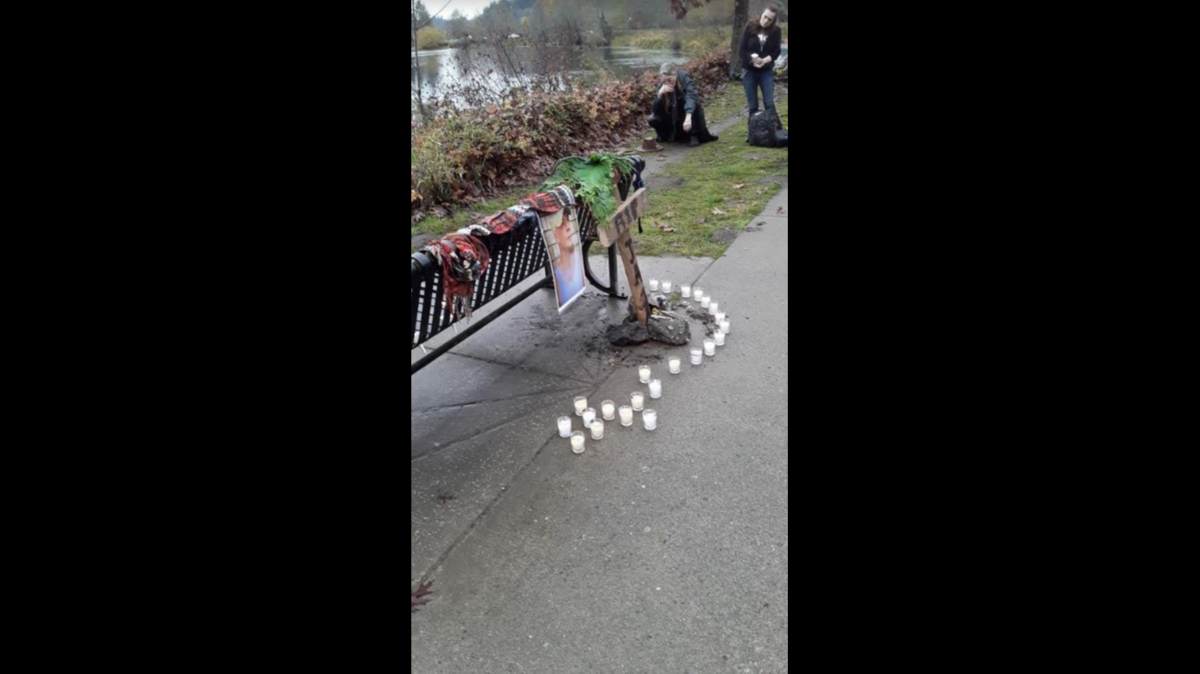
Both LaCroix and Luxilyn described a beautiful memorial with a good turnout. LaCroix said 45 candles were set out along with a large, laminated photo of Moline, as those gathered honored him and shared songs he loved.
“Everything (Jay’s friends) said about loss and the brokenness and the troubles that they face are identical to what I hear from the housed community and their fears,” LaCroix said.
One of Moline’s friends, who goes by the name Cricket and is also homeless in Olympia, was the driving force behind planning the memorial. He told The Olympian he’d known Moline since he came here about seven years ago.
Cricket described Moline as a close friend — an eccentric dresser some called “Crazy Jay,” a resourceful guy who liked nature, and a safe person to camp around.
Moline taught Cricket how to carve dirt steps, raise dirt beds to make the ground level, and tie a tarp so that it wouldn’t let condensation sweat through into his tent.
“He taught me how to survive out here,” Cricket told The Olympian.
At the memorial, Cricket said, Jay “got the respect he deserves, because he didn’t get it that night.”
Luxilyn said she plans to cremate her dad next week, and to host another memorial that will bring her down to Olympia again from Lynnwood, where she attends college.
“I am going to school and I am becoming a social worker to make my dad proud,” Luxilyn said. “Because I want to make the world better, for him. I’m carrying on his dream of making the world better.”
Unanswered questions, no arrests
Capitol Lake and Heritage Park are part of the Capitol Campus, so Washington State Patrol is leading the ongoing homicide investigation.
While State Patrol doesn’t conduct homicide investigations very often, Sgt. Darren Wright told The Olympian, it’s not new to the department.
“We tend to help small agencies that don’t have a detective force,” Wright said. But WSP doesn’t have a lot of territory across the state where a homicide might happen, according to Wright.
“The Capitol Campus is a little bit of an anomaly there,” Wright said. “But it’s something our detectives are trained in and prepared for.”
The agency has been receiving a lot of information on the tip line and through research, he said, and is following up on every piece of information it receives.
Olympia Police Lt. Paul Lower told The Olympian that Olympia police have been called upon “occasionally” to connect State Patrol with people who might have been witnesses or have helpful information.
Thursday, WSP issued a press release with a timeline of known events from the night of Nov. 2.
At 8:34 p.m. Nov. 2, two gunshots were fired in the area and nobody called the police. Six minutes later, a witness drove by and saw a person lying/rolling in a parking lane near the scene and didn’t call the police.
“Unfortunately, some of us are becoming desensitized to seeing people laying on the ground that they don’t see an emergency anymore,” Sgt. Wright said.
At 9:20 p.m., a person with a backpack was caught on video running east through Marathon Park, away from where Moline was.
Almost an hour after the two gunshots were fired, 911 dispatchers got a call about Moline.
State Patrol has said Moline was shot. It hasn’t, however, confirmed a connection between the shots heard and Moline’s injury, and has said Moline’s gunshot wound did not kill him.
Moline’s friend Cricket said he’s angry that people living near where Moline was found heard the gunshots and didn’t come out to help him.
“Jay didn’t die for the limelight,” Cricket said. “Jay didn’t die because he did something wrong. Jay died because the very people that he loved in the place that he called home did nothing to help.”
Some of his anger, too, is directed at the ongoing investigation.
“I think the investigation is just a process, a due process. Because they have to show some type of action, but they don’t really care. It’s just another dead homeless person,” Cricket said.
The State Patrol has not released the names of any suspects in Moline’s death and has not made any arrests. On Wednesday, Luxilyn told The Olympian they weren’t any closer to making one.
“What I know is that somebody, obviously — a person or persons — killed Jay,” homeless response coordinator DeForrest said. “And whoever those individuals are are still out there somewhere. ... It’s scary knowing there’s individuals in our community that murdered a very vulnerable individual experiencing homelessness and they’re still out there.”
For the area’s broader homeless community, advocate Gundel said situations like this often make people living outside fearful; more people try to get into shelters or stay in visible places.
The Olympian did talk to three people who live in the area, all of whom would only give their preferred first names: Opie and Veronica, who live in the camp under the Fourth Avenue Bridge, and Karen, who lives in a van parked on Deschutes Parkway.
Those three described a heightened level of fear. Veronica said that she and her group “don’t go anywhere alone anymore.”
“He should’ve been safe,” Karen said. “It’s such a highly trafficked area.”
Moline’s death has sparked speculation, with social media posts publicly repeating theories around how Moline died and who could have been involved. Sgt. Wright said rumors are coming into the State Patrol that are “way off base.”
John Hutchings, chair of Thurston’s Board of County Commissioners, told The Olympian he’s concerned the incident will cause the proliferation of a stereotype that equates homelessness with violence.
It’s a stereotype, he confirmed, that can make it harder to pursue projects such as a “regional transition center” recently put on pause.
An area already fraught with tension
Perhaps some of what’s fueling the rumors around Moline’s death has to do with the area where it happened: That stretch of Deschutes Parkway was already a hotspot of public tension around homelessness.
Between Marathon Park and Lakeridge Drive Southwest, the road up the hill to the county courthouse, an influx of recreational and other vehicles has led the state to consider restricting overnight parking in the area.
State officials report hearing concerns over sewage dumping, RV doors being opened into bike lanes, and other issues. Last Saturday, the owner of a bike tour company that operates in the area led a demonstration against the RVs that was met by counter demonstrators.
The city of Olympia in September said it was clearing the camp where Opie and Veronica live under the bridge. It hit pause the day before the camp was scheduled to be cleared, and clergy have stepped in to help manage the camp.
Olympia City Council member Nathaniel Jones, Mayor Cheryl Selby’s challenger in the Nov. 5 election, led the push for a delay. Selby was the only vote against it. Homelessness became a defining issue in the race between Selby and Jones for mayor.
DeForrest called the Fourth Avenue Bridge camp the “most concerning” homeless encampment in the city. He said dangerous behavior there is ongoing and often doesn’t come from people who live there, but from others who stop by.
He said the city’s current plan is to work with First Christian Church and Concerned Clergy of Olympia to engage with people living there and help them identify and move to safer locations.
A complicating factor is the fine line that separates land owned by different jurisdictions. In that area of Deschutes Parkway, there’s what DeForrest called a “mishmash” of state property, private property, and city property.
He said the city is meeting with partners and attempting to coordinate and collaborate, but that it’s “very challenging when you hop from government entity to government entity.”
Concerned citizens don’t always understand that a lot of land is either private or under the state’s control, and “the city of Olympia can’t do it all.” He emphasized the need for a regional approach.
That area, he said, “shines a light” on a particular fact:
“Depending on who you talk to in the community, there’s never a perfect place for individuals living outside to be,” DeForrest said. “Wherever you go, there’s going to be somebody who says ‘Not here, that can’t be here.’ There’s no good place, but ... these individuals are going to find a place, because they need to survive.”
This story was originally published November 17, 2019 at 6:00 AM.
.jpg)