
Clouds in state-revenue forecast: Projected collections through 2029 drop $845 million
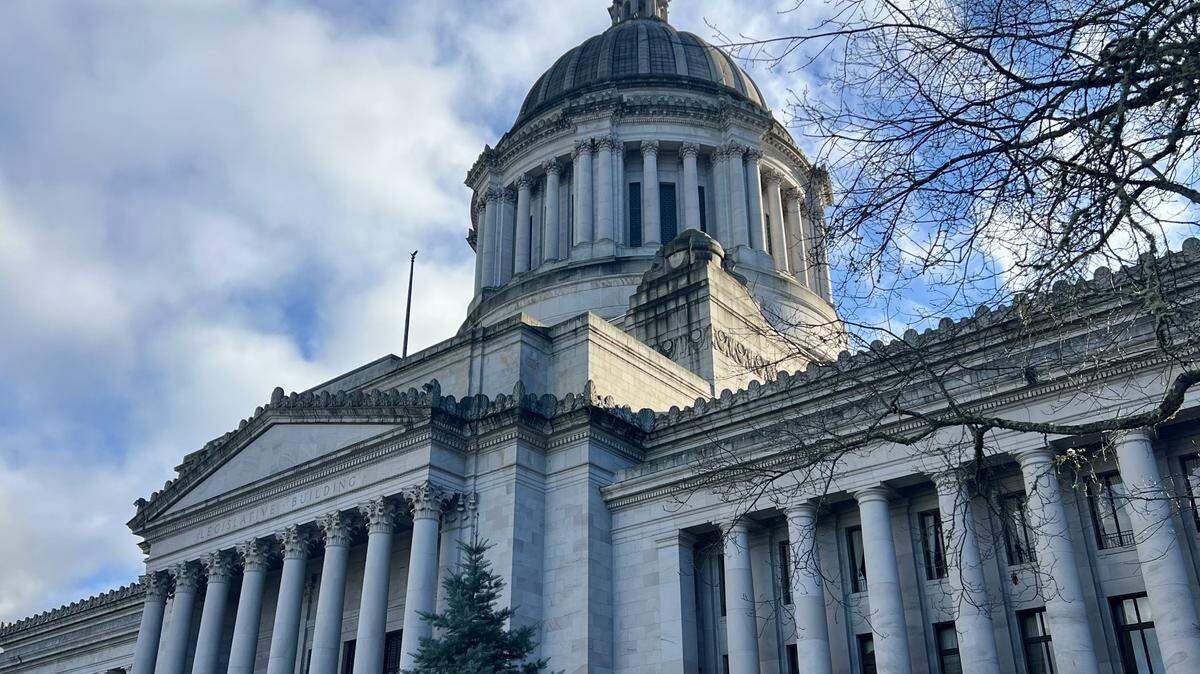
Washington’s projected revenue collections through the next four years are down by $845 million from the previous forecast in November, according to a report released on March 18.
It’s less-than-stellar news at a time when state lawmakers are already examining ways to fill the state’s multi-billion-dollar budget hole.
Dave Reich, executive director of the Washington State Economic and Revenue Forecast Council, noted that the revenue forecast has risen somewhat for the current fiscal year “but is down in out-years compared with the November forecast.”
“This change reflects lower actual revenues and a generally lower forecast for Washington personal income, employment and building permits that likely mean lower revenues in the future compared to last fall,” Reich said in a statement.
The current forecast is made up of revenue projections for the ongoing 2023-25 biennium, which closes at the end of June, plus the 2025-27 and 2027-29 bienniums.
Although projected collections for the 2023-25 state budget rose by about $54 million from the November forecast, they dropped by $479 million for the upcoming biennium and by $420.2 million for 2027-29.
Such shifts in projections are mostly due to reduced expectations for business and occupation tax and sales tax revenues, plus lower interest income, according to the forecast council. The decreases are somewhat offset by the expectation of more estate and capital gains tax revenue, the Office of Financial Management noted in a news release.
K.D. Chapman-See, OFM’s director, said that the most recent revenue forecast “confirms that our financial outlook remains challenging.”
State lawmakers look to the revenue forecast as they settle on plans for balancing the state’s operating budget through new taxes or expenditure cuts. House and Senate Democrats are expected to unveil their proposals March 24.
State Sen. June Robinson, chair of the Senate Ways and Means Committee, said in a statement that the March 18 forecast suggests a relatively moderate fall in projected revenue, which lawmakers expected. She said it shows the need for a sustainable and balanced approach to finalizing the next biennium’s operating budget.
“Throughout this process, we have been focused on making thoughtful, strategic decisions that protect essential services and put the state on a stronger financial footing,” the Everett Democrat said. “The proposal we release next week will reflect that commitment, ensuring stability now and in the years ahead.”
Reich noted during his March 18 presentation that recent tariff increases “are a negative to the national economy and local economy.”
“In the short run, we expect to see higher prices, and of course, other countries are retaliating, so that’s a negative for our economic forecast,” Reich said.
State Rep. Timm Ormsby, chair of the House Appropriations Committee, referenced the “volatility” emanating from the national and international stages in recent months, not to mention the state’s challenges when it comes to inflation, uneven revenue growth and higher caseloads.
“With revenue growth slower than it has been in about a decade, and the continued impacts of inflation being felt across the budget, we know what we need to do,” the Spokane Democrat said. “House Democrats are taking a balanced approach to reducing the budget where we can and addressing our regressive tax structure to ask the wealthiest in our state to help us keep people alive.”
Former Gov. Jay Inslee’s budget plan, proposed in December before he left office, included imposing a new wealth tax. His successor, Gov. Bob Ferguson, has been skeptical about such a tax in particular, and he’s viewed other taxes in general as a last resort.
Ferguson revealed a budget plan late last month that would create nearly $4 billion in savings, including through potential state job cuts and furloughs.
State Sen. Chris Gildon, the Senate Republican budget leader, argued that the March 18 forecast gives lawmakers more of a reason to avoid higher and new taxes while restricting new spending.
“Even with today’s forecast, the state expects to have $4.5 billion more over the next two years, so the sky is not falling. Still, our chief economist repeatedly cautioned us to expect slow revenue growth,” the Puyallup Republican said in a statement. “Legislative budget writers should take heed and show restraint going forward, especially with the uncertainty about actions at the federal level that could affect our situation.”
Democratic lawmakers also have mulled tapping the state’s rainy-day fund to help mitigate the state’s budget woes. Gildon said that such a move, plus possible new taxes, could put the state in “a very vulnerable position next year.”
The next revenue forecast will come out by June 27, months after the legislature’s regular session has ended.
This story was originally published March 19, 2025 at 5:00 AM.
.jpg)