
Where candidates for Thurston County Commission District 1 stand on 3 key issues
One of the most hotly contested primary races in Thurston County is that for County Commissioner in District 1.
District 1 covers the middle third of the county, stretching from Boston Harbor to Skookumchuck Lake and including downtown Olympia. Seven candidates are running for the seat, including the incumbent and a former District 3 commissioner.
The seat in District 2, which covers the easternmost third of the county, is also up for election. That race includes incumbent Commissioner Gary Edwards, who states no party preference, and Democratic challenger Michael Steadman, who’s now a Lacey City Council member. Both will move on to the November General Election — they’re on primary ballots because it’s a partisan race, Thurston County Auditor Mary Hall said, and the top vote-getter will appear first on November ballots.
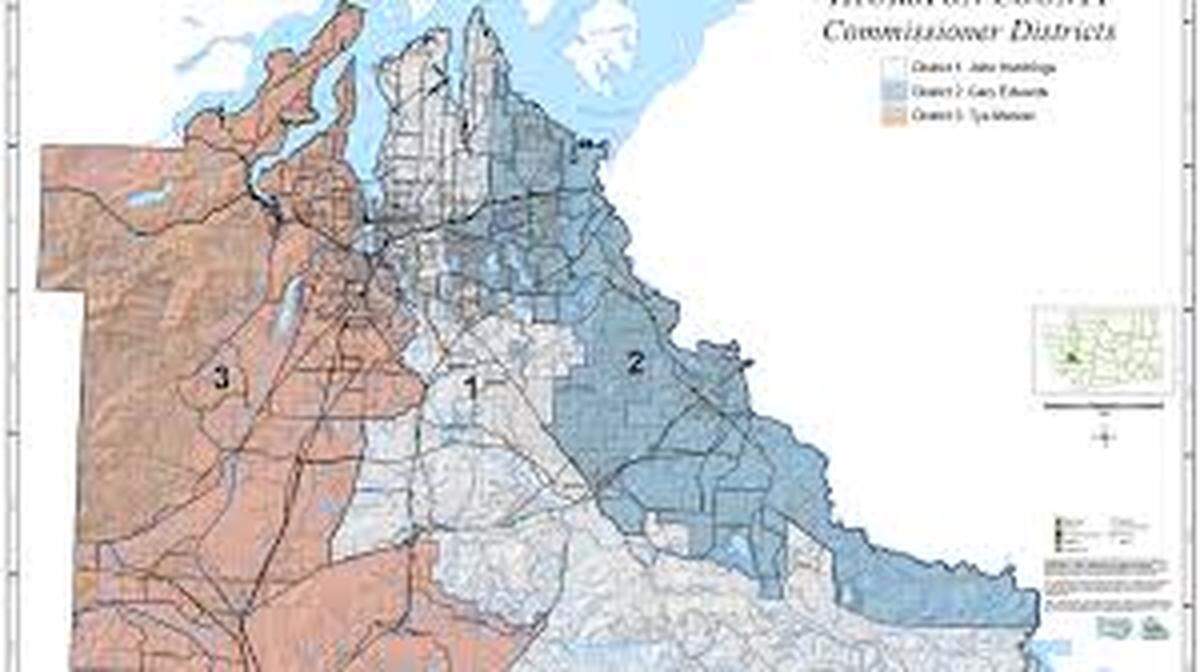
Only voters living in Districts 1 or 2 will see their district’s commissioner races on their current ballots, but both races will appear on general election ballots for the entire county.
The Olympian sent all primary commissioner candidates a questionnaire to collect their thoughts on homelessness, racial equity, and the need for more space at the county courthouse. Five of seven candidates for District 1 filled out the survey. Republican candidate C Davis asked questions about how the answers would be used but did not submit responses, and The Olympian did not hear back from Tom Bolender.
Homelessness
What role do candidates think the county should play in addressing the growing homeless population? Their answers ranged from maintaining distance as a strategic entity to taking specific, on-the-ground action.
Former District 3 Commissioner Bud Blake, who’s running as an independent, wrote that commissioners and staff should “maintain a strategic role” in the county and region, and referenced upcoming hurdles caused by COVID-19 related to tenants unable to pay delayed rent and landlords unable to collect.
“The primary role is to address strategic modeling and outcomes, the bigger picture and timelines,” Blake wrote. “Certain jurisdictions wish more involvement, but if everyone is everything, then we are not going to get anywhere. The county can’t do both or all, its role is best served as a strategic asset.”
Incumbent John Hutchings, also an Independent candidate, pointed to the county’s recent work, describing its role as “the lead agency among the cities” and listing funding, land use for mitigation, collaboration with non-profits, and grant money as resources the county can bring to the table. He also mentioned an Interlocal Agreement that’s in the works among local jurisdictions.
“Once I became the Chair of the Board, I began meeting with the city mayors to discuss the county’s role,” Hutchings wrote. “This relationship had been damaged in 2018. Meeting regularly with the mayors, a relationship built on trust has emerged.”
Other candidates also envisioned continued collaboration among jurisdictions and organizations, with Democrat Carolina Mejia including community mental health and medical providers in the mix to address homelessness as “a social justice issue.”
“We must come up with sustainable ideas and solutions that will address the issues head on by reducing barriers to accessing mental health, health services and safe and affordable housing among risk variables in reducing or eradicating the homelessness crisis,” Mejia wrote.
Most candidates stressed that the crisis will likely worsen due to COVID-19 and its economic impacts, with Mejia noting the importance of funding social services while addressing budget concerns.
Democrat Rory Summerson was the only candidate to specifically mention a potential mitigation site, writing that the county “needs to further invest in housing stock, affordable housing, wrap around services, and provide for a managed mitigation site,” and that it’s uniquely positioned to ensure collaboration in eliminating “the driving factors of homelessness” locally.
“Thurston County must also push to ensure that divisive and dismissive narratives are not able to halt progress in addressing systemic failures that further complicate pathways to housing, work, economic and environmental participation,” Summerson wrote.
Both Summerson and Mejia used the word “holistic” in their answers to describe their approach, and a similar idea was reflected in Democrat David Gaw’s answer.
“The county has invested much for the Homeless Crisis Response Plan to coordinate, assess and evaluate options that enable a collaborative approach with local jurisdictions and organizations,” Gaw wrote, emphasizing that the crisis impacts everyone in the county and compassion is key.
“We must continue to engage and support this effort to ensure a pathway for those who need support to transition, in addition to the external impacts to our surroundings,” Gaw wrote.
Racial equity in the justice system
When asked whether they would like to see any reforms related to racial equity in the county’s justice system, and if so, what initiatives they would bring forward, each candidate answered with specific ideas.
Summerson said he’d like to see a human rights commission established, along with independent review boards on equity, policing, and budgets.
“I expect to see the county work to reduce reliance on the justice system by providing for the basic needs of our constituency and visitors,” Summerson said. “I would also expect to see further movement towards diversion and community courts.”
Gaw identified a need for continued education and “thorough evaluation of our policies and procedures,” and stressed a collaborative approach.
“We will likely need a community-driven council or committee to enable these issues and develop the necessary reforms not just within the justice system, but holistically among and with our local organizations, within the county and externally with community members,” he wrote.
Blake wrote that he would support legislation and resourcing “for reform and strategies to treat every ethnicity with racial equity and respect within the justice system.” A military veteran, he saw success with ongoing training, monitoring, and mentoring initiatives, including “individual and collective sensitivity coaching with the goal of a better organization,” he wrote.
“We can do this with informed, effective communications about race with real solutions and commitment,” Blake wrote. “How we talk about race matters.”
Mejia replied that, as an immigrant and woman of color, she “feels very strongly” and has “great personal regard for racial equity.”
“This is a compelling reason for why representation in every seat of the local government matters,” Mejia wrote.
She’s working with local community leaders and “engaged in conversation about criminal justice reform and bail reform in our county,” she wrote, and thinks it’s “imperative” that the justice system and its departments “have the support of the commission.”
Hutchings, a former Olympia police officer and Tenino police chief, offered several specific initiatives, the first being the adoption of a Law Enforcement Assisted Diversion program. A previous effort to launch a LEAD program, modeled after a Seattle program with the goal of diverting people from jail, was unsuccessful here, but efforts are currently underway to start over.
He also named policy and training as “vital in changing the culture of an organization,” a process that can take years. The Washington State Association of Counties recently nominated Hutchings for a seat on an advisory committee to assist the Task Force on Independent Investigations of Police Use of Force, he wrote, and Inslee confirmed his appointment.
“Researching police policies in several areas and offering policy, training, protocols all play a large part of racial equity in our justice system right up front,” Hutchings wrote. “I envisage specific reforms coming from this committee’s work, in the area of racial equity reform.”
The need for space at the courthouse
If not for COVID-19, Thurston County voters would’ve weighed in a few months ago on a proposal to raise property taxes to pay for a new county courthouse and office complex. A new facility would replace the 40-plus-year-old complex on Lakeridge Drive Southwest that officials say isn’t functional, secure, or adequate to serve a growing population.
The need for more space at the complex and how to address it was an oft-debated subject among commissioners before the pandemic, and commissioners landed on a spectrum of stances.
On one end is Blake, who testified against a plan to build a new courthouse on Olympia’s Plum Street at a public hearing last October, saying he was concerned about the tax increase’s impact on businesses and homeowners. In a previous interview with The Olympian, he referenced the commission’s handling of the proposal and the financing for it as factors that prompted him to run for this seat.
“Businesses and families have to figure it out, so should commissioners,” Blake wrote in his recent answers. He asserts that “space isn’t the issue,” and the county has real estate in its inventory.
“After the business blunders of 2008-2014, the real problem was how to build a financial package that the public trusted without causing a burden while achieving the standards of safety and functionality of a refurbished or limited rebuilding,” Blake wrote. “I would restart the dialogue of various funding packages internal to the county commission and meet the true needs of a courthouse.”
Somewhat similarly, Hutchings voiced a need to revisit a remodel or expansion of the county’s current site as the economy recovers.
“I will not ask the citizens for any funding for their courthouse until a Plan B has been fully vetted, they understand the issue and agree,” Hutchings pledged. “The courthouse issue has been so charged with emotion and opinion, this is the exact type of issue to take to the citizens for their say.”
In the middle is Gaw, who wrote he’d like to see the county leverage more of its “now very limited resources and identify partnerships that include state agencies and local organizations,” and that a public-private partnership could share costs of building or remodeling. With the pandemic in mind, he wrote that the county can “look to alternatives through technology and incorporate other innovations that still allow us to serve the community effectively.”
“These innovations enable us to look at a building differently, perhaps by reducing the square footage, reducing operating and maintenance costs through technology and ensuring we are looking long term as it relates to the value and benefits a different space or environment may provide,” Gaw wrote.
The only candidate to name replacement as the sole option was Summerson, who wrote that the current facility is dilapidated “and is beyond our ability to reasonably maintain, retrofit, or expand.” He’s not alone in that thinking — officials have cited studies commissioned by the board over the years that say remodeling won’t address the ongoing issues.
“We absolutely need to look to renewed discussions and revisit planning to ensure the cost effectiveness of a replacement facility,” Summerson wrote, including that the county needs to look at options to protect visitors, workers, and people accessing services at the complex, as well as “protect future budgets from unexpected expenses and potential legal complications.”
Mejia works as a judicial assistant for Thurston County Superior Court, so could not give her opinion or thoughts on the subject “due to the employee Judicial Code of Conduct and Ethics Rule.”
“However, I believe an elected official has an obligation to their constituents and to do what is in the best interest for the community,” Mejia wrote.
District 1 candidate fast facts
In ballot order, here are some quick facts about the candidates in District 1. Fundraising information is from the state Public Disclosure Commission as of Friday, current positions are based on survey responses, and reasons for running were given in response to this question: “In two sentences or fewer, please sum up why you’re running for the position of County Commissioner.”
Thomas (Tom) Bolender
- No party preference
- Money raised: $0
- No apparent campaign website.
- Current position: Did not answer.
- Reason for running: Did not answer.
David Gaw
- Prefers Democratic Party
- Money raised: $14,432
- Website: https://www.david-gaw.com/
Current position: Management analyst and project manager at the state Department of Labor & Industries in the Division of Occupational Safety and Health
- Reason for running: “I feel that my experiences and qualifications provide the necessary competency to function effectively in this role and with my background, I see this as an opportunity to leverage what I know for the benefit of the community. I have interests in ensuring the burdens of taxes are optimized for the greater good in our community while enabling transparency and accountability, implementing a sustainable economy, improving our public health and safety and adopting affordable and green housing policies that help us as a community move forward.”
Carolina Mejia
- Prefers Democratic Party
- Money raised: $19,348
- Website: https://www.carolinaforthurston.com/
- Current position: Judicial assistant for Thurston County Superior Court
- Reason for running: “As a young professional, a mother of two girls and a resident of Thurston County, I feel compelled to address issues affecting not only my family, but Thurston County residents and our environment. I have a strong desire to serve our community and enhance its richness and diversity.”
Rory Summerson
- Prefers Democratic Party
- Money raised: $16,847
- Website: https://voterory.com/
- Current position: Project/Service Management for a local small business
- Reason for running: “My campaign is about providing a voice for youth, workers, renters, and marginalized community members at the table. We need to see a stronger focus on uplifting people, accountability, and our environment.”
C Davis
- Prefers Republican Party
- Money raised: $1,450
- Website: https://electcdavis.com/
- Current position: Did not answer.
- Reason for running: Did not answer.
Bud Blake
- Prefers Independent Party
- Money raised: $19,321
- Website: https://www.electbudblake2020.org/?fbclid=IwAR22ZS9-yMEPigeYNieOGL0hijIbONvmDVMZ7OycNCP-T_3mcQnNbNJv7LE
- Current position: Community Service
- Reason for running: “To create system efficiencies of county services to the people and environment in order to prosper; leave it better for the next generation.”
John (Hutch) Hutchings
- Prefers Independent Party
- Money raised: $11,719.50
- Website: https://votehutch.com/
- Current position: Incumbent Commissioner
- Reason for running: “After 40 years of public service, volunteerism and being the incumbent, there is still work to do. During this pandemic, economic recovery and homelessness crisis, Thurston County deserves proven, ethical and collaborative leadership.”
Note: The campaign contribution tallies include contributions from this election cycle, so candidates may have more money to spend on their campaigns because of starting fund balances from previous campaigns or loans. To check campaign finances, visit the state Public Disclosure Commission’s website at pdc.wa.gov.
This story was originally published July 26, 2020 at 5:45 AM.