
Election 2025: 3 questions for North Thurston Public Schools board candidates
READ MORE
Olympian Election 2025 Coverage
There are 31 ballot drop boxes located across the county. Ballots are due Nov. 4, 2025.
Expand All
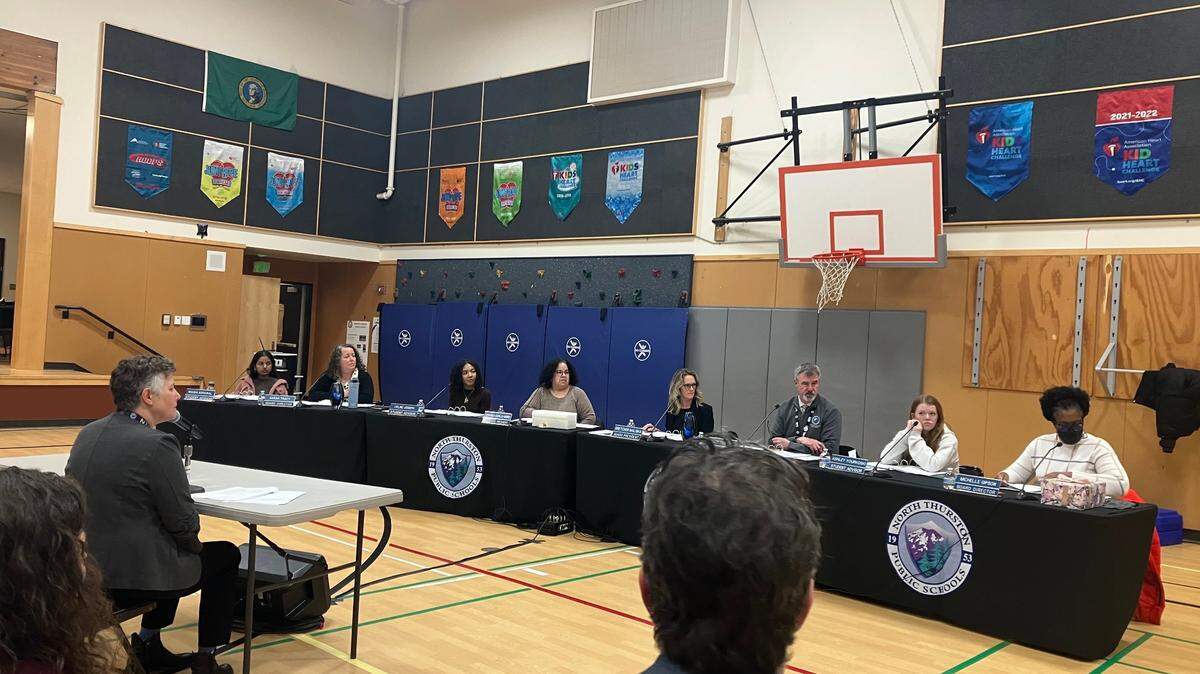
Four people are running for school board at North Thurston Public Schools, the largest school district in the county.
Sarah Tracy is the District 3 incumbent, and she squares off against Loretta Byrnes, a familiar face. She and Byrnes both applied to fill the District 3 vacancy in 2024 when former board member Jennifer Thomas resigned.
The school board ultimately voted 3-1 to appoint Tracy to the seat.
In the District 2 race, incumbent Tiffany Sevruk chose not to run for re-election, so newcomers Tim Bullus and Jeremy Ryan, both of whom have teaching backgrounds, seek her vacant seat.
The Olympian asked the four candidates three questions ahead of the Nov. 4 general election. Here’s what they had to say.
Do you support the district’s off and away all day cell phone policy?
Tim Bullus, District 2: I support the district’s off and away all day cell phone policy. As a former teacher who used more technology than most, I have seen how powerful tech can be for learning, but also how easily phones can become a distraction. Data shows sharp increases in bullying, anxiety, and behavior issues linked to constant screen time and social media use. We also need to teach students how to use phones appropriately, since even new employees I hire now struggle to disconnect during work and meetings. Parents who worry about emergencies can always call the school, and many of the same concerns about bullying and safety are actually reduced when phones are put away. Most importantly, it helps students learn to talk to each other again and stay focused on learning.
Jeremy Ryan, District 2: I support the district’s “off and away all day” policy. My central philosophy is to enhance the true capabilities of students, and that potential is realized when they are fully engaged in the learning community. As an educator for over a decade, I’ve seen that consistent behavior supports are crucial for student progress. However, my support is nuanced: While phones must be silenced and away to mitigate distraction, our ultimate goal should be to treat this policy as a tool to teach responsible technology use. We must help students develop the self-moderation and media literacy needed to utilize these tools effectively and responsibly as adults, preparing them for the challenges of life beyond the classroom.
Loretta Byrnes, District 3: Yes. Research has shown that young people spend too many hours on their phones causing a decline in mental health and the ability to focus and socialize. Where the policy has been implemented, students shared how it has led to an improved environment for learning and socializing. Teachers also appreciate not having to compete for the attention of their students. Having it as a schoolwide policy is preferable so that teachers do not have to be the enforcers. Regarding the details of implementation, our schools are large, and lunch periods are brief. I can imagine high school students wanting their phones at lunch in order to communicate and plan for the day. As long as individual high school students comply with the policy, it might be logistically easier for them to retain their phones rather than locking them up.
Sarah Tracy, District 3: Having cell phones off and away all day in schools supports better focus, learning, and social interaction. Phones are a major source of distraction, often leading students to check messages, play games, or browse social media during lessons. This breaks their concentration and reduces academic performance. Without phones, students are more likely to engage with their teachers and classmates, building stronger communication and collaboration skills. It also reduces the risk of cyberbullying and limits exposure to harmful or inappropriate content during school hours. Additionally, removing phones can ease anxiety caused by constant notifications and social media pressures. By limiting cell phone use in classrooms, schools create a more focused, respectful, and productive learning environment. Clear boundaries on phone use can help students develop healthier digital habits that benefit them both academically and personally now and in the future.
What do you think is the most pressing issue facing the district?
Bullus: I think the most pressing issue facing the district is that too much time and energy are being spent on social and political issues that have little to no impact on student learning. Our main priority should always be the academic health and success of our students. Regardless of which side is chosen on a nonacademic issue, we end up alienating a portion of our students. We need to get back to the basics, strong instruction in reading, writing, and math, consistent expectations for behavior, and supporting teachers so they can focus on teaching. When we focus on academics first and leave distractions at the door, we create schools where every student has the opportunity to learn, grow, and be challenged.
Ryan: The most pressing issue is the urgent need to expand and refine our capacity for Universal Design for Learning (UDL) and exceptional specialized instruction district-wide. Equity in education is the bedrock of all learning, and my years spent developing individualized education plans (IEPs) have shown me that when we focus on UDL, we create a truly equitable platform that benefits all students. This approach allows for creative, relevant, and individualized approaches from educators that may also help to increase student engagement — an ever present and serious concern with wide-reaching implications. We must ensure our professional staff are consistently and deeply trained in delivering specialized instruction and that we continue to foster diverse perspectives. By developing leaders who are proficient in individualized best practices, we build an environment where every child can achieve greatness.
Byrnes: Less than 50 percent of all students read at grade level and only 36 percent are competent in math. Less than 25 percent of 10th graders can pass the 1st year algebra or geometry assessment and only 30 percent of 11th graders pass the science assessment. This should be the most pressing issue, but does not seem to be. Highly paid administrators present lackluster data at school board meetings with a multitude of wordy action points involving ‘more teacher training,’ etc., without any discussion on the policies that have led to poor discipline, low attendance, and the lack of student accountability — for example, not requiring students to hand in homework on time and allowing them to retake exams without any penalty. They have lowered expectations to the point that students no longer respect the system or find it of value.
Tracy: Early childhood education is an important issue because the early years lay the foundation for lifelong learning, behavior, and health. High-quality early learning experiences build essential language, literacy, and social-emotional skills that set children up for success in kindergarten and beyond. Students who start school behind often struggle to catch up, leading to persistent achievement gaps that widen over time. Investing in early education also reduces the need for costly interventions later, such as special education or remediation. Ensuring access to strong early learning programs supports smoother transitions into elementary school, boosts third-grade reading proficiency, and improves long-term academic outcomes. I am excited about the early learning programs our district provides now as well as additional opportunities coming in the near future.
How would you ensure the district continues to operate without significant budget cuts?
Bullus: I believe the key to keeping our district financially strong is fiscal transparency and responsible, sustainable spending. We need to make sure every dollar directly supports student learning or extracurricular opportunities. That means carefully reviewing programs and positions to ensure they provide real value to students. Compensation should remain competitive but also sustainable, especially at the upper administrative levels where costs can add up quickly. Our district has avoided major shortfalls because of smart financial management, and we should continue that approach by focusing investments on classrooms, teachers, and programs that make a measurable impact on student growth and engagement. Every financial decision should start with a simple question: Does this help students learn and succeed?
Ryan: To ensure the district continues to operate without the need for significant budget cuts, I would employ the same comprehensive strategy I have used in my administrative roles: data-driven resource allocation, entrepreneurial collaboration, and targeted staff development. First, we must maintain fiscal responsibility by managing and auditing data across all departments to ensure every dollar directly supports compliance and student progress. Second, I would forge strong, trust-based partnerships with our community and local businesses to seek creative solutions for supplementing funding. Finally, by strategically investing in the holistic development and training of our educators, we build internal capacity, reduce costly turnover, and increase the effectiveness of our current staff — the most sustainable way to secure our long-term future.
Byrnes: The NT district is well funded in the fastest growing area of the county, but cannot take this for granted. The board increased salaries across the board just before the 2024 Operations Levy. What if that had failed? A few years ago they were planning for 5 percent increase in enrollment even though OSPI projected a 7 percent decrease. According to the recently approved 2025/26 budget, we lost 74 students since 2023/24 while increasing staff by 137 FTEs and total salaries/benefits by $28,000,000. Our state policies and new taxes are increasing the cost of fuel, heating, transportation, materials, vehicle purchases, wages, construction, etc., and the district needs to plan accordingly. The state is now at risk of a recession and serious budget cuts. Instead of continually adding and expanding special programs, the district needs to focus on the fundamentals and realize that most taxpayers have increased expenses as well.
Tracy: To ensure the district operates without significant budget cuts, I will continue to focus on remaining fiscally responsible while aligning funding with actual needs. Instead of eliminating programs, I would scale them back where appropriate, preserving core offerings while reducing costs. Prioritizing frontline educators — teachers, paraeducators, librarians, counselors, special education, and CTE staff — is essential, as they directly impact student success. I will continue to work to ensure funding and expenditures are carefully aligned, regularly reviewed, and adjusted based on student needs and district goals. Running the district as efficiently as possible means identifying areas of redundancy or underuse and reallocating those resources strategically. By maintaining transparency and focusing on long-term sustainability, we can protect essential services, avoid deep cuts, and continue providing high-quality education to all students.
This story was originally published October 20, 2025 at 5:00 AM.


.jpg)