
Nuclear trailblazer, former Richland councilwoman with ‘feisty conviction’ has died
AI-generated summary reviewed by our newsroom.
- Tri-Cities leader who championed women's roles in science and engineering dies.
- She served on the Richland City Council; volunteered for many causes.
- Her legacy includes a scholarship for nontraditional students like she once was.
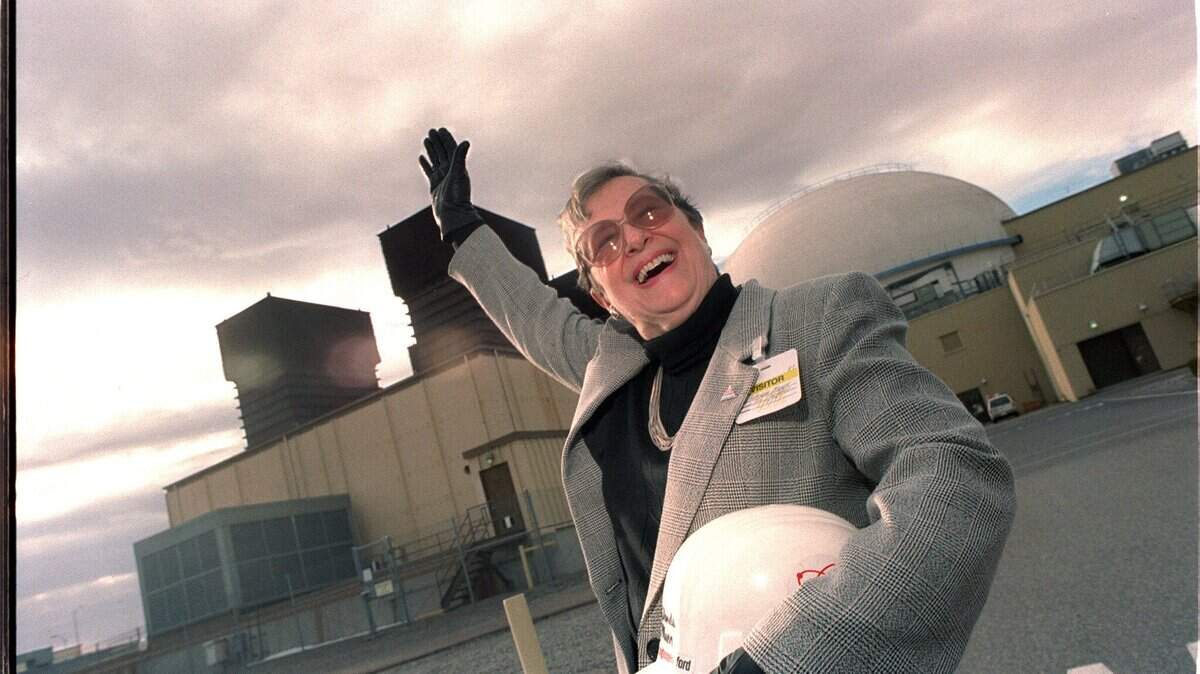
Wanda Munn was a trailblazer for women doing technical work in the Tri-Cities, an outspoken advocate for the peaceful use of nuclear technology and a former Richland council member known for her openness to hearing all views.
Munn, who once described herself as lucky to have been a part of history, died Wednesday. She was 93.
She graduated from high school at 16 and had been working toward her pre-med degree when she married at 18 to her husband in the Air Force.
By the time she turned 42 she was divorced and supporting two sons, an invalid mother, a sister with health problems and a nephew. And she had never made more than $650 a month, she told the Tri-City Herald in 1978 in a story headlined, “Mother-turned-engineer finds college a good investment.”
“I knew that whatever I was going to do, I was going to have to do it on a bachelor’s degree because I had no time or money to go beyond that,” she said.
When friends and family questioned her decision to return to college, “I told them I was going to turn 45 anyway. I could see my life as half over or half ahead of me,” she said at the time.
“I figured I had 20, maybe 30, years as a productive person ... so I evaluated whether I wanted to spend those years punching typewriter keys and telephone buttons or did I want to do something that would pay off for me and the people who mattered to me?”
She also knew that she needed the professional position that paid two or three times what she had made working as an assistant for a range of professionals in medicine, education, investment, accounting and law enforcement while she was married.
She was intrigued with energy issues and earned a four-year degree in nuclear engineering from Oregon State University in three years.
Money was tight but she sold what she could and took out a bank loan, as she wondered how long she could go without paying the mortgage and utility bills in her senior year.
Then three months behind on her bills, she was one of 17 women among 25,000 who applied to receive a $2,500 Marlo Thomas-McCalls scholarship for women in re-entry.
‘Building on the giants’ of Hanford
With her new diploma, she interviewed for a job at the Hanford nuclear site in Eastern Washington where the Fast Flux Test Facility (FFTF) was being designed and built.
The reactor was “the most exciting technical thing on the horizon,” she said in a 2016 interview for the Hanford Oral History Project at Washington State University Tri-Cities.
“I became a member of the Westinghouse Hanford team that was constructing that reactor — and never looked back,” she said in that interview.
The work on what was then the most advanced research and development reactor in the world was “building on the giants that we’d had here three decades earlier,” she said, referring to the Manhattan Project. “And I have never regretted a day of it.”
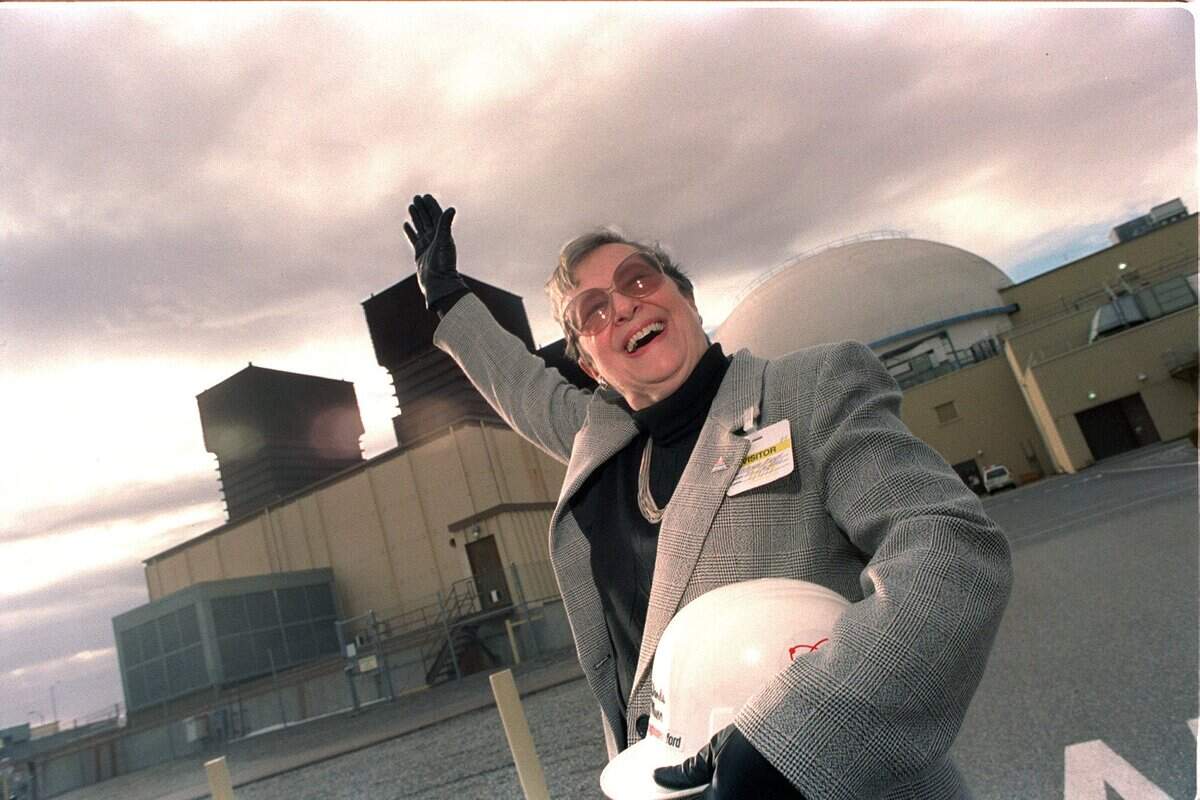
She spent nearly two decades working the design, construction, start up, nuclear safety oversight and operation of FFTF.
There were few women who were nuclear engineers in the 1970s — she considered herself not in the first wave of women becoming engineers, but the second. She found women engineering mentors who had careers in the military, which had been one of the few technical paths open to them, she said in the oral history project interview.
Soroptomist International Club in the Tri-Cities honored her in 1991 as a Woman of Distinction, saying she was one of fewer than 10 women nuclear engineers at the Hanford site.
FFTF was operated for a decade until 1992, including to test the operation of commercial reactors and advance knowledge of breeder reactors, and then work gradually ramped down.
She retired from Hanford in 1995 and ran for the city council..
But she remained a key advocate for saving the reactor, which supporters argued should be saved to make tritium for weapons, isotopes to power missions deep into outer space and, most importantly, to make radioactive isotopes for new nuclear medicine procedures to more efficiently kill cancer cells.
When sodium began to be drained from the reactor in 2004, ending hopes of a restart, Munn called in the “most advanced, most safe, most efficient, and in my opinion, most beautiful nuclear reactor in the world.”
“This is a tragedy,” she said.
A born volunteer
Her advocacy for FFTF was just one of many interests and activities that kept her busy before and after retirement.
“I guess I’m a born volunteer. It makes our nation what it is, our willingness to volunteer,” she told the Herald in 2001 when President George W. Bush appointed her to serve on the Advisory Board on Radiation and Worker Health. She remained on the board until her resignation in 2018.
The board paid tribute to her then, saying she had brought “clear-headed and practical perspectives on the diverse questions confronting the board.”
“It will also miss the personal figure Wanda cut among the board, as an independent-minded colleague of feisty conviction, candor and sympathy,” it said, and noted her “elegant dry wit and humor.”
During her senior year of college at Oregon State University she became the president of its chapter of the American Nuclear Society and president of the student section of the Society of Women Engineers. She would continue her volunteer work with those organizations in the Tri-Cities.
It helped that she could get by on five hours of sleep, she said.
In 1982 she earned a master’s of Business Administration from the University of Washington.
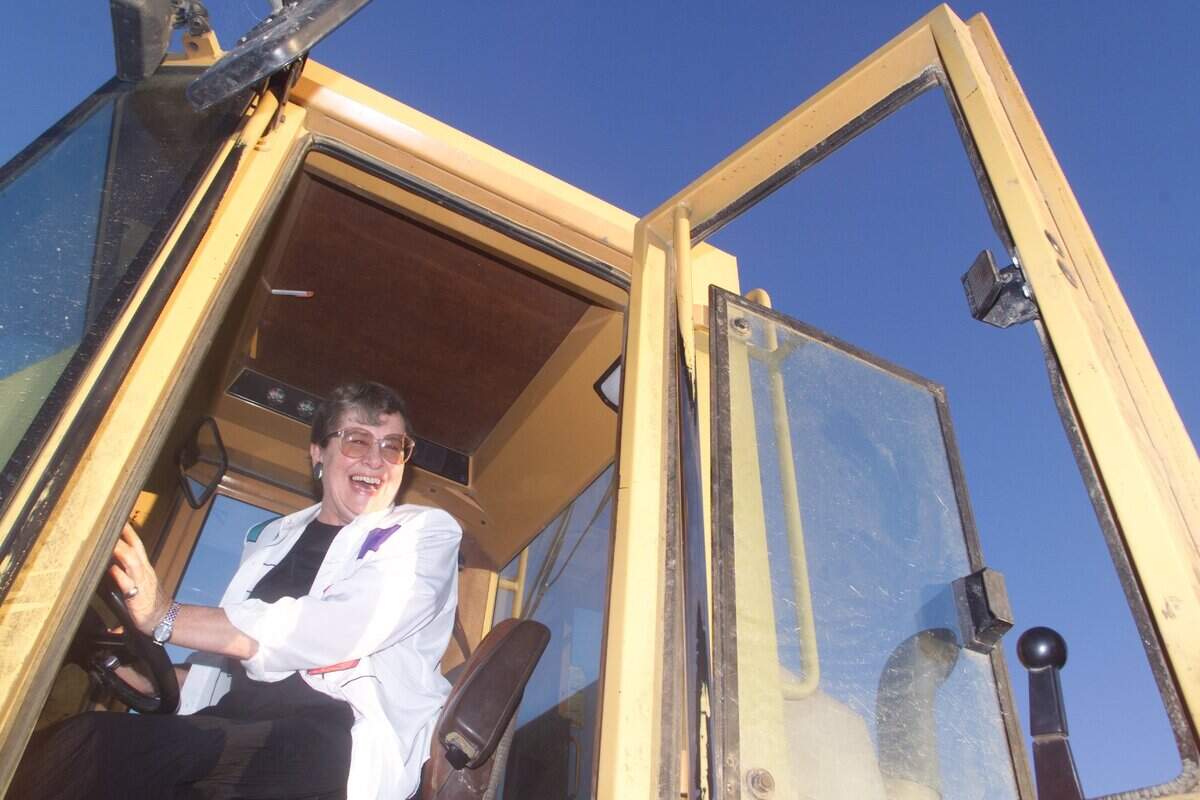
She served on the Richland City Council for four years, with several Herald letters to the editor calling out her openness to new ideas. One letter said she was “tolerant of others and would fully consider the views of all of the citizens of Richland, not just those she agrees with.”
Another letter said that “she is absolutely straight with you once she has reached a decision. What is more, she is highly articulate and persuasive.”
She said in her oral history interview that she was was always surprised when people told here there was nothing to do in Richland.
As a person interested in technical issues, Richland was the perfect place to live and she needed more time on her calendar for all the activities she wanted to do, she said.
She was a member of the Hanford Advisory Board, a Girl Scout volunteer, member of the Soroptimist Club and the past section presidents in the Tri-Cities of both the American Nuclear Society and the Society of Women Engineers, which she helped charter.
The Society of Women Engineers said in 2024 that she had been an active participant or principal in global technology or community projects and conferences for over half a century.
Wanda Munn scholarship
Among her honors was being named the 1992 Tri-Cities Engineer of the Year and that same year was a delegate to the United Nations Earth Summit in Rio de Janeiro.
She was awarded the Distinguished New Engineer Award by the Society of Women Engineers in 1985 and the Public Communications Award by the national American Nuclear Society in 1988.
She was inducted into both the Oregon State University Engineering Hall of Fame and the College of Fellow of the Society of Women Engineers.
The Eastern Washington Section of the Society of Women Engineers has endowed a scholarship in her honor that is awarded to re-entering or nontraditional engineering students like she once was.
Einan’s at Sunset is in charge of her arrangements. Read her oral history interview at hanfordhistory.com/items/show/818.
This story was originally published July 25, 2025 at 9:33 AM with the headline "Nuclear trailblazer, former Richland councilwoman with ‘feisty conviction’ has died."