
Train crash was accident waiting to happen
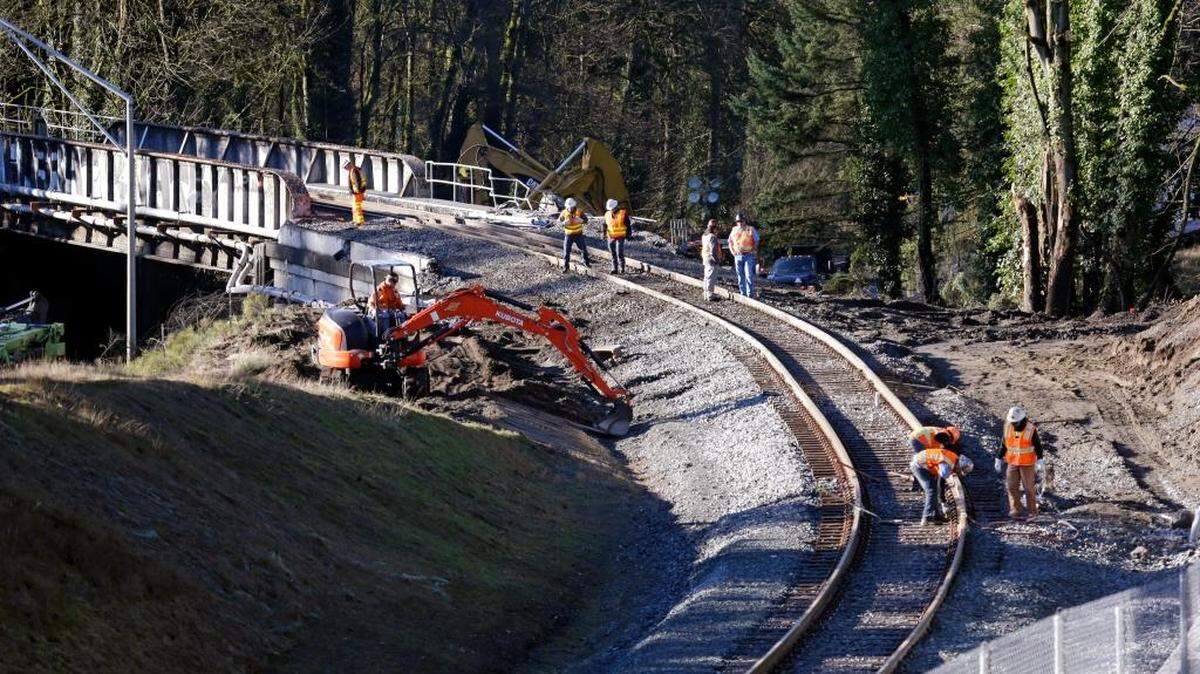
State and Amtrak officials clearly have more explaining to do around the deadly derailment last Dec. 18 that killed three people, injured more than 60 others and blocked southbound Interstate 5 for nearly two days.
This was a crash that in hindsight could have been predicted. It never should have happened and something like this never should again.
The disaster unfolded during the inaugural voyage of a passenger train along a new rail spur that bypassing parts of Tacoma as part of a new high-speed link between Seattle and Portland.
A regrettable design flaw – a sharp bend in the tracks requiring trains to slow from 80 mph to 30 – proved disastrous. The wreck occurred north of Olympia near DuPont, where the spur running south from Lakewood crosses I-5. The tracks then rejoin the main line north of the Nisqually River.
Hearings before the National Transportation Safety Board this week put a focus on that fatal design. The spur was designed to bypass congested tracks in Tacoma, saving 10 minutes on the route.
Train operators were well aware of the curve from making trial runs, but they were slow to notice signs in real time until it was too late.
Clearly project oversight was weak and so was the management of the line that had such a dangerous curve. An advanced safety system known as positive train control, which can automatically slow a train if engineers do not, was installed but still in the testing phase.
And the curve had led a worried engineer to say that “everybody hated that curve.” Yet the accident happened.
When pressed by a member of the NTSB board on who was responsible for working around or identifying risks posed by the curve, Ron Pate of the Washington state Department of Transportation gave a less than satisfactory answer Wednesday that implicated design engineers, the state, Amtrak and the regional Sound Transit agency.
“So nobody is responsible for the potential mitigation or at least the identification of the curve as being problematic as it turned out to be?” asked Earl Weener, an NTSB member.
As paraphrased by The Associated Press, Pate said “the state contracted with an engineering company who was responsible for the design, which was given to Sound Transit. Many parties signed off on those drawings … and it had to be accepted as part of contractual documents.”
This diffusion of responsibility is unacceptable. It appears there was a kind of fog around the thinking of those bringing this valuable high-speed rail project to fruition.
Did each party to this disaster simply assume the others involved would speak up if there was a problem – and then no one did?
The tracks did have a speed sign at about milepost 18 along the track, and the train engineer in charge of the disastrous run planned to start braking there – well before the curve at milepost 19.8, the AP reported.
But the engineer didn’t see the sign or other warning signals until a 30 mph sign at the curve.
NTSB is also looking into a deadly February crash of a passenger train in South Carolina.
It is a step in the right direction that Washington officials halted passenger train use of the tracks until the installation of the PCT automatic braking system is completed. And Amtrak has said it now requires at least four round-trip qualifying runs for engineers on a route before the engineer is certified to operate on a route.
The engineer in this case had been on two northbound and one southbound trips before the fatal run.
Though it takes a lot of cooperation between different government arms to build and launch a project like this one, there needs to be a single point of responsibility for big regional projects such as this one.
The NTSB work is still under way, and more lessons are in the offing. This tragedy costs lives and snarled traffic along I-5, exposing a vulnerability in our regional transportation system.
Those looking into the aftermath of this tragedy for ways to prevent a repeat here – or elsewhere in the country – must find ways to require a buck-stops-here agency that is responsible for safety decisions.
That is for starters.
This story was originally published July 12, 2018 at 1:33 PM.