Thurston County roads, other services to take a hit in $1 billion budget plan
READ MORE
Thurston County works to close 2026 budget deficit
Thurston County commissioners are deciding how to close an estimated $36 million budget gap in the general fund, the county’s primary operating fund, for 2026.
Expand All
Thurston County roads will suffer and services will be slowed under a proposed 2026-2027 budget that’s due for approval this week, according to county commissioners.
The Board of County Commissioners is scheduled to vote on the roughly $1 billion biennial budget and related items during their regular Tuesday meeting at The Atrium.
The new budget includes about $9.8 million in reductions to the county’s 2026 general fund, the county’s primary operating purse.
County leadership initially projected a $36 million deficit, but the board has teed up decisions and trade-offs to mitigate that gap. Those measures include diverting money away from county roads, implementing a new public safety sales tax, and other actions. The cuts that remain will hit a wide swath of offices in ways that may make it more difficult for the public to access services, according to the commissioners.
Ahead of Tuesday’s vote, The Olympian asked each of the county’s five commissioners to share their biggest takeaways about the new budget.
What’s happening with funding for Thurston County roads?
The board mitigated some of the deficit by taking money from the county’s road fund and putting it into the general fund.
“We basically reinstated the kind of high-level road fund shifting and diverting that we were trying to step away from that’s going to impact road maintenance and levels of service in county roads,” Commissioner Tye Menser said.
The road fund contains money intended for building, maintaining and operating the county’s public road and bridge system. The portion of property taxes collected for the road fund is called a road levy, according to the county’s Transportation Improvement Plan.
On Dec. 10, the board approved a resolution to certify 2026 property tax levies and authorize a $4.7 million road levy shift as well as a $1.5 million road diversion.
State law allows the county to shift the portion of the property tax levy for roads to the general fund under certain conditions. Likewise, state law allows the county to divert money from the road fund to the general fund.
Menser said there’s a limit to how much the board can responsibly take these actions. He said the board has reached that limit.
“Many counties do it,” Menser said. “It’s a very common way that counties get by with inadequate funding levels for the general fund. But it’s going to come back and bite you eventually, in terms of road maintenance.”
Commissioner Carolina Mejia shared Menser’s concern and said the board will likely not be able to rely on taking from the road fund next time.
“Our road fund isn’t better off than our general fund,” Mejia said. “For 2027, the board won’t be able to take away that much. We’re not going to be able to do as many projects as we were doing before.”
Menser said this is one example of the kinds of trade-offs the board decided on when building the new biennial budget.
“I would say we exhausted the low hanging and medium hanging fruit,” Menser said. “Now all that’s left is the really tough stuff. There aren’t more things to cut that aren’t going to hurt community service levels.”
‘Our budget priorities didn’t align with our actual priorities.’
Commissioner Rachel Grant said she expects the public to see slower service levels in most county departments.
“By reducing the budgets in some of the departments, we really have cut some of the process improvements that Thurston County has been working on over the last several years,” Grant said. “There’ll be fewer staff available for frontline work.”
For example, she said the Clerk’s Office has already reduced their public hours and may reduce them further. Much of the cuts are affecting the county’s criminal legal system, leading some officials to warn about court delays and public safety.
Grant said the new budget doesn’t fix the county’s long-term structural deficit, and as a result, the county will likely be unable to improve service levels in the near future.
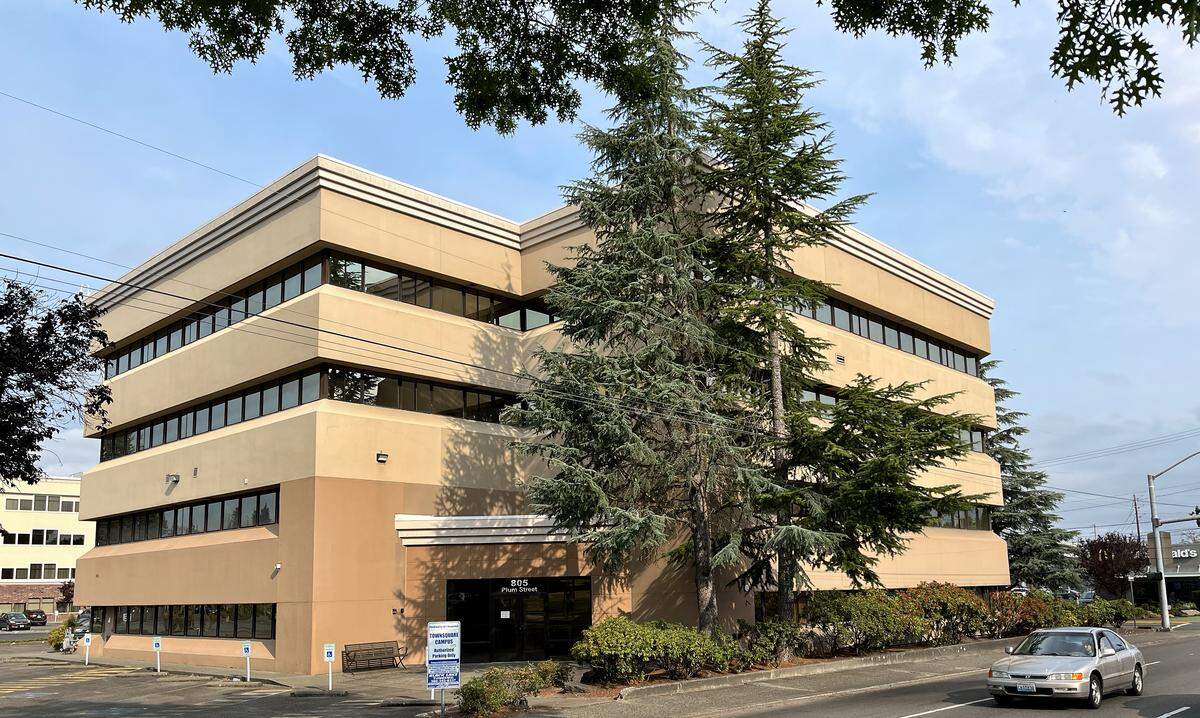
Earlier this fall, the county closed on a $34.6 million real-estate deal for several buildings in downtown Olympia.
The county purchased the buildings months after committing to establishing a new courthouse campus to meet the growing needs of its criminal legal system. This plan is moving ahead, without impacting the general fund.
However, Grant said the recent cuts to the county’s court system feel like they contradict that earlier commitment.
“Our budget priorities didn’t align with our actual priorities,” Grant said. “That’s an issue, and I really hope that by next year, when we’re working better together, that we’re able to do a better job looking at that and thinking about that.”
Commissioner Emily Clouse echoed that concern. She pointed out that the county’s 2026 legislative priorities largely center around funding the county’s criminal legal system.
“If you look at our legislative priorities juxtaposed with the budget decision we’ve made, it just doesn’t add up,” Clouse said. “We are not budgeting based on our priorities.”
While the cuts will affect service levels, Commissioner Wayne Fournier said he thinks no part of the county budget should be untouchable.
“You should always be willing to do the hard thing for 12, 16 months to ensure a better future,” Fournier said. “Sometimes we have to make those decisions in our personal lives, and sometimes we have to make those decisions for our community.”
He pointed to the recently purchased downtown buildings as a smart investment that will allow the county to get out of its leased space at The Atrium and better set up the county for the future.
Thurston County seeks more revenue
On Tuesday, the board will consider approving a new 0.1% public safety sales tax. That would amount to a penny for a $10 purchase.
This is different from the public safety sales tax that county voters approved in 2023. The new tax was made possible by Washington state House Bill 2015 and only requires a councilmanic vote.
County leadership has attributed its budget gap to rising costs outpacing the county’s slowing and limited revenue options.
Mejia said Thurston County along with the WA State Association of Counties intends to request more funding from the state on a host of issues. However, that may prove difficult given the state’s dire revenue outlook.
Still, county documents show that Thurston County intends to request money for its planned courthouse campus in downtown Olympia and funds to help the county’s Public Defense department meet caseload standards set by the WA State Supreme Court among other asks.
Should the county’s fortunes improve, each commissioner said they’d like to see funding returned to the offices and departments that were hit with spending cuts this year.
Looking ahead, Menser said the board may ask the public to contribute more to the county’s coffers.
“In the long-term, I think the public will have to consider a levy lid lift (on property taxes) for the county,” Menser said. “The commissioners are thinking about when. I think it’s more a question of when rather than if.”
Menser acknowledged that the public might be hesitant to pay more taxes for basic government. Still, he said the current budget cycle has shown how the lean the county really is.
“It’s a lot of mandatory services that benefit the community,” Menser said. “There isn’t a lot of fluff in the county budget. We don’t do a lot of discretionary programs. So, I would just ask people to keep in mind that county government is unique and very essential.”